
Knowledge
Design first: a clickable journey before you build
A clickable design lets you show and test what you want before there is one line of real code. This is how we work.
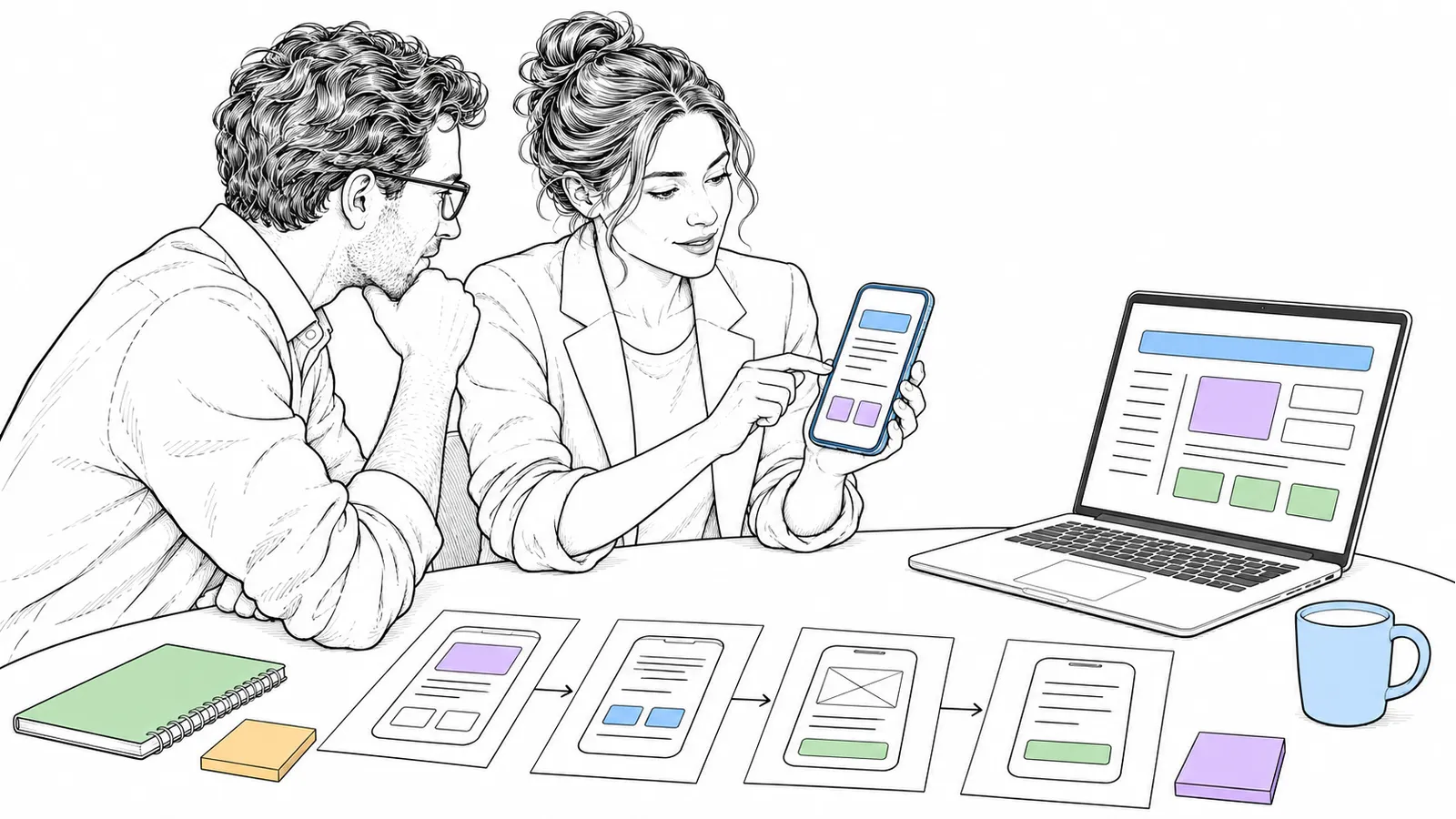
With AI, you can build an app in an afternoon. So it is tempting to start building at once. We first make a clickable design of the whole journey, and only build when that is right.
Plain technical English A clickable prototype is a series of screens that you can click through, without real data or logic. Users test the journey on it, from start to end. The prototype is the design; the real code is built separately after it.
Why it matters
A change in a design takes minutes. The same change in built software takes hours, and often more. The UK government writes it in its manual for digital services: you must make prototypes to explore, share and test designs before you commit to building anything. Code prototypes are better for user research there, because they feel more real.
How it works
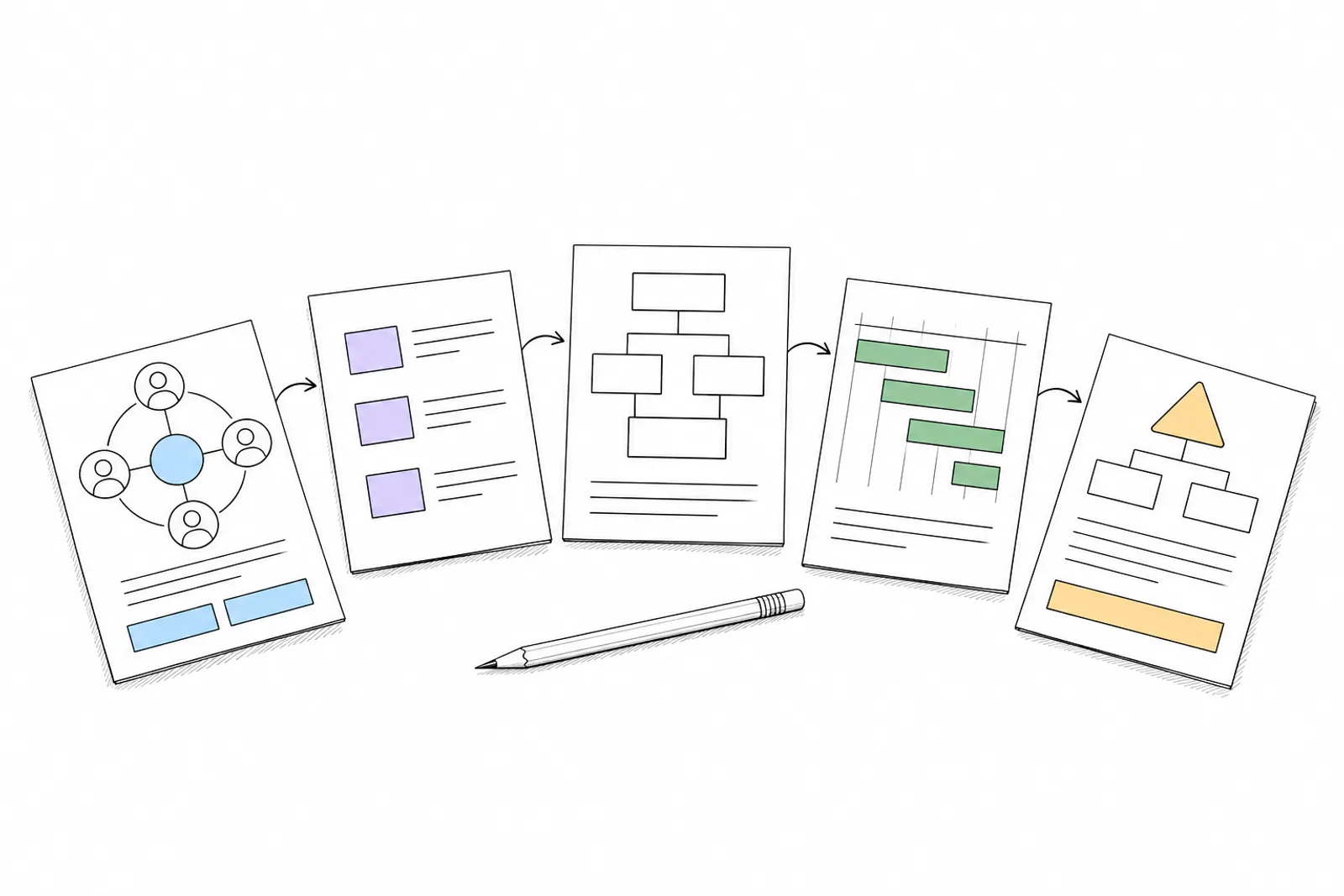
You sketch, make the journey clickable, test it, and only build after approval.
What you do
- Draw the whole journey, not one screen. From the first click to the result.
- Make it clickable. We make designs in Claude Design, as clickable screens.
- Let someone click through it without explanation. Watch where they get stuck.
- Change it until the journey works. That is the approved design.
- Do not copy the prototype as production code. The GOV.UK manual says so too: prototype code does not need to meet the same standards. Build the real version separately, with tests.
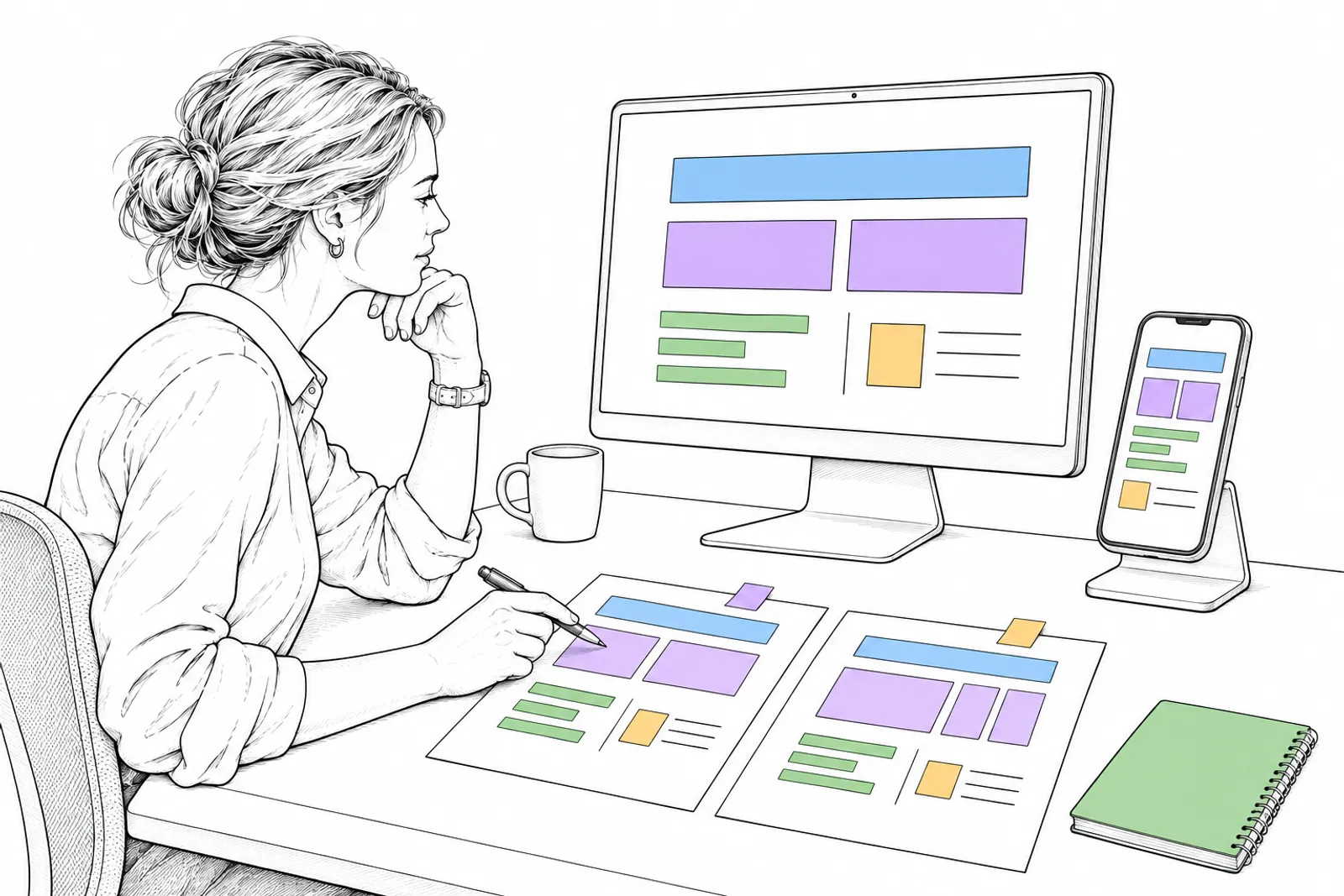
- Compare the result with the design, with screenshots on phone and desktop side by side.
We put a new design that is not yet approved on the site behind its own address, so that the approved version stays in place.
What we can do with you: we make a clickable design of your idea with you, test it, and then build it. Book a conversation.