
Knowledge
End to end first, including the deploy
First build the thinnest version that really works from start to end, deployed and all. Only then make it wider and nicer.
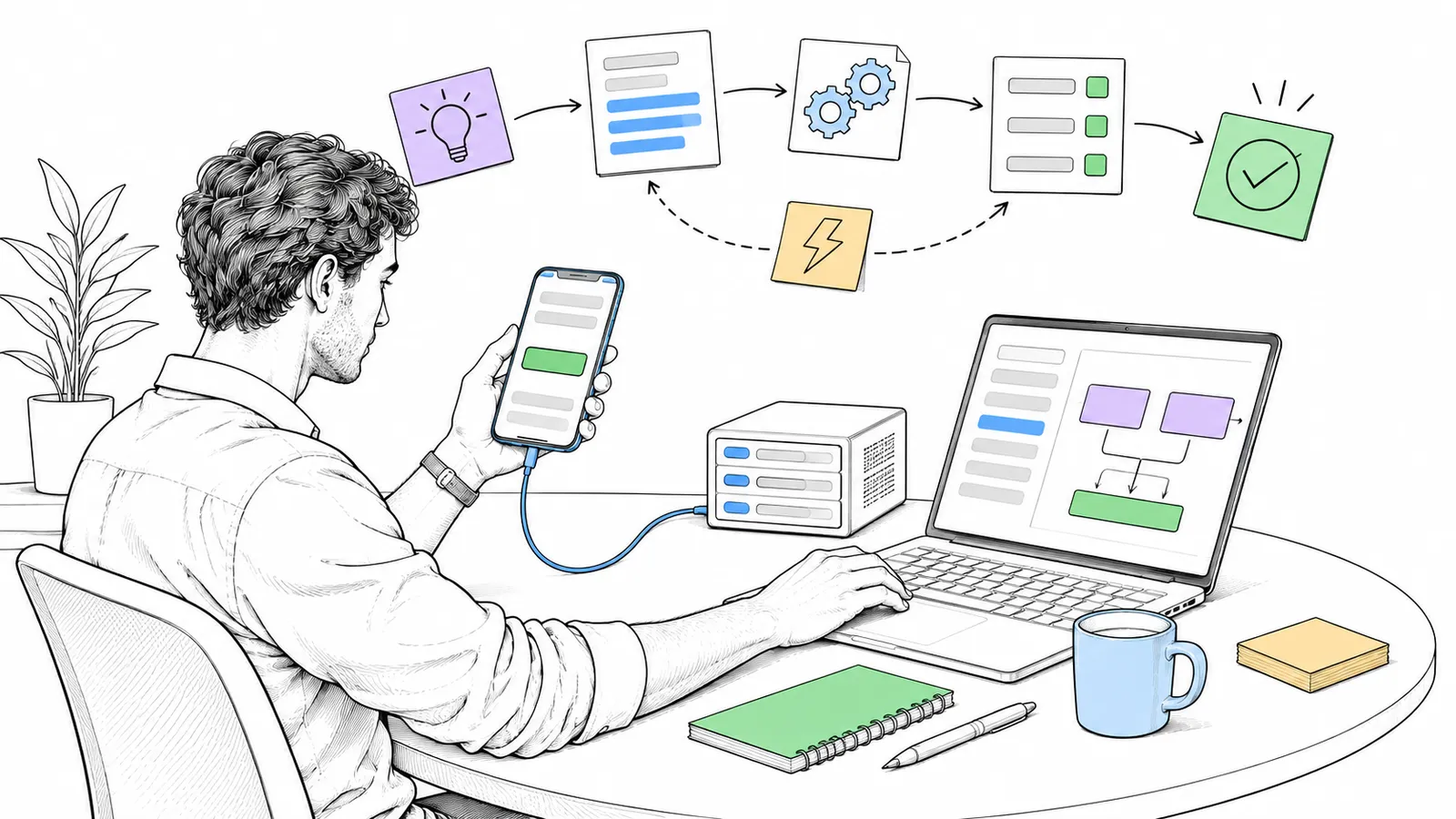
Many projects first build all parts separately, and connect them at the end. Only then do they find that the whole does not work. We do it the other way round: first one thin line that really works, from input to screen, and live.
Plain technical English An end-to-end skeleton is the smallest version that really runs all steps: real call, real data, real screen. The deploy is part of it too. After that, you improve each step and prove each time that the whole still works.
Why it matters
The hard part is often in the connections: login, the real data, the server, the deploy. If you do those last, you find the biggest problems at the worst moment. Andrej Karpathy describes the same approach for training neural networks. His second step: set up the end-to-end skeleton first and get a simple baseline. Only then do you make the model better.
How it works
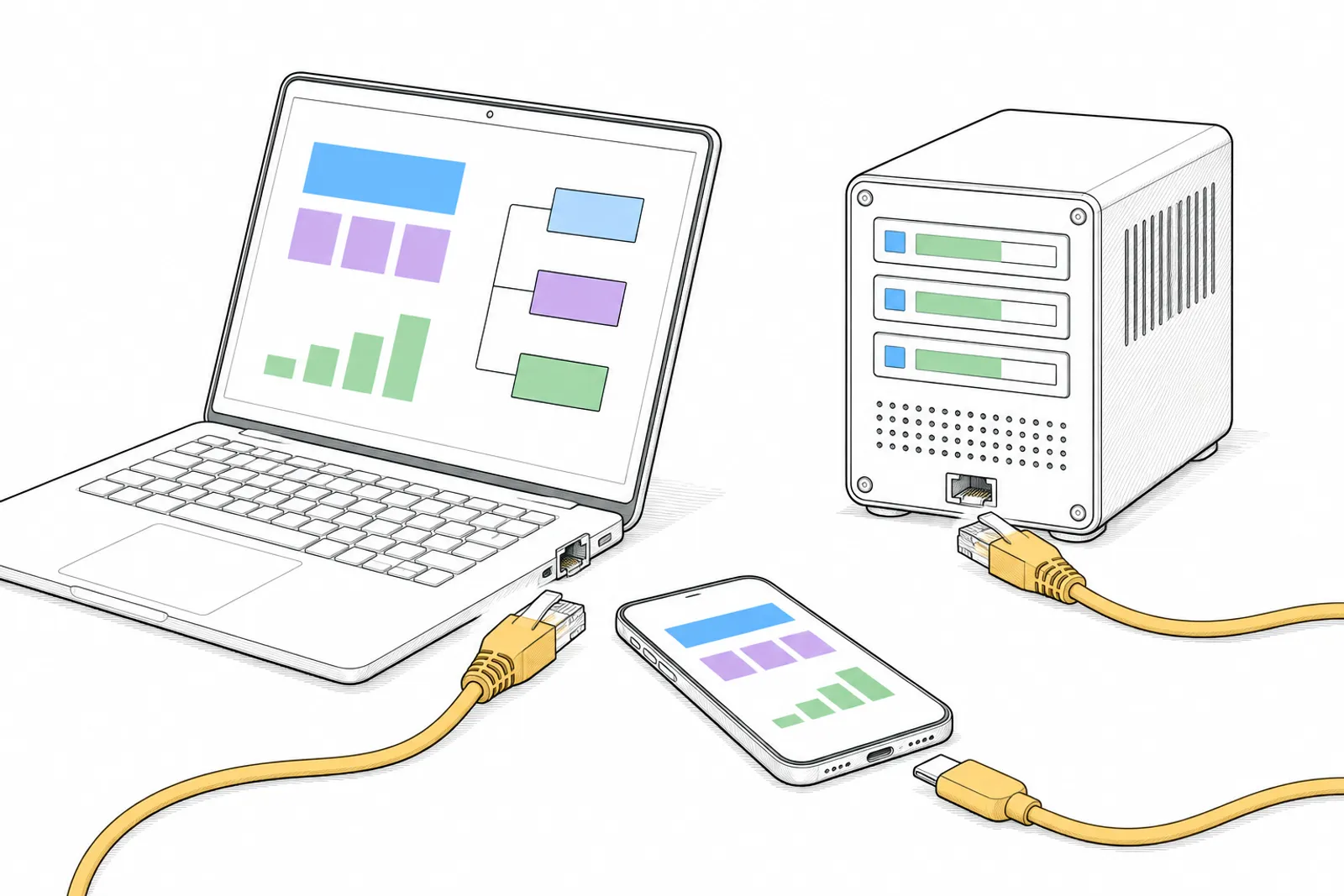
First one thin line runs from input to live; then you improve one thing at a time, and the test proves each time that the whole still works.

What you do
- Choose the smallest journey that has value. For example: one form, one store, one confirmation.
- Use real parts: the real call, real data, the real screen. Not simulated.
- Deploy it at once, through the route you will also use later. Martin Fowler names automated deployment as one of the core practices of continuous integration.
- Write one test that runs the whole journey. That test stays green at every step after it.
- Only then make it wider and nicer. Security and tests grow with what already works.
For us, something is only done when there is a link you open on your phone, a screenshot, and a test of at most six steps that ran green.
What we can do with you: we build the first working line of your idea, live, and then finish it step by step. Book a conversation.