
Knowledge
Write like an aircraft manual: plain technical English
Andrej Karpathy asks language models to explain things in the style of aircraft manuals. We write all our texts that way, for people and for agents.
A language model likes to write long, with many clauses and big words. In early October 2026, Andrej Karpathy suggested a different style: let the model explain in the language of aircraft manuals.
Plain technical English ASD-STE100 is the standard for Simplified Technical English, made for aircraft maintenance manuals. It has writing rules and a dictionary of about 900 approved words, most with one meaning. Karpathy sometimes asks models for “80% of the way to ASD-STE100”.
Why it matters
A manual for aircraft maintenance must be understood correctly the first time; a misunderstanding is dangerous. According to Search Engine Journal, Karpathy wrote that models know this standard well, and that its strict rules give text he often finds a lot more readable. Because the standard is strict, he sometimes asks for 80% of it. He also expects more of our work to move to checking and understanding what AI makes. That goes better with short, exact text.
How it works
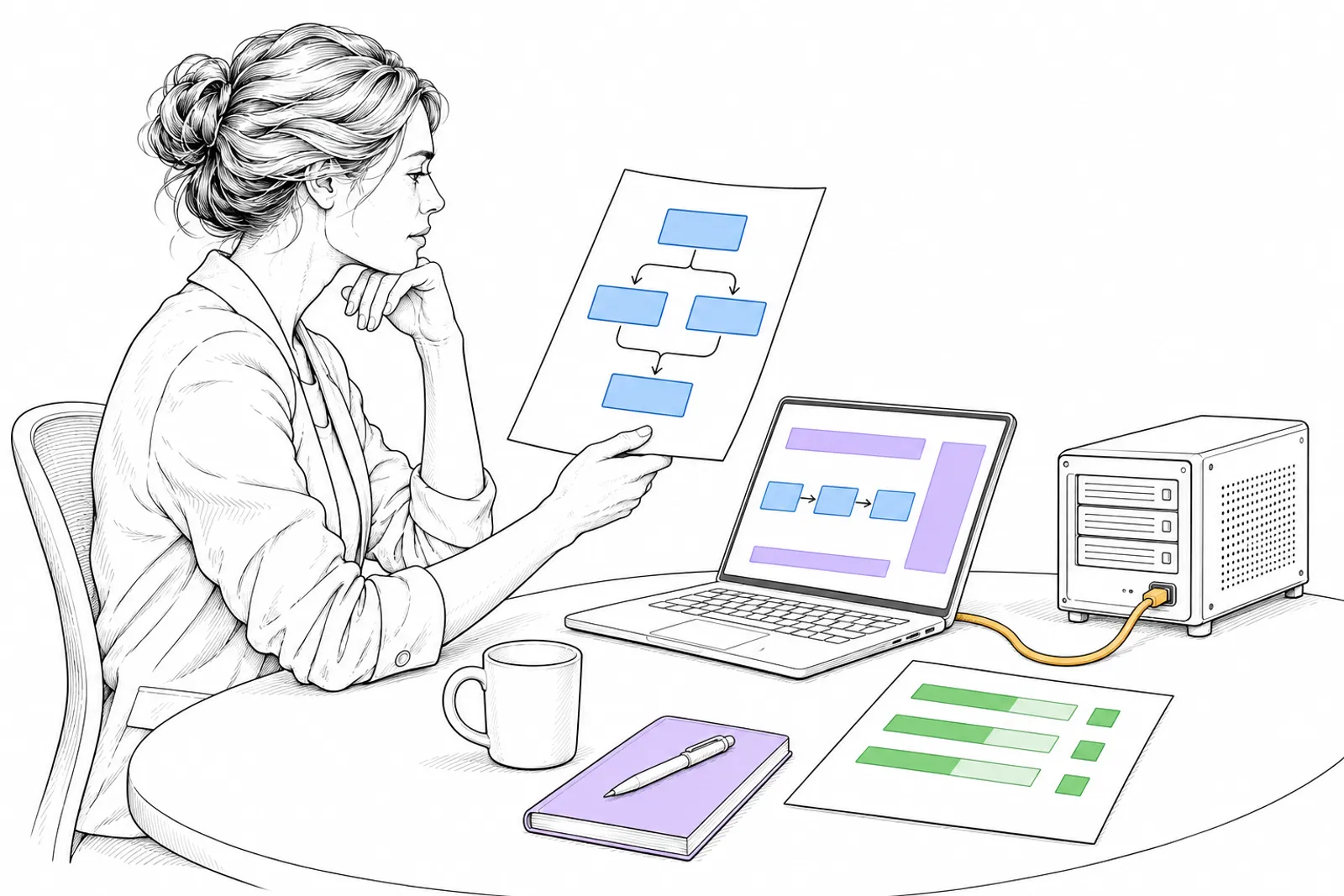
You give the model fixed writing rules, let it draw a diagram where something flows, and check every fact.
What you do
- Short sentences. One idea per sentence.
- Active voice, with who does it. “The server starts the job”, not “the job is started”.
- Simple words, and always the same word for the same thing.
- Exact names: the file, the command, the table.
- A diagram where something flows or connects, with one sentence under it that says the same.
- Check every fact. Readable text is not yet correct text, but a mistake is easier to see in it.
We use this as our fixed writing style in a skill of our own, for messages, documentation and tasks for agents. That is why every article in this knowledge centre starts with a short “Plain technical English” box. You can request the full standard for free from ASD.
What we can do with you: we set up this writing style for your team and your agents, so that texts and tasks are understood the first time. Book a conversation.