Skip to content

Pick your style: Denkbaar

Book a conversation

Articles

What we make, what we learn and what we try. And the technology since January 2024 on a timeline.

View
Kind
Topic

221 articles

A developer examines a server beside an open and a closed box.

Knowledge

What are open weights?

Open weights are the released numbers of a trained model, so you can run it yourself.

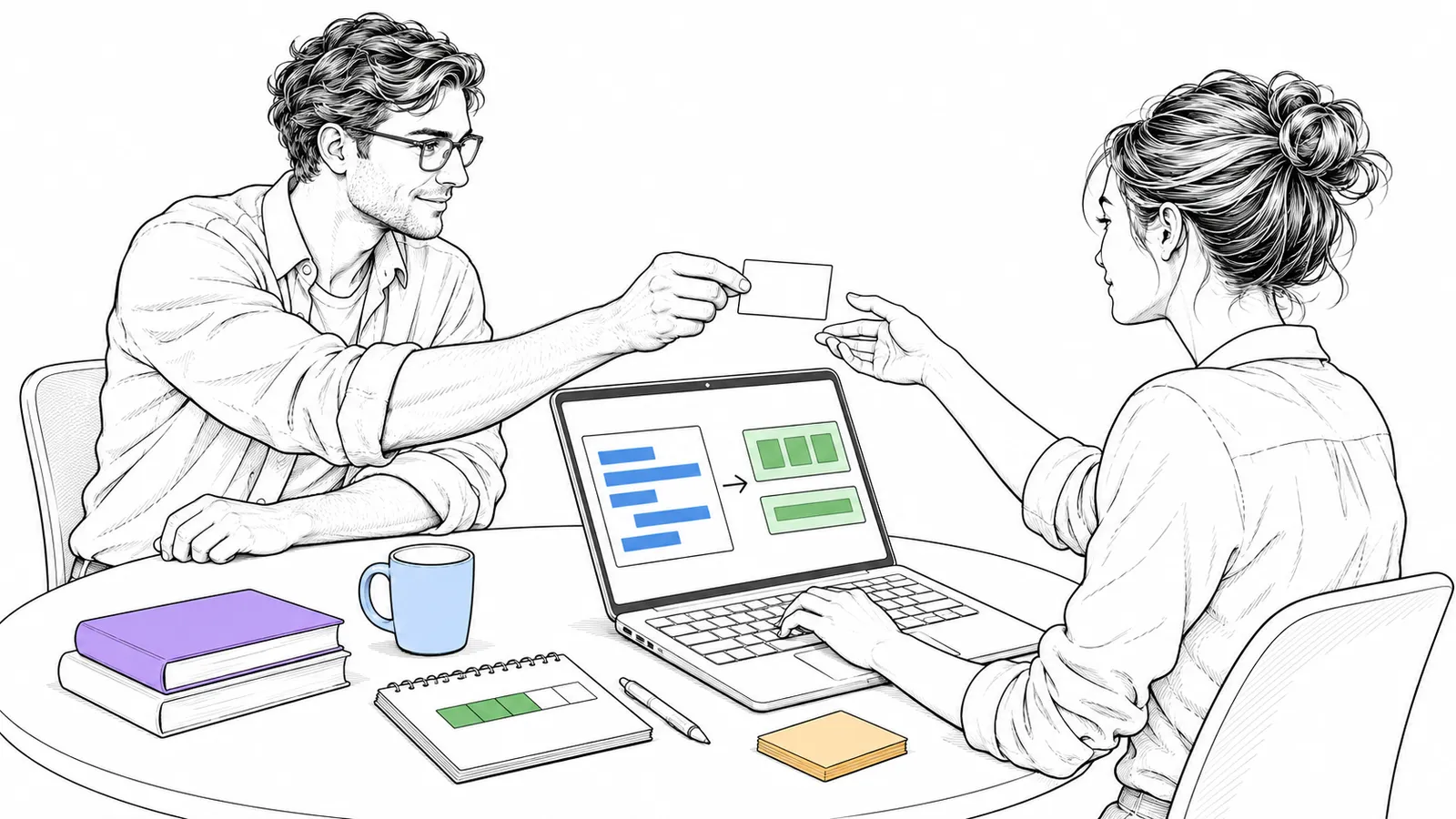
A person compares two response cards beside a laptop.

Knowledge

What is a large language model (LLM)?
A language model is an AI model that reads and writes text, and does not give the same answer every time.

A person studies branching blocks on a laptop beside an hourglass.

Knowledge

What is a reasoning model?

A reasoning model thinks first and answers after, and that costs more time and tokens.

An employee divides a strip into small blocks beside a laptop.

Knowledge

What is a token?

A token is a piece of text a language model works in; it sets how much text fits and what it costs.

A person studies a tablet connected to a server.

Knowledge

What is an API?

An API is a connection that lets software use a service or a model.

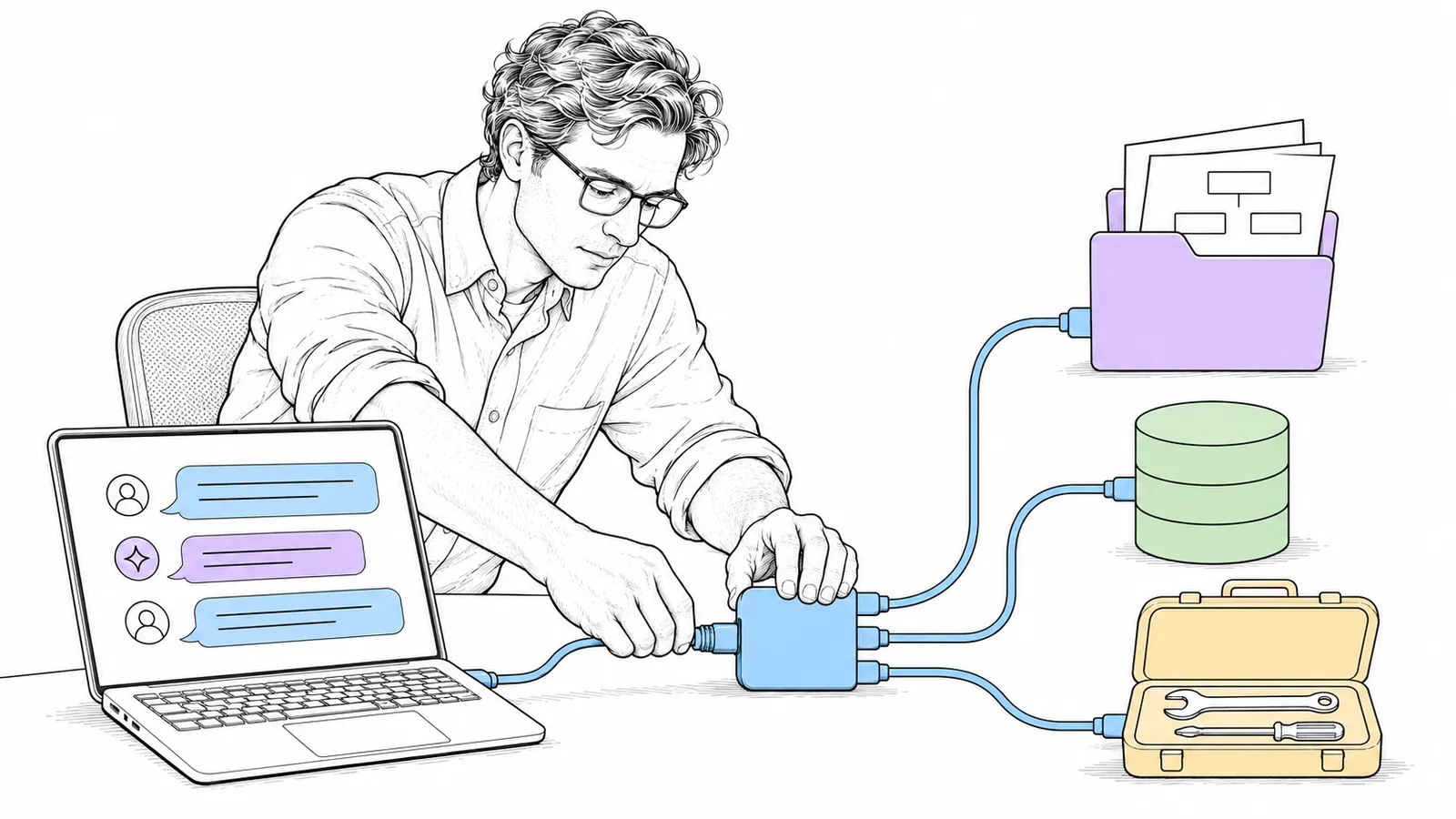
A worker connects a laptop to a folder, a data store and tools.

Knowledge

What is Anthropic?

Anthropic is the company behind Claude, a family of AI models and an AI assistant.

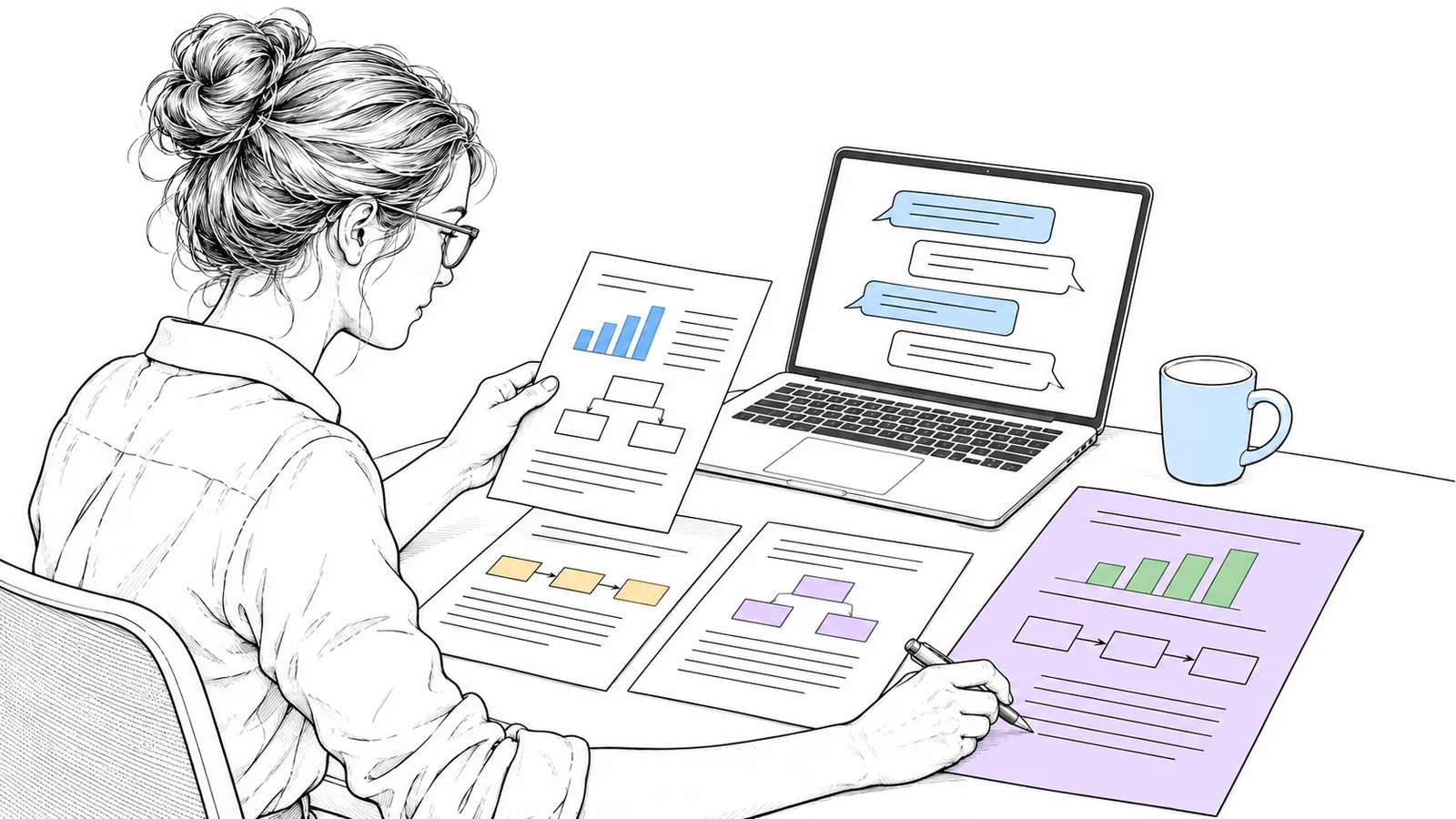
A worker compares source documents with a report beside a laptop.

Knowledge

What is ChatGPT?

ChatGPT is the AI assistant from OpenAI.

A developer works on a laptop with task blocks.

Knowledge

What is Claude Code?

Claude Code is the programming agent from Anthropic that carries out tasks on code.

A developer chooses from three modules beside a laptop.

Knowledge

What is Claude?

Claude is the AI assistant and the family of AI models from Anthropic.

A developer reviews work blocks and green tests on a laptop.

Knowledge

What is Codex?

Codex is the programming agent from OpenAI, for the terminal, the cloud and the desktop.

A developer works on a screen with code blocks and three separate work areas.

Knowledge

What is Cursor?

Cursor is a code editor with built-in AI agents and its own coding model, Composer.

A worker examines a purple chip beside an open case with a server and laptop.

Knowledge

What is DeepSeek?

DeepSeek is an AI company that releases models such as R1 with open weights.

A person studies a phone beside a connected model module.

Knowledge

What is Gemini?

Gemini is the name of Google's AI models and of the chat assistant that runs on them.

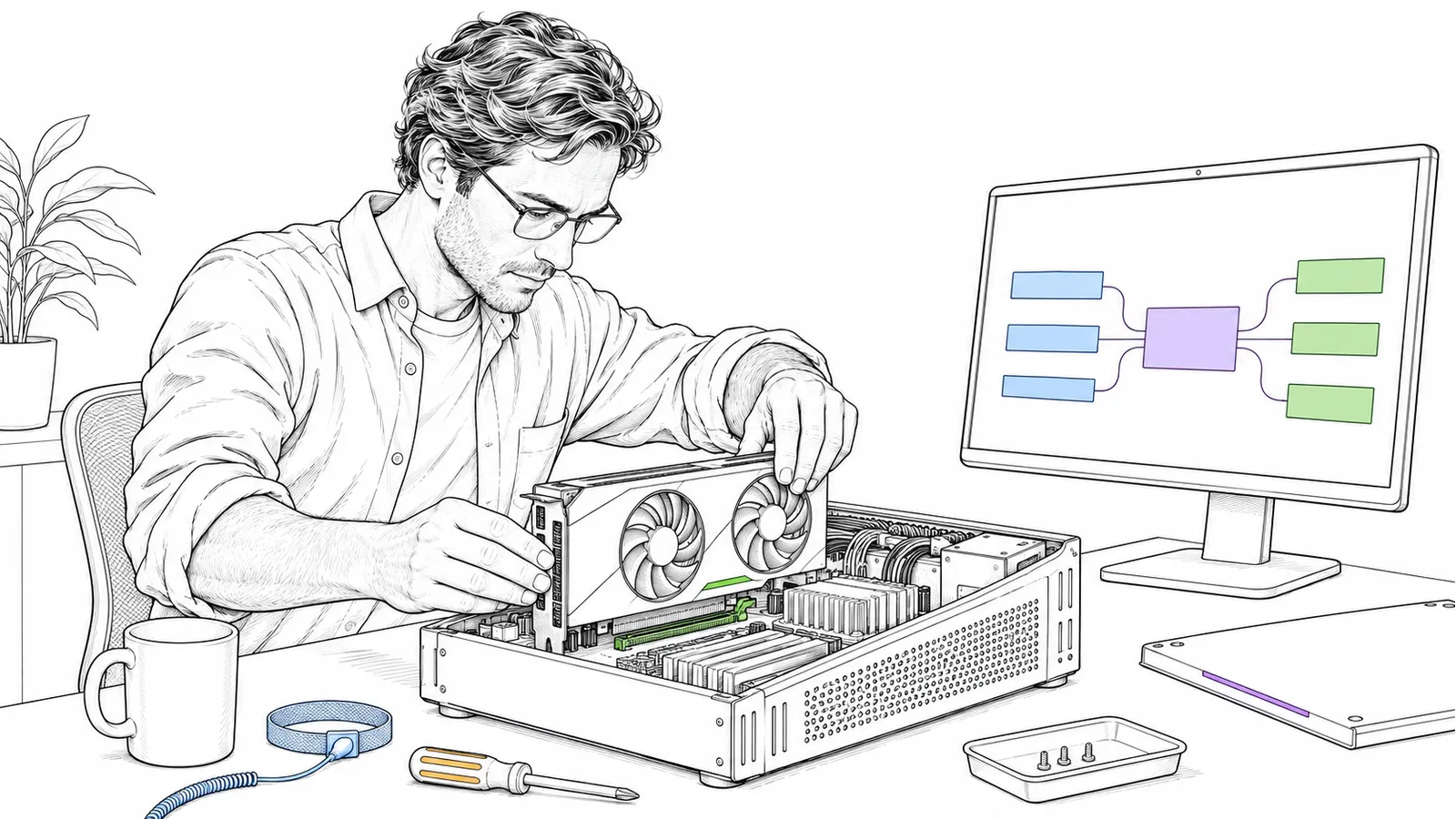
An employee places a compute card in a local server.

Knowledge

What is Gemma?

Gemma is Google's family of open models that you can download and run yourself.

A programmer reviews a proposed block on a monitor.

Knowledge

What is GitHub Copilot?

GitHub Copilot is GitHub's coding assistant, which suggests code and increasingly carries out tasks itself.

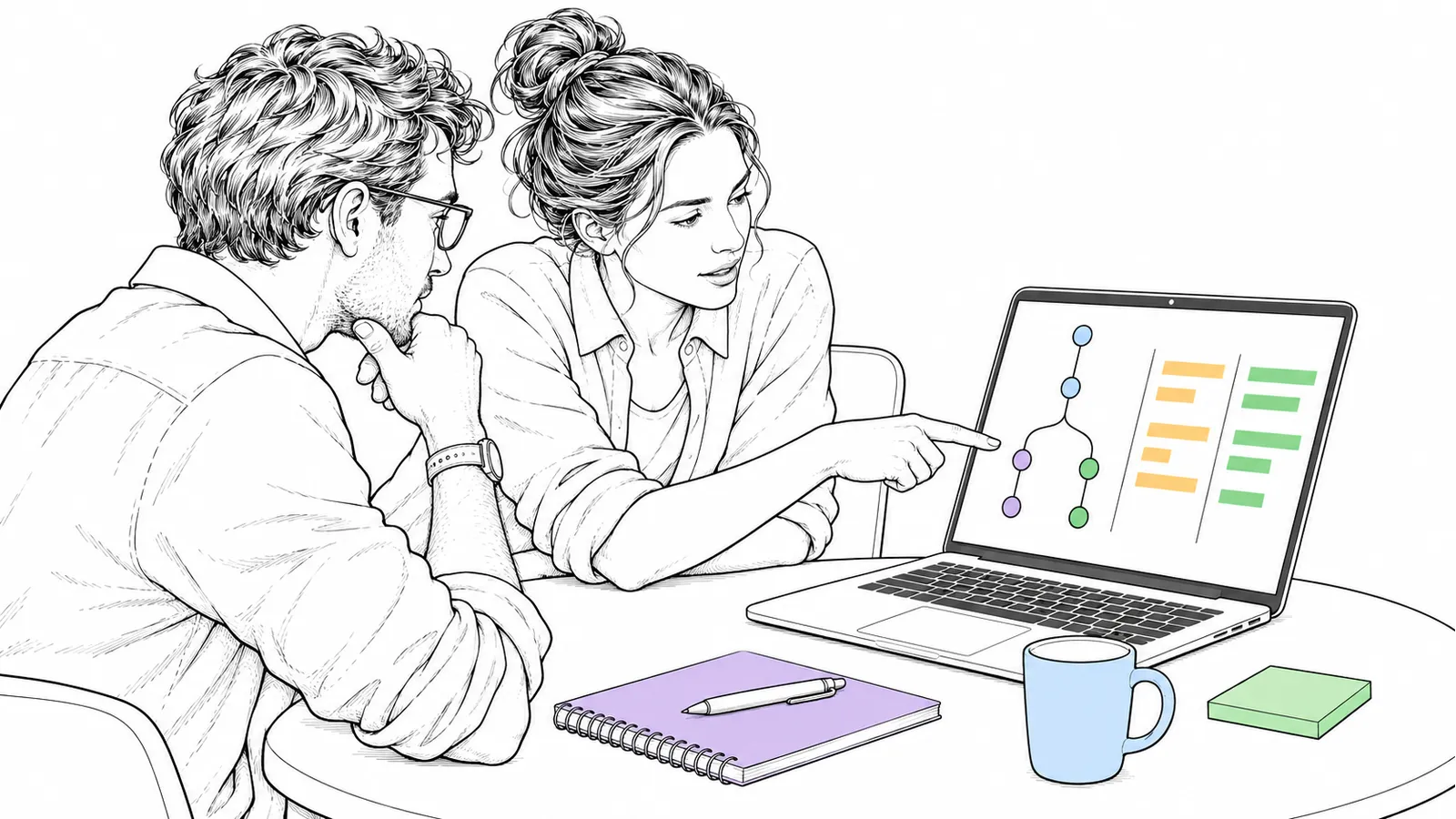
Two developers study a laptop with branching lines and two columns of blocks.

Knowledge

What is GitHub?

GitHub is where developers keep and share code, with AI help for programmers added.

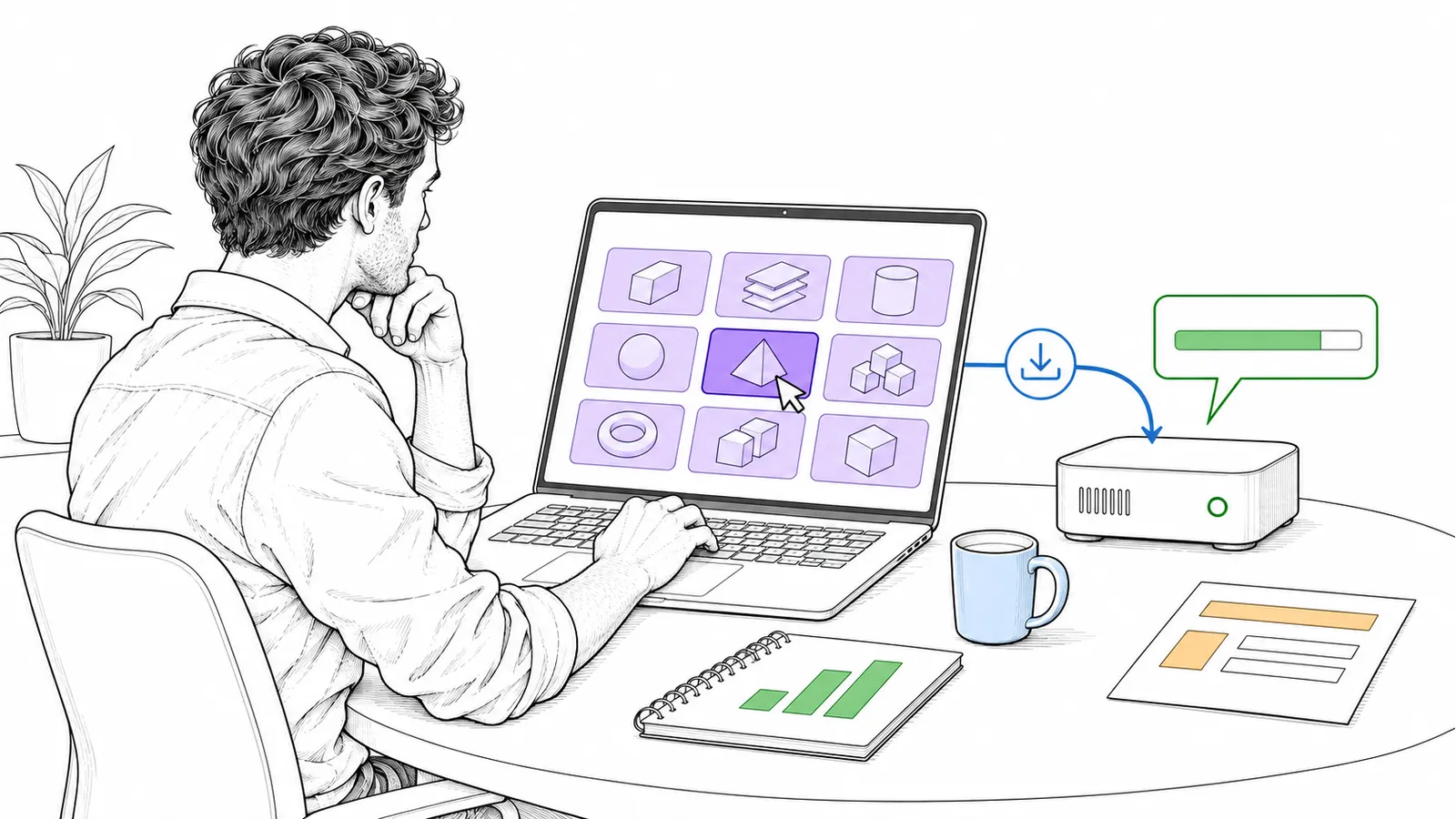
A developer selects a model from a laptop catalogue.

Knowledge

What is Hugging Face?

Hugging Face is a place where open models are available, next to Azure and Ollama.

A person works on a laptop beside a small server and a document.

Knowledge

What is Llama?

Llama is Meta's open language model, which you can run yourself under its own licence.

A maker views a picture and a strip of film frames.

Knowledge

What is Midjourney?

Midjourney makes AI models for images, first for pictures and since June 2025 also for video.

An employee works with a laptop and a local server.

Knowledge

What is Mistral AI?

Mistral AI makes AI models, some with open weights, so you can run them on your own server.

A worker uses a screen with conversation blocks and code blocks.

Knowledge

What is OpenAI?

OpenAI is the company behind ChatGPT and Codex.

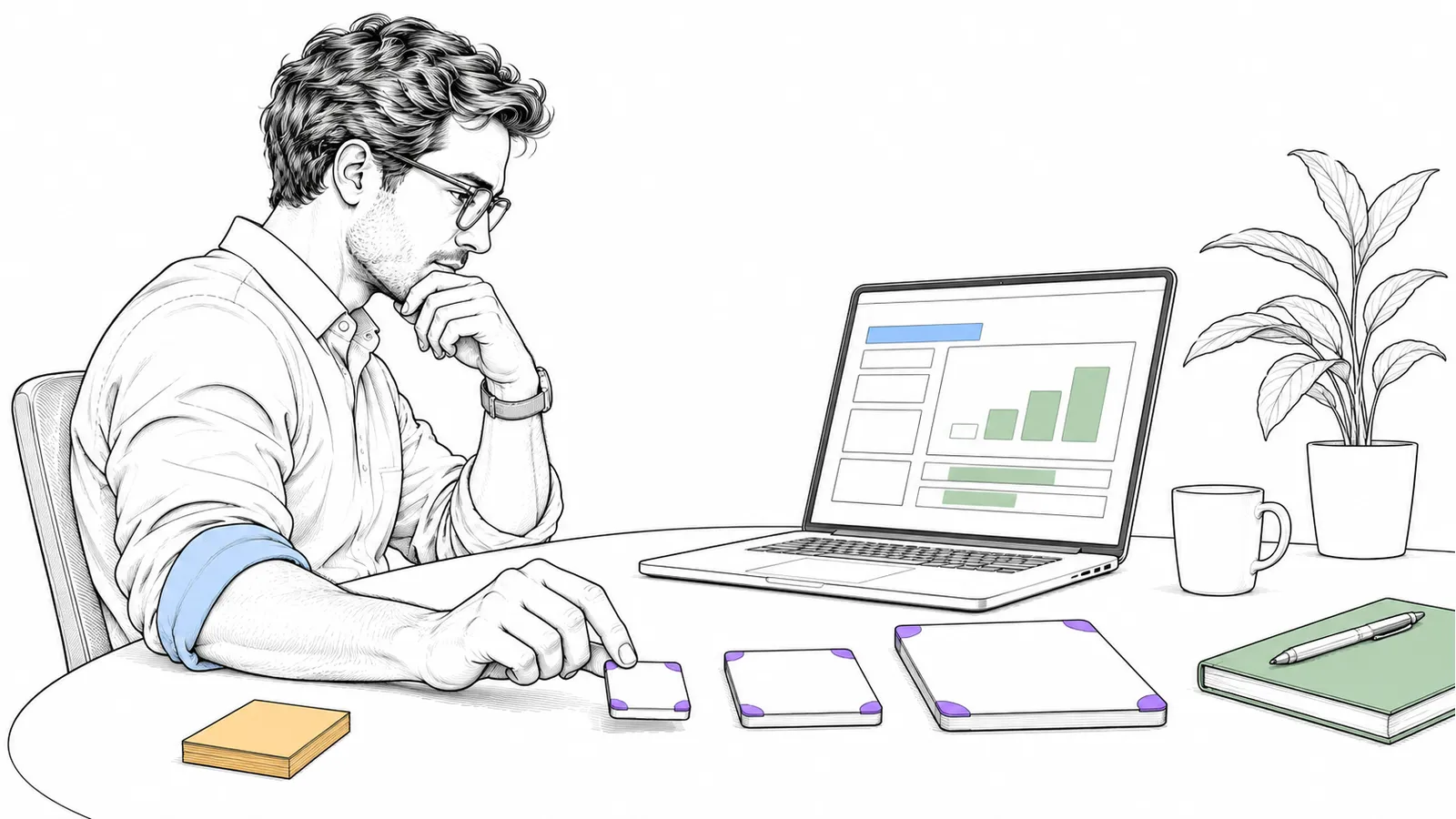
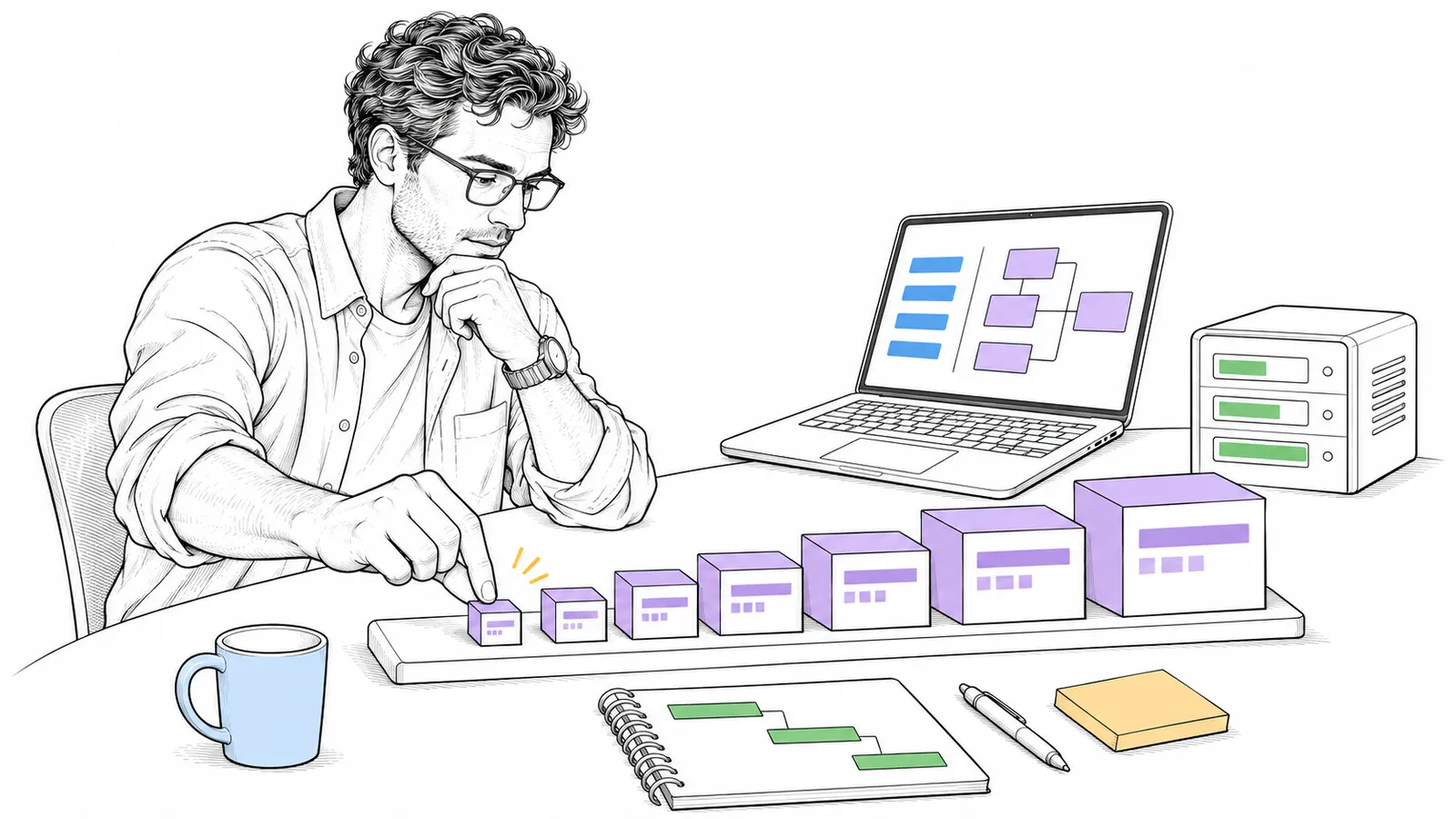
A developer selects from seven modules of different sizes.

Knowledge

What is Qwen?

Qwen is the family of open models from Alibaba's Qwen team, in many sizes.

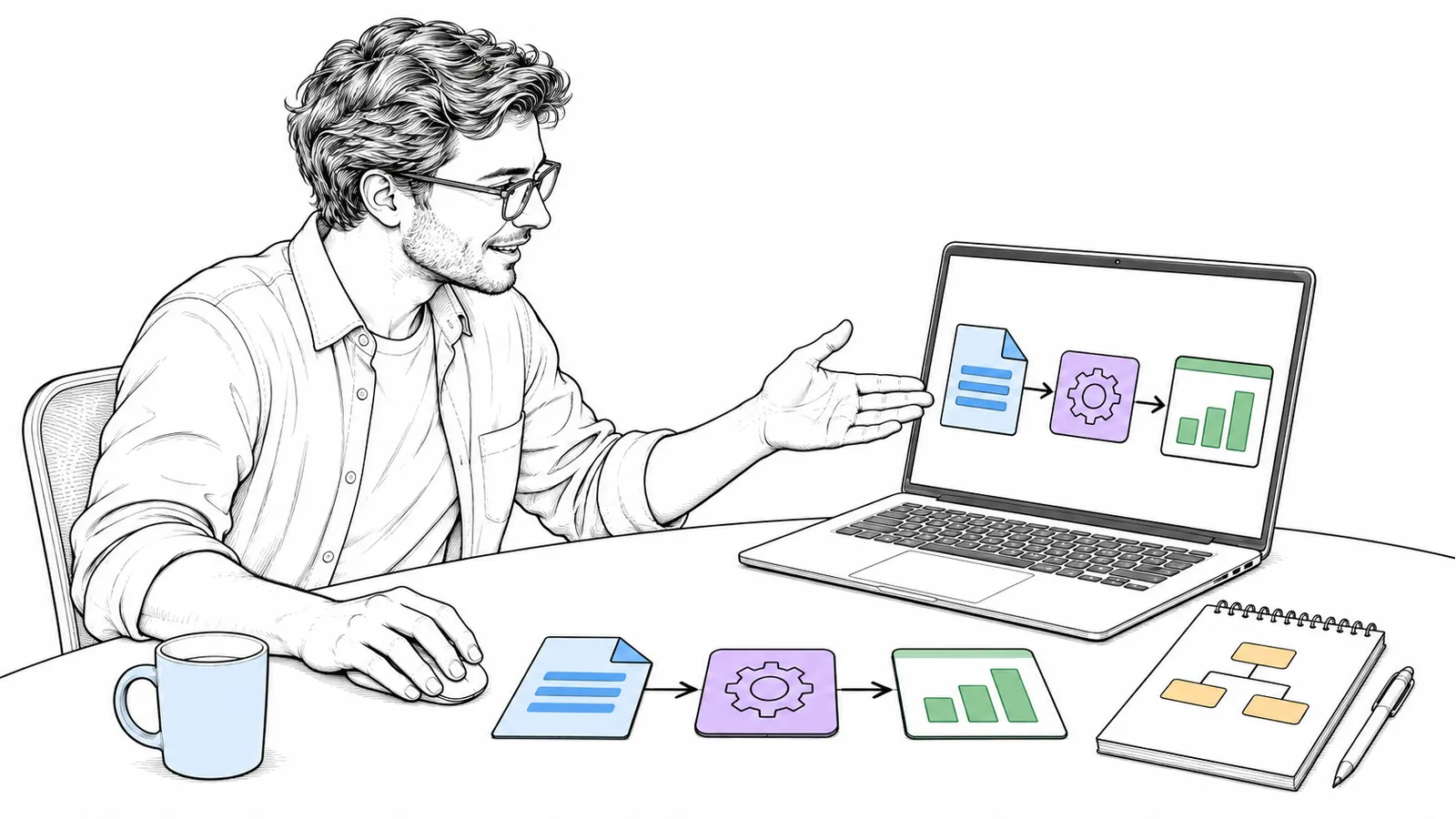
A developer works at a laptop beside a small chain from document to screen.

Knowledge

Who is Andrej Karpathy?

Andrej Karpathy writes and talks about language models and about making software, and gave vibe coding its name.

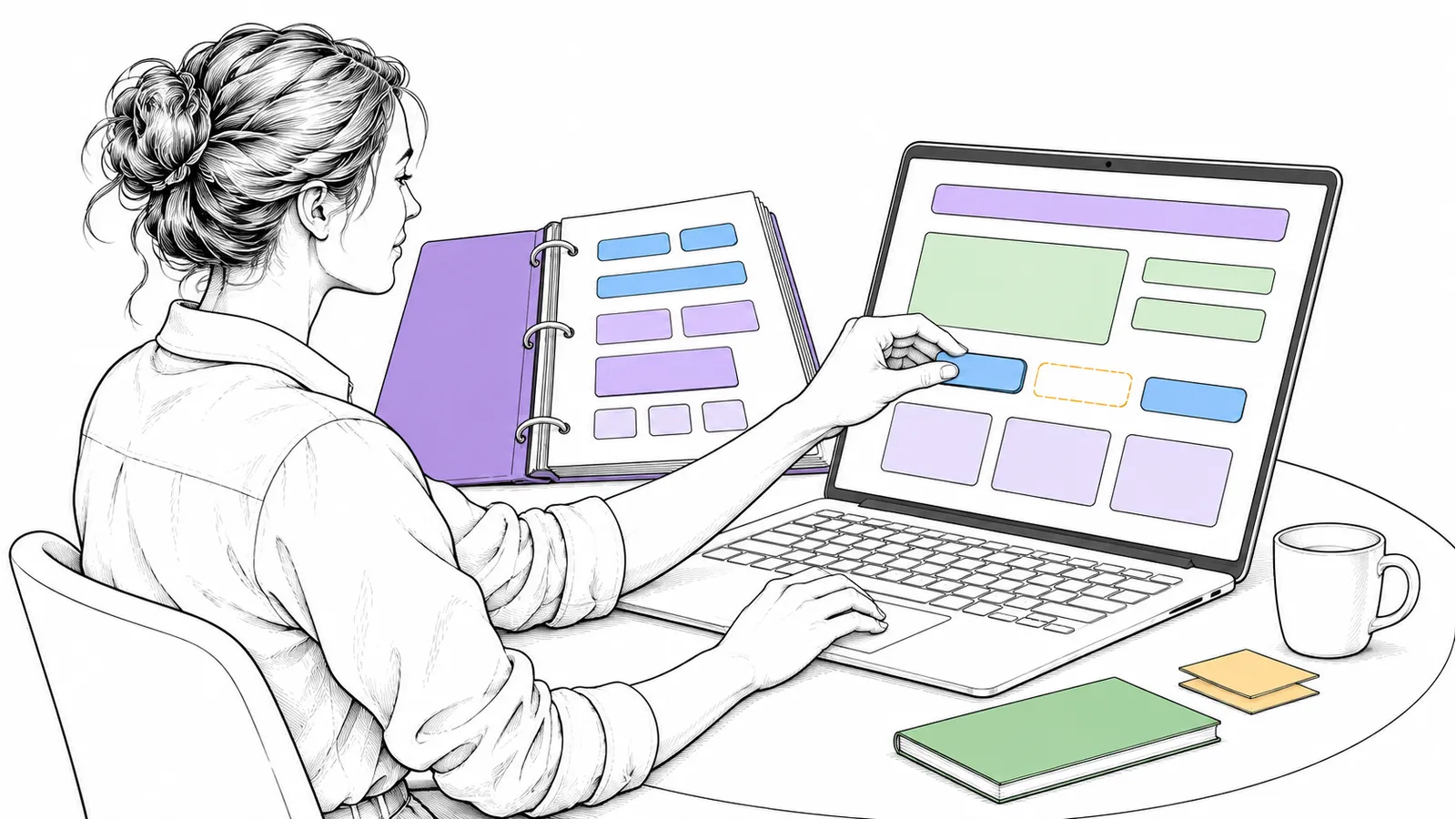
A designer selects interface parts beside a laptop.

Knowledge

21st.dev and shadcn/ui: building blocks you own
With shadcn/ui and 21st.dev you put ready-made parts into your own code, and then change them. That way you build fast, without being tied to a library.

A buyer and a supplier examine model information in a folder.

History

A code of practice for general-purpose AI model makers
The European Commission published a voluntary way to demonstrate obligations for general-purpose AI models.

·

A developer reviews a proposed change beside a task card.

History

A GitHub task can go to the Copilot agent
GitHub introduced a coding agent that prepares a proposed change from an assigned task.

·

Three colleagues compare a website on different screens.

Knowledge

A site in fourteen languages: how to approach i18n
Multilingual is not a translation job at the end. It starts with how you set up your code: no text in the code, keys per area, and every language tested.

An employee connects a cable beside two model modules and a laptop.

History

Access to Fable 5 and Mythos 5 is restored
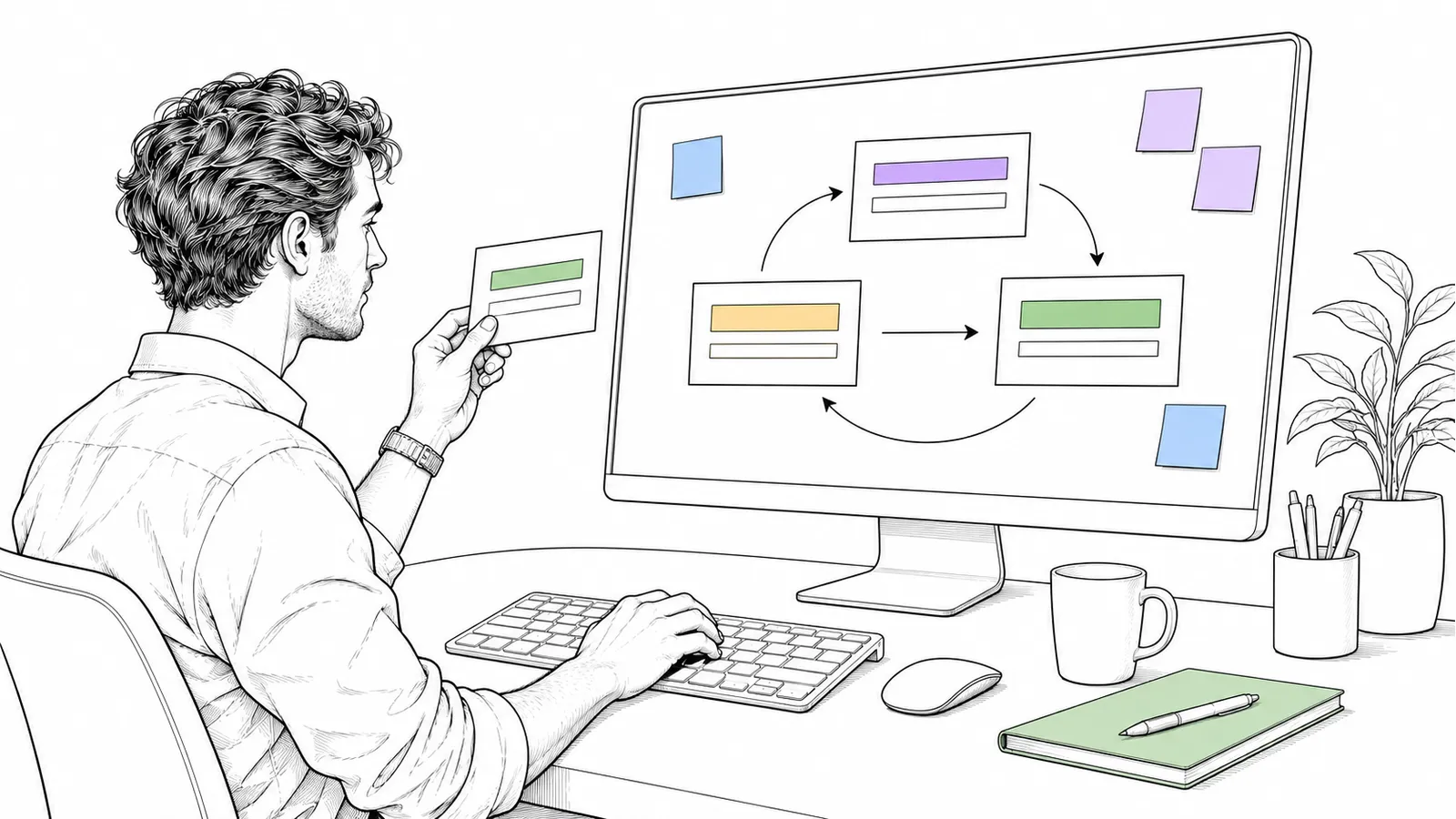
Anthropic reported on 1 July 2026 that access to Claude Fable 5 and Claude Mythos 5 was being restored.

·

An employee views a work loop with a fault and a repaired part.

Knowledge

Agent loops that check themselves and keep going until done
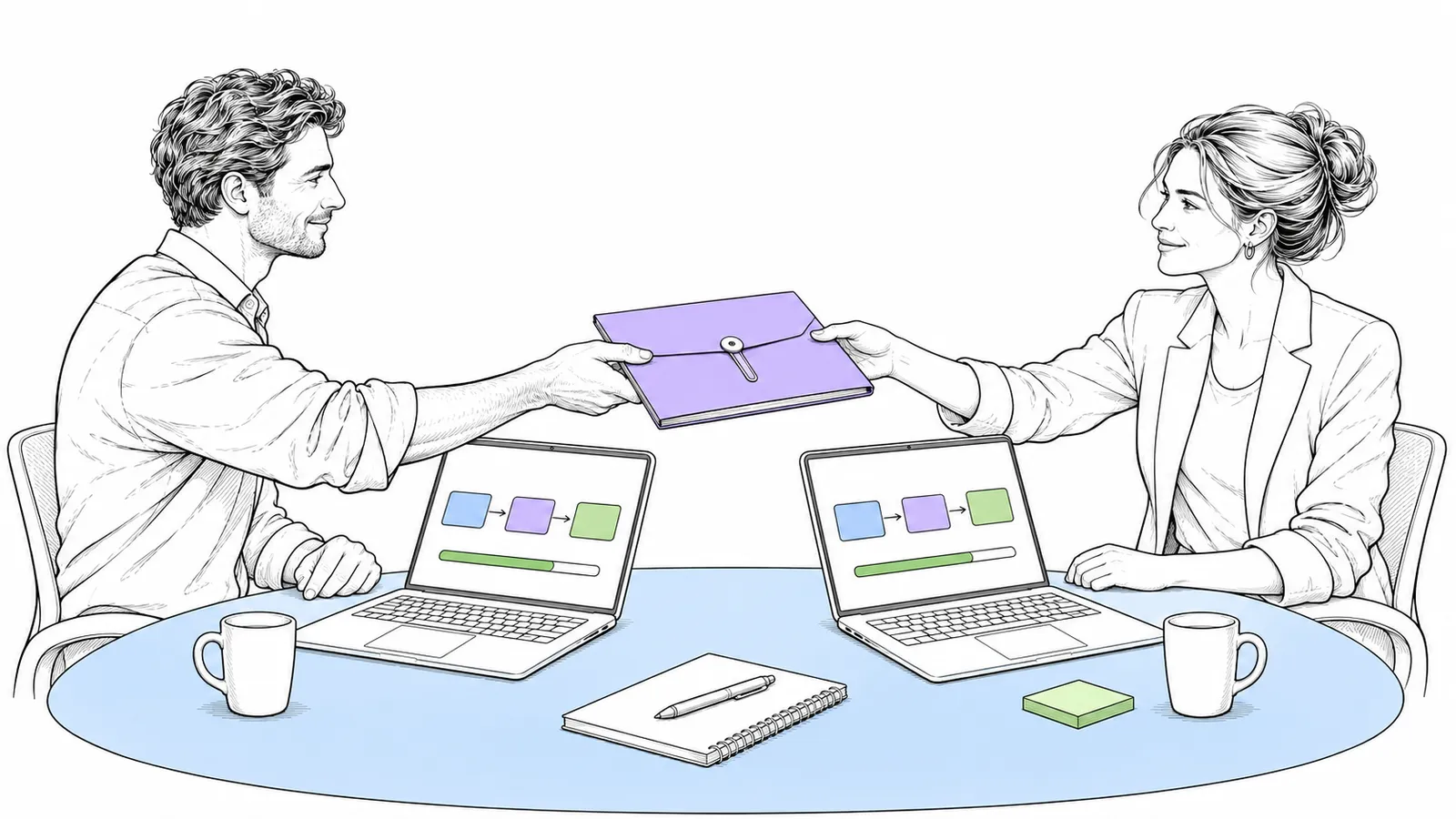
How do you make an agent keep working until the result is there, check itself and improve, without you steering every step?

Two colleagues use the same instruction folder with two different laptops.

History

Agent Skills gain an open standard
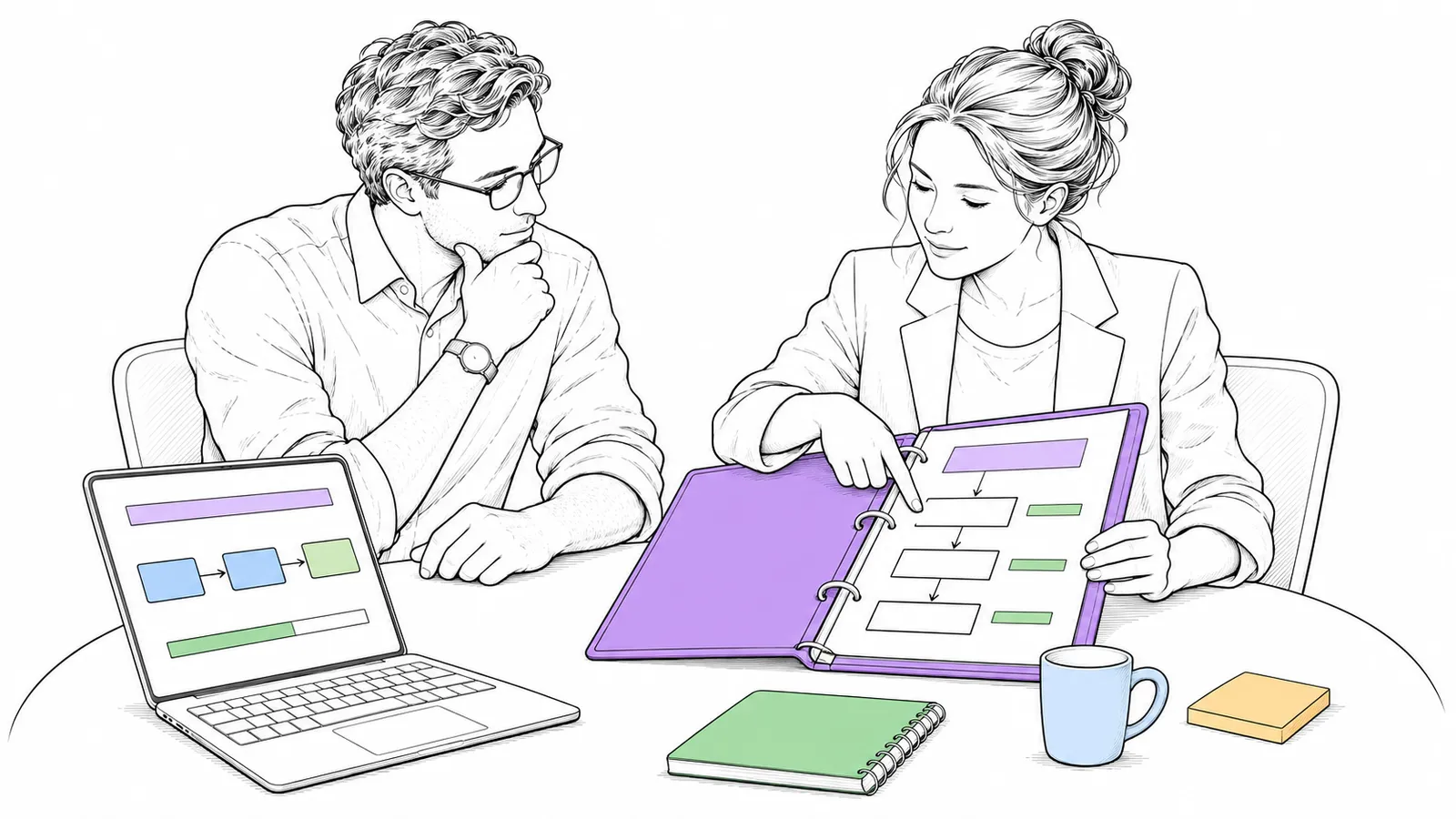
Anthropic announced a shared format for skills and expanded access to Claude in Chrome.

·

Two colleagues review a purple instruction folder beside a laptop.

History

Agent Skills make working instructions reusable
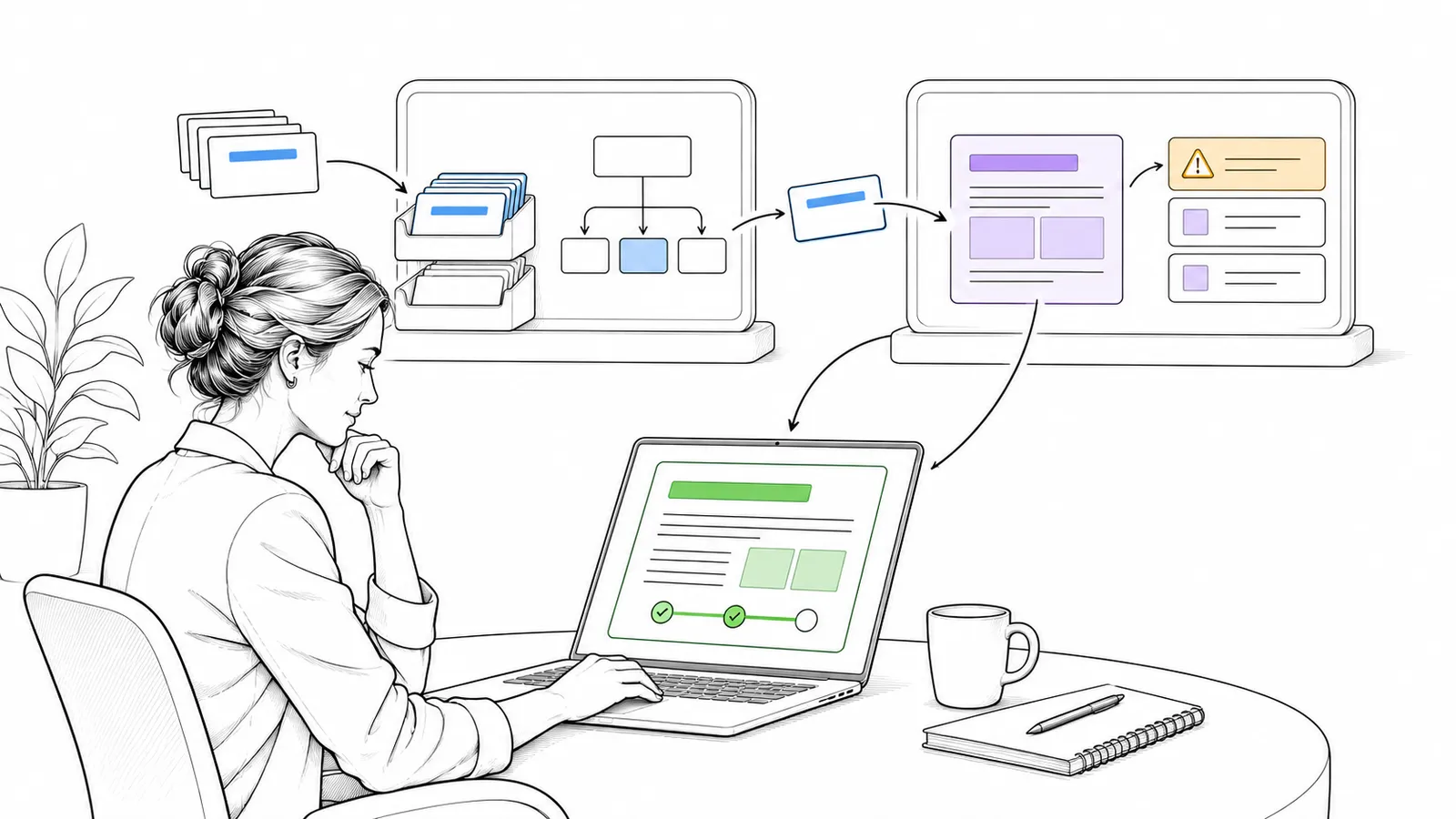
Anthropic introduced folders of instructions that agents can load when needed.

·

An employee follows the handover from an enquiry to a draft answer.

History

Agent2Agent gives agent collaboration a protocol
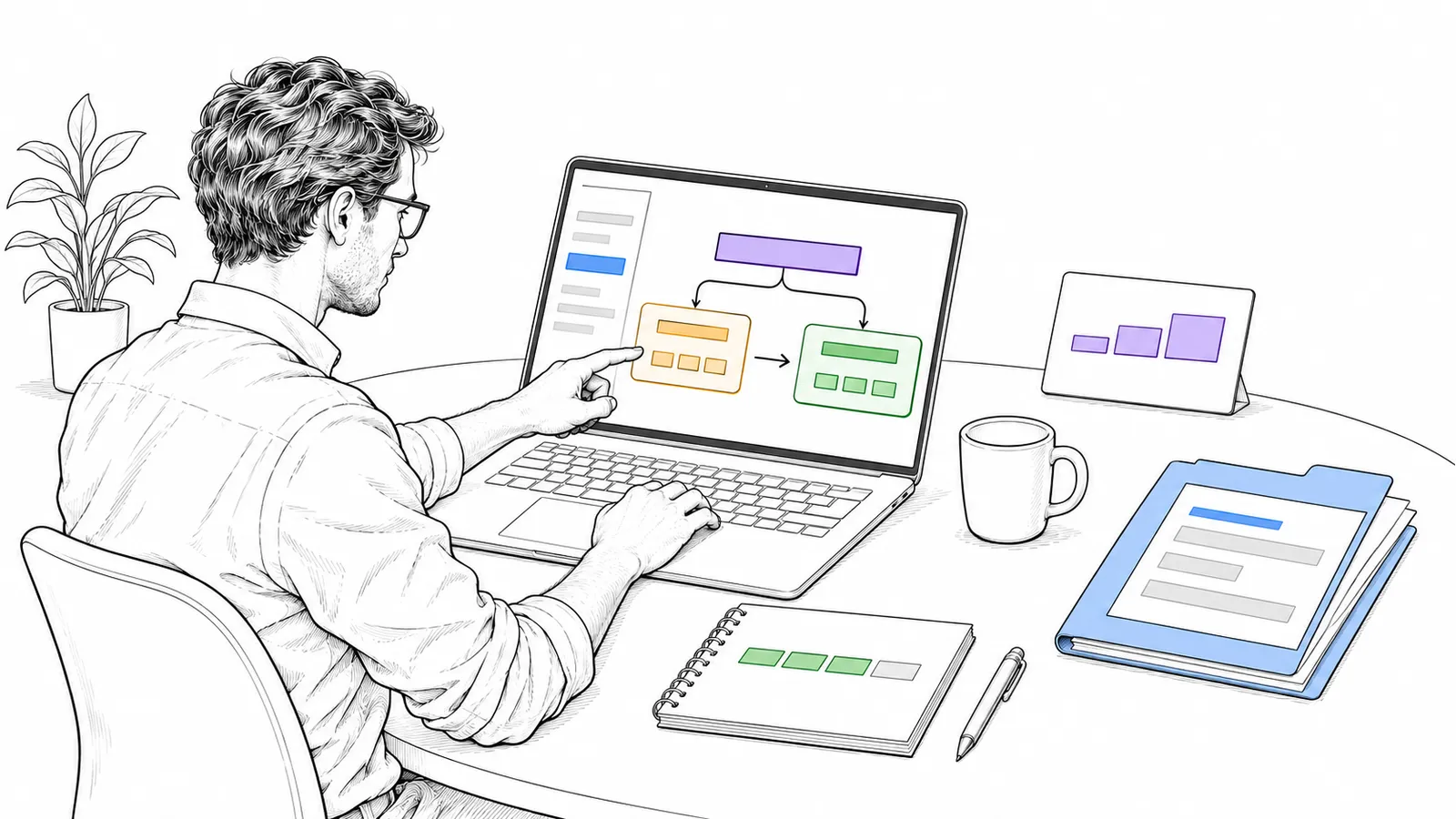
Google presented A2A as an open protocol for communication between agents from different makers.

·

A developer studies task blocks and test blocks on a laptop.

Knowledge

Agentic coding: tips and the skills we use
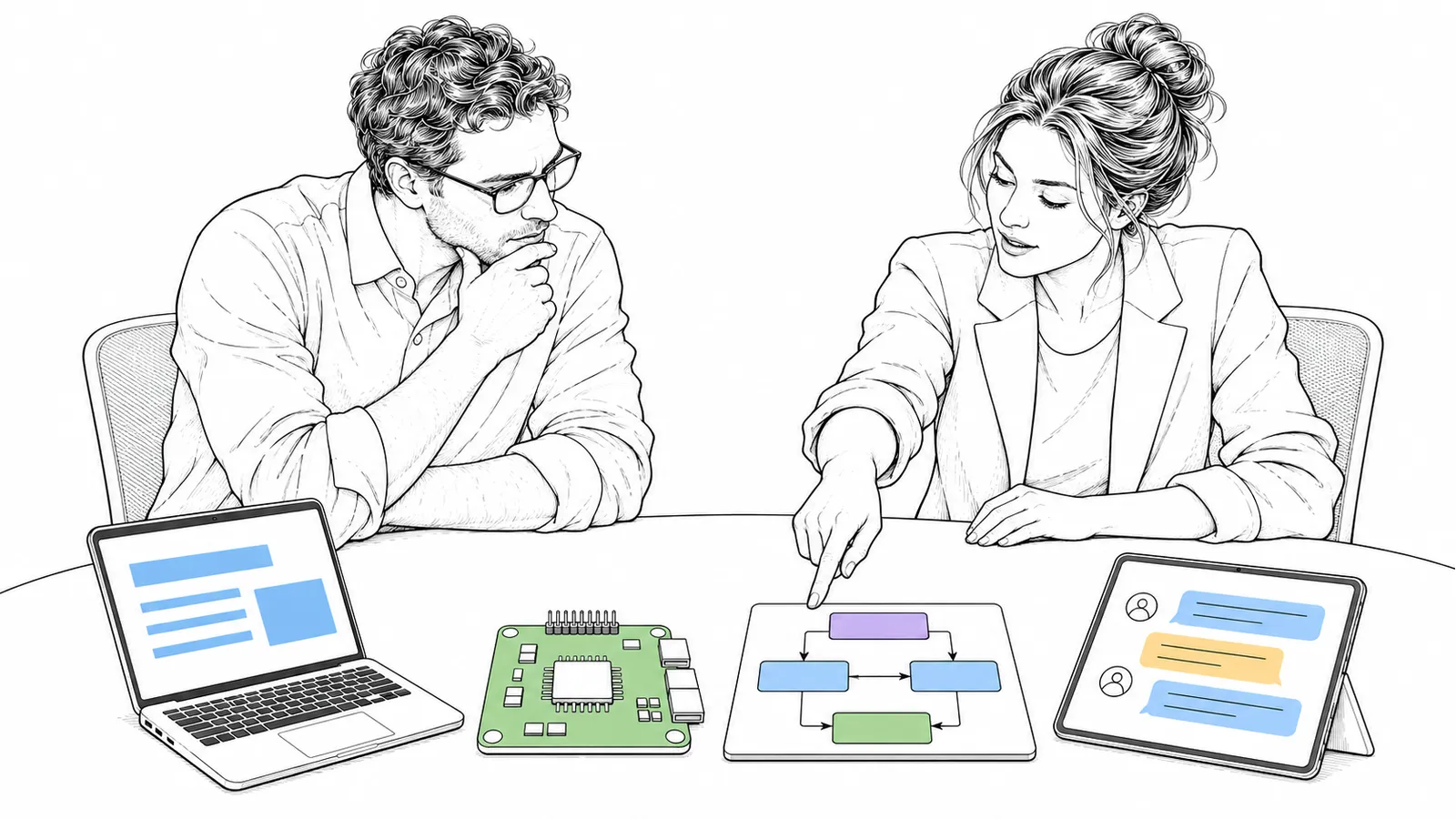
A coding agent writes fast. With a fixed frame it also writes well: one goal, a test first, small commits and skills you reuse everywhere.

Two people compare a laptop, a circuit board, connected blocks and a tablet.

Knowledge

Agentic platforms: which exist and which do you choose?
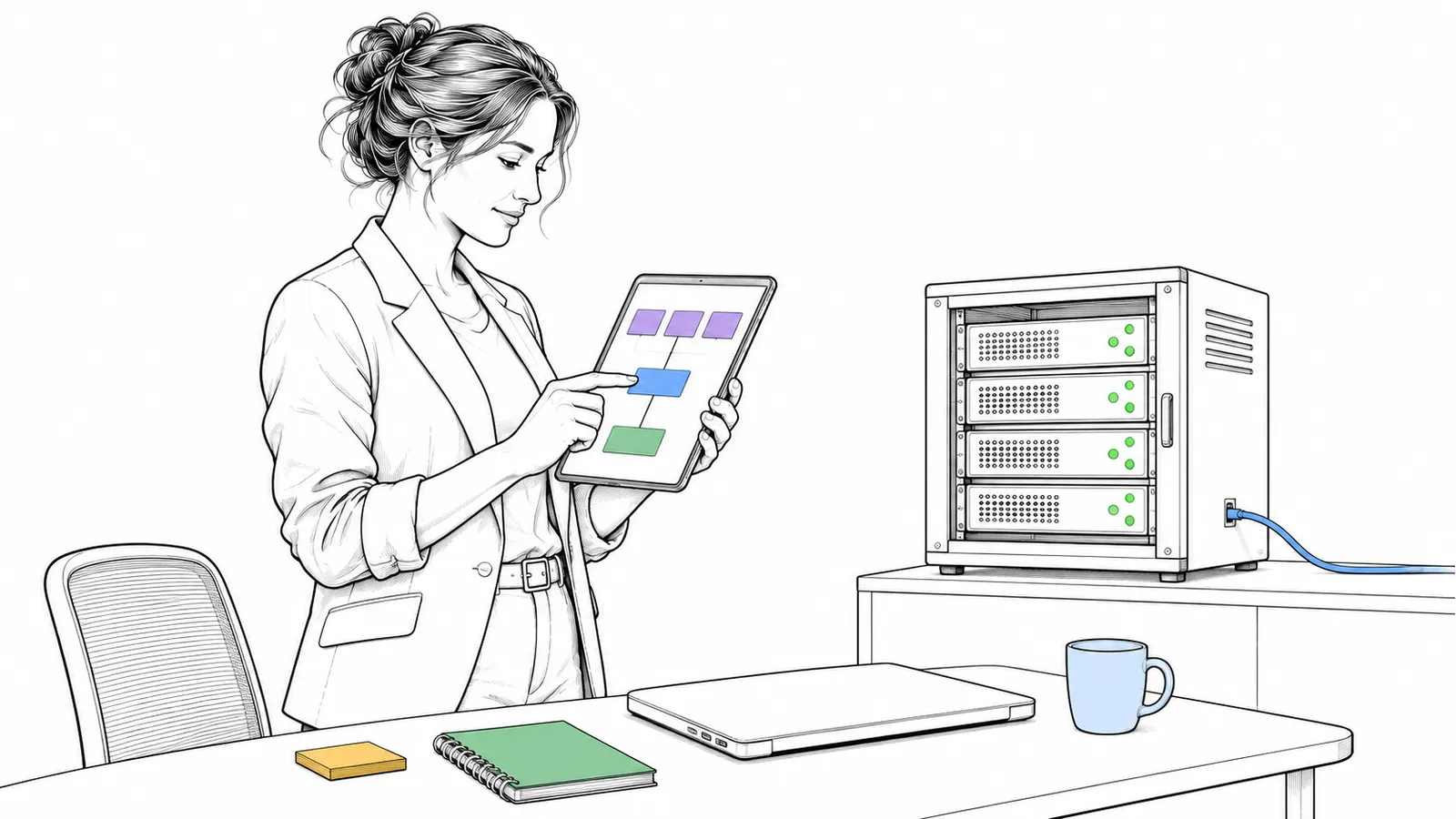
From an agent in your terminal to a workflow tool with AI blocks: four kinds, with their licence and when they fit.

A closed laptop stands beside an active server and a worker with a tablet.

Knowledge

Agents on your own server at Hetzner
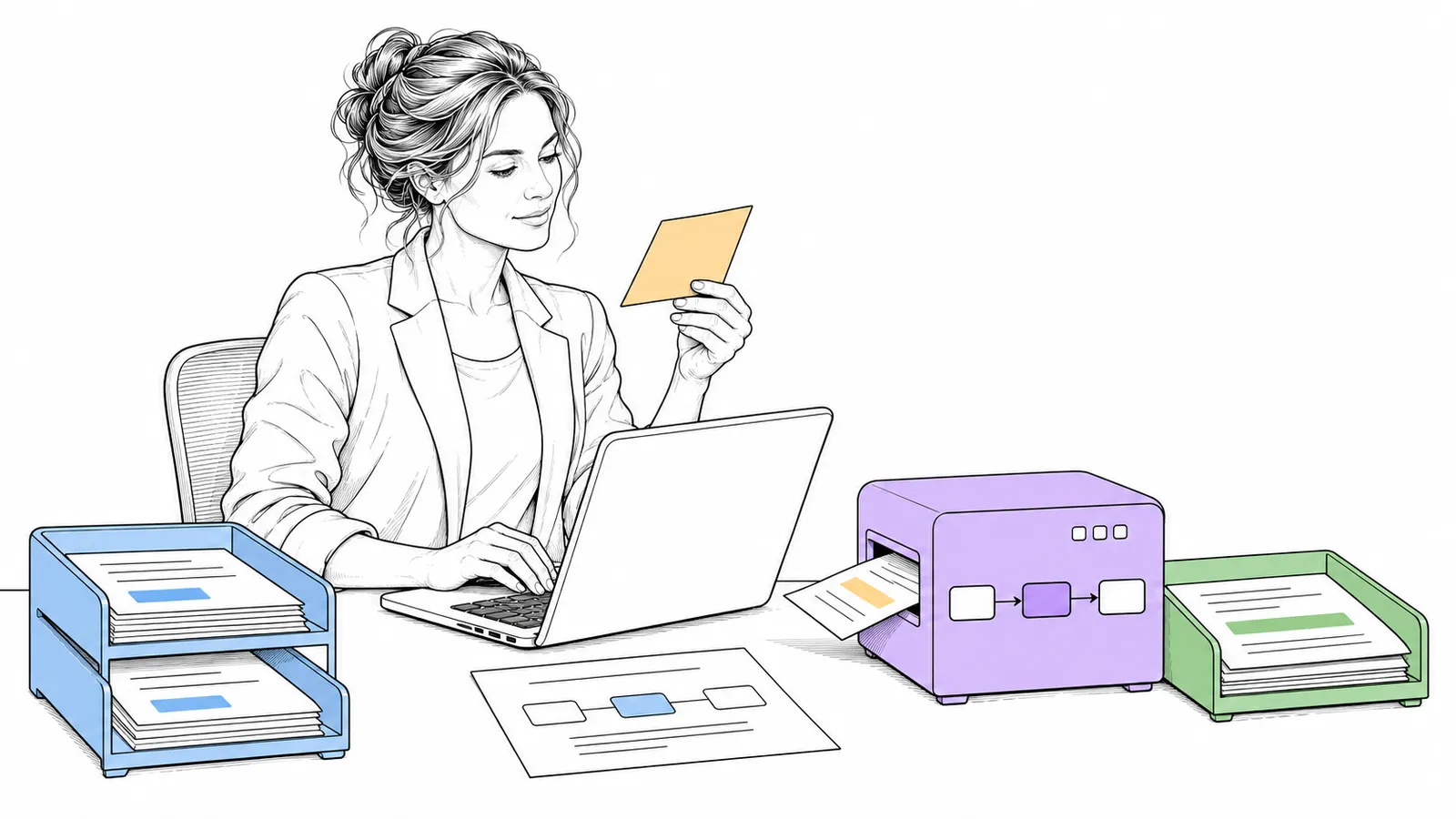
An agent that works for hours does not belong on your laptop. This is how you set up a server of your own where agents keep working safely.

A woman checks an orange card beside a laptop and document trays.

Knowledge

AI pipelines and the idea behind data science
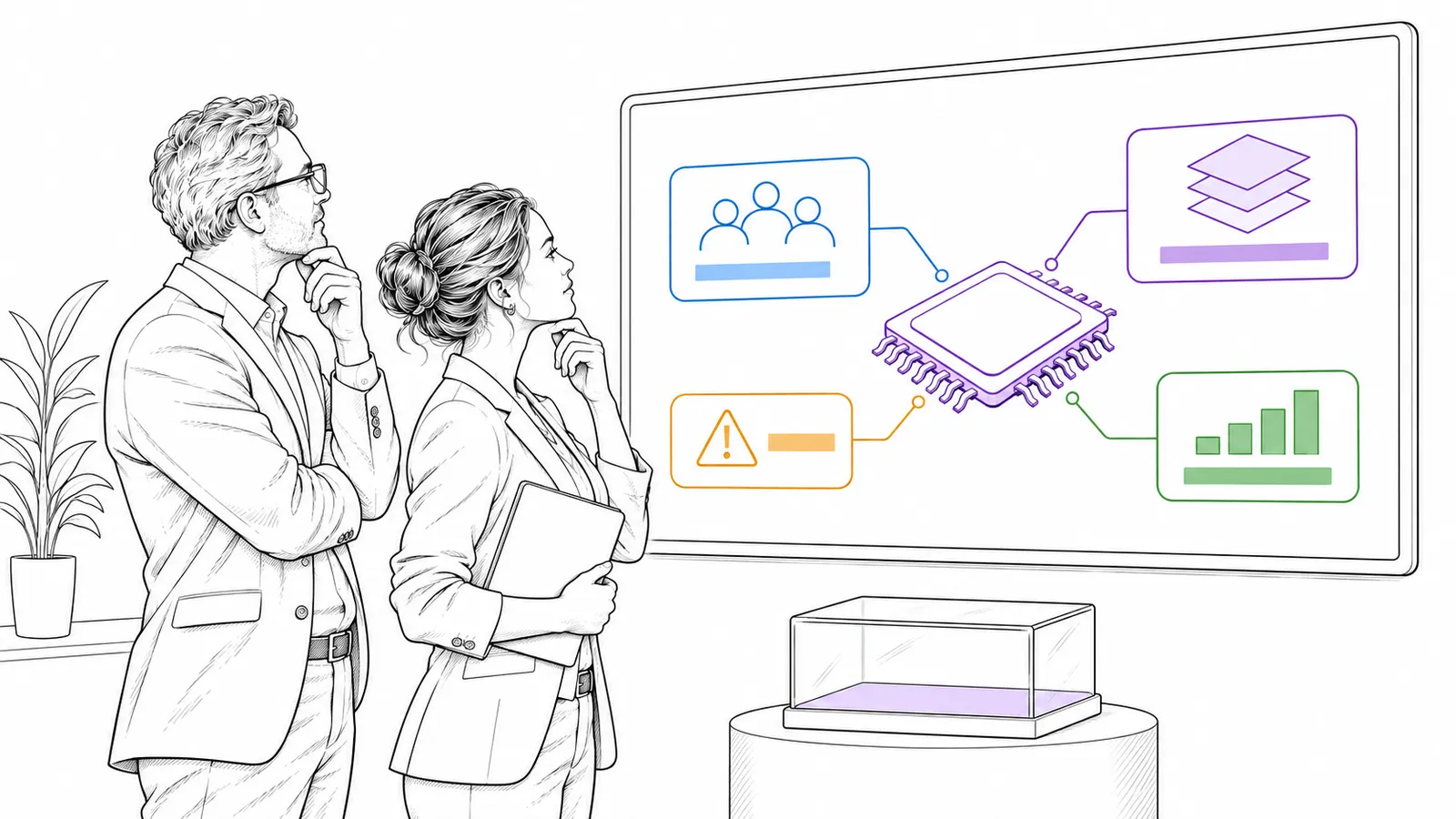
An AI pipeline is a fixed series of steps. AI reads, software calculates, people decide. This is how you build one you can trust.

Two people study a purple chip diagram on a presentation screen.

History

Alibaba shows Qwen 4 without a confirmed release
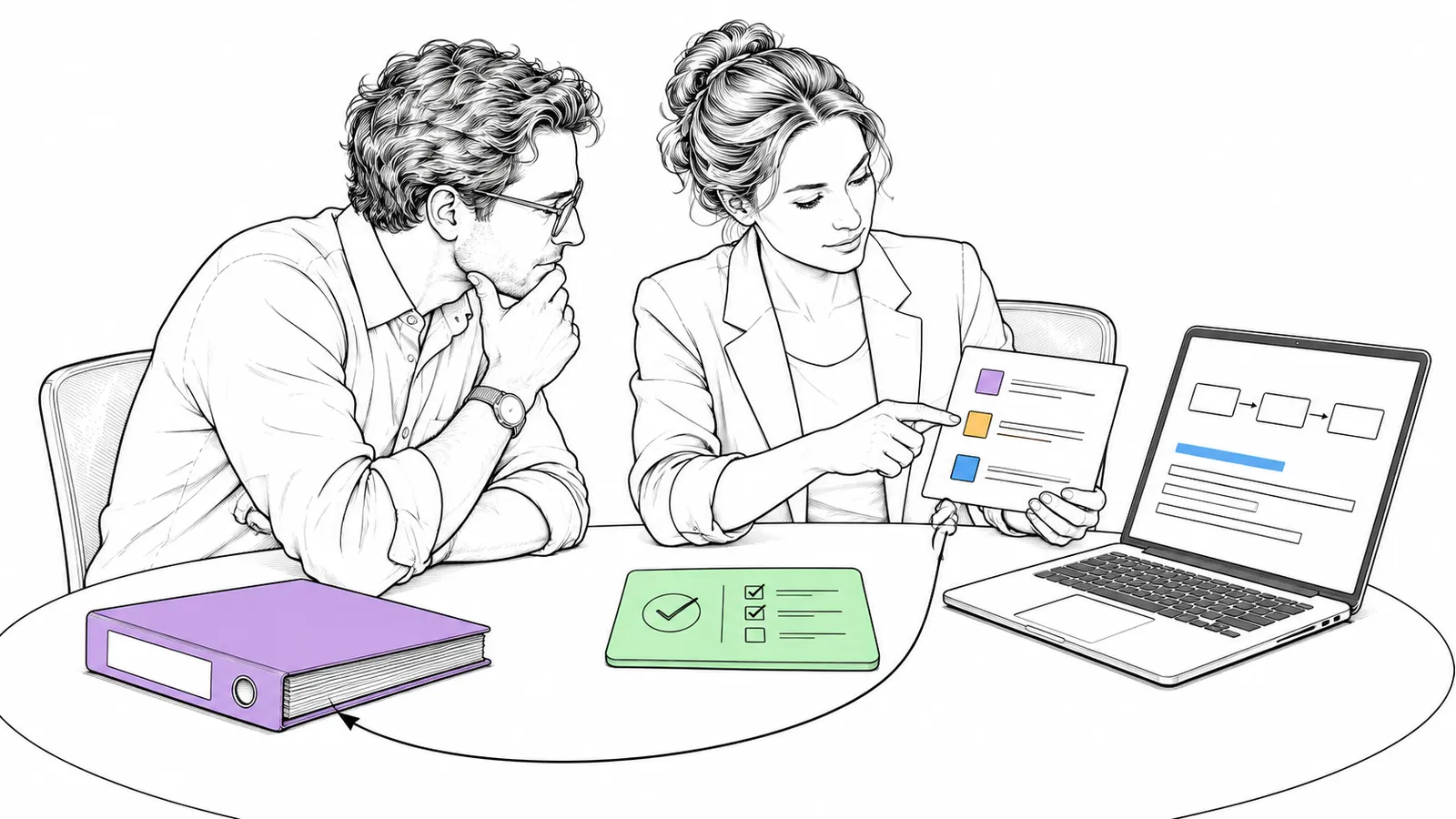
Alibaba presented Qwen 4 at Apsara on 22 September 2026; the source confirms no available model.

·

Two people compare a laptop result with a card and a checking panel.

Knowledge

An agent that does what you want, every time
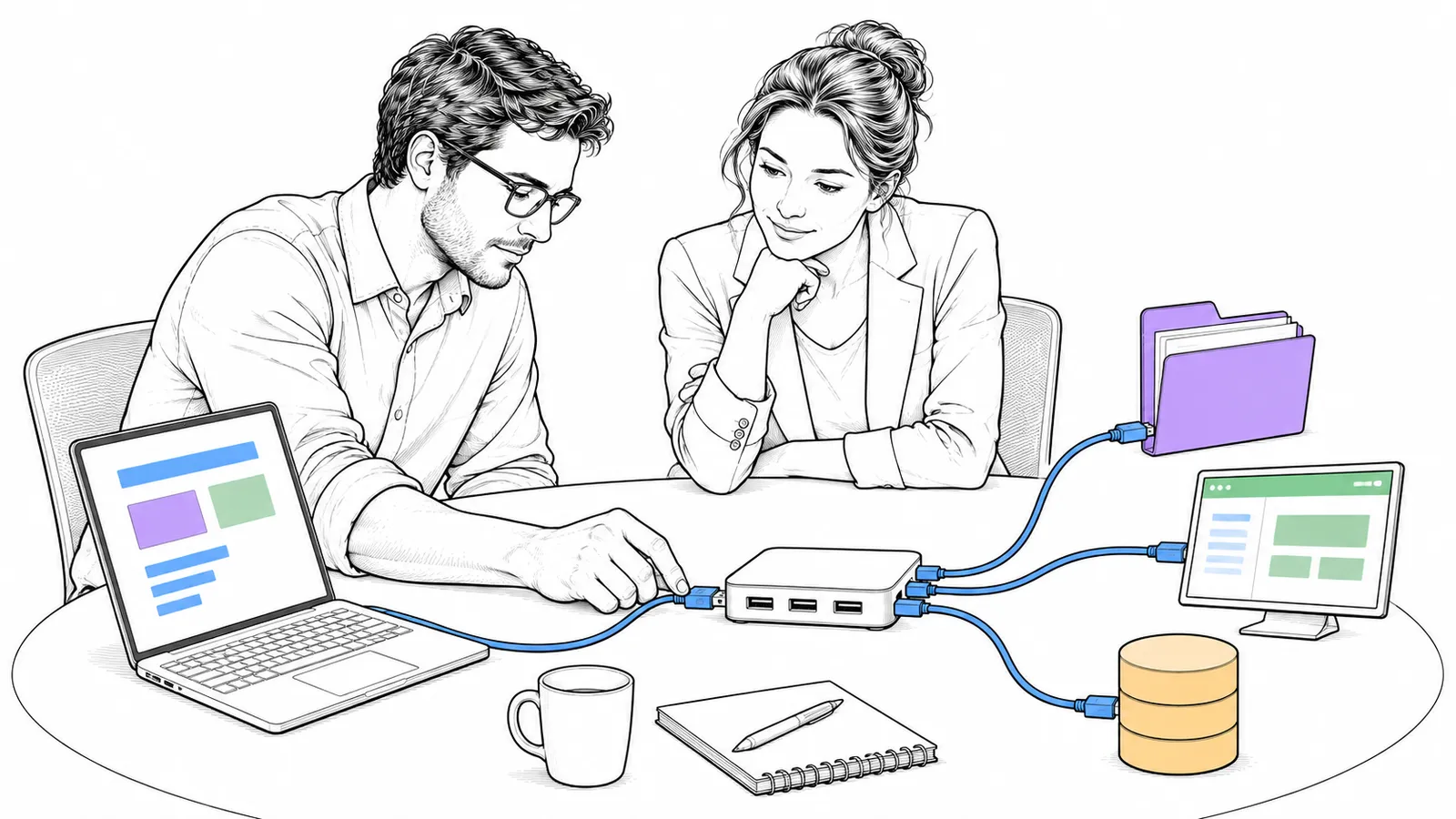
Consistent work from an agent does not come from a better prompt, but from fixed rules, a check and a learning loop.

Two colleagues review one connection to documents, software and storage.

History

Anthropic open-sources MCP

The Model Context Protocol becomes one open standard to connect AI assistants to your data and tools.

·

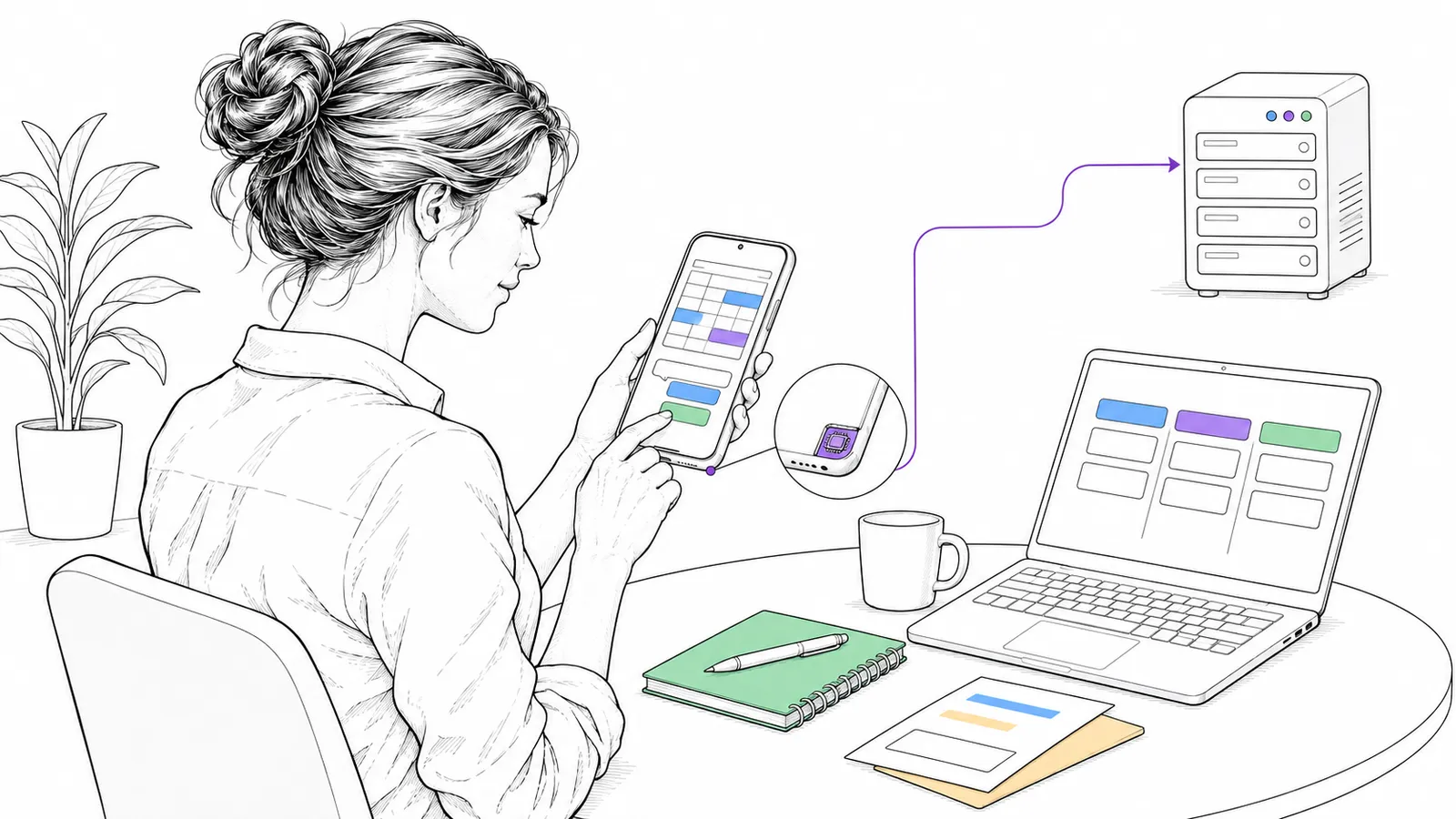
A worker uses a phone with a chip, with a server in the background.

History

Apple Intelligence: AI on the phone itself
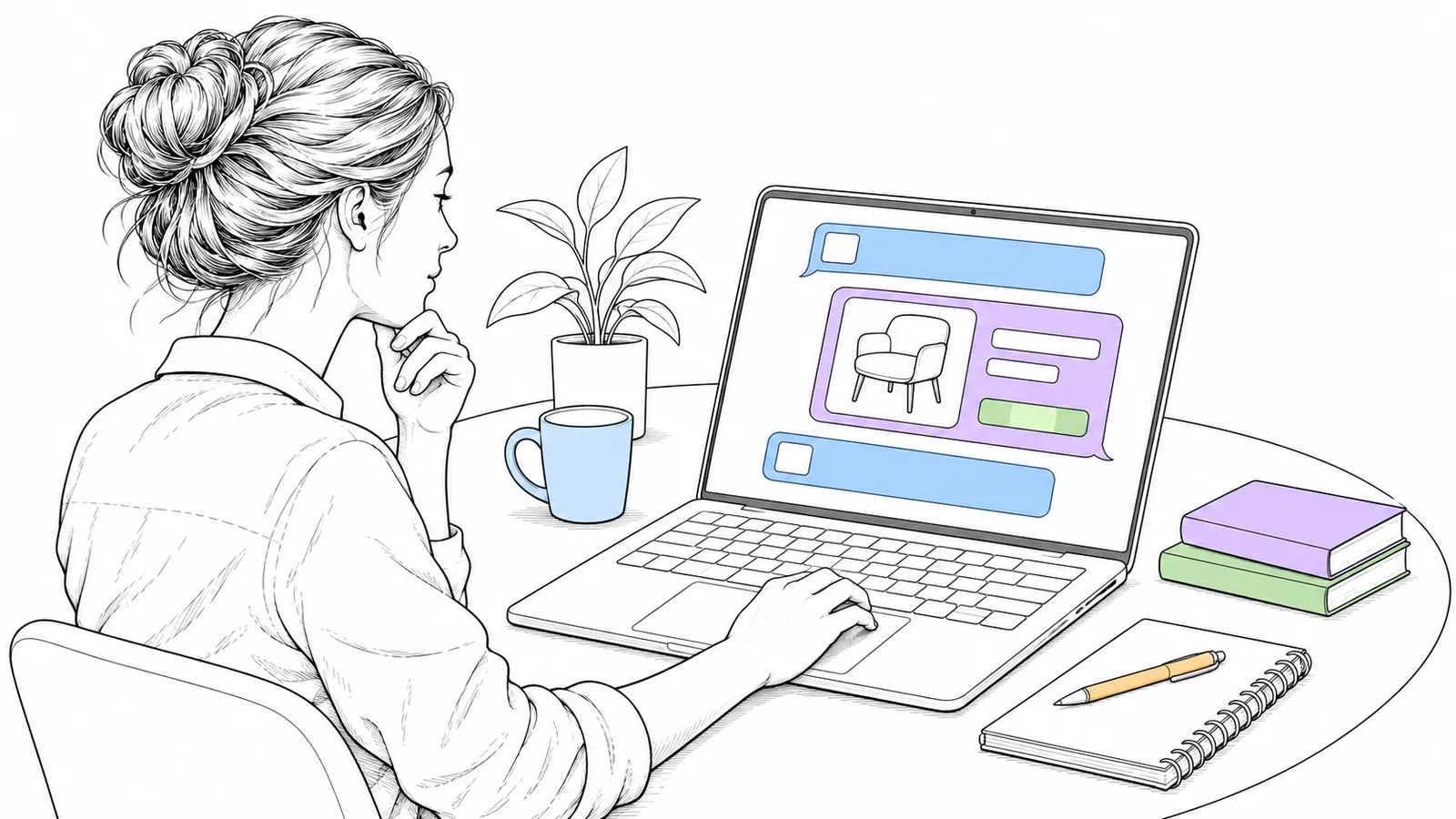
Apple announces Apple Intelligence for iPhone, iPad and Mac, with Private Cloud Compute for heavier work.

·

A worker views a product card inside a conversation on a laptop.

History

Apps gain a place inside ChatGPT
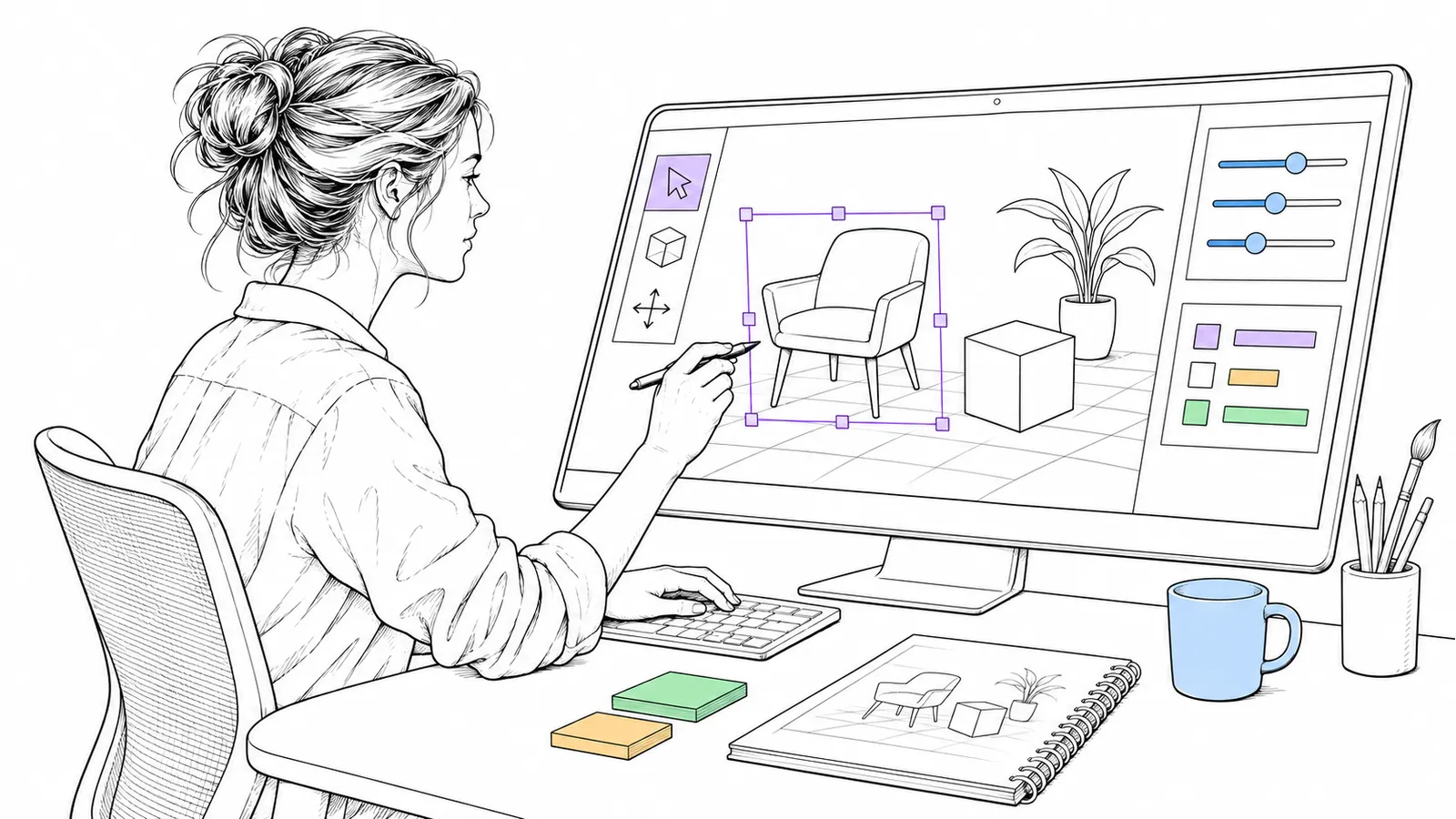
OpenAI introduced an MCP-based Apps SDK at DevDay.

·

A maker uses a stylus beside a screen showing a chair, a cube and a plant.

Vlog

ArtCraft: an open source workshop for images and video with AI
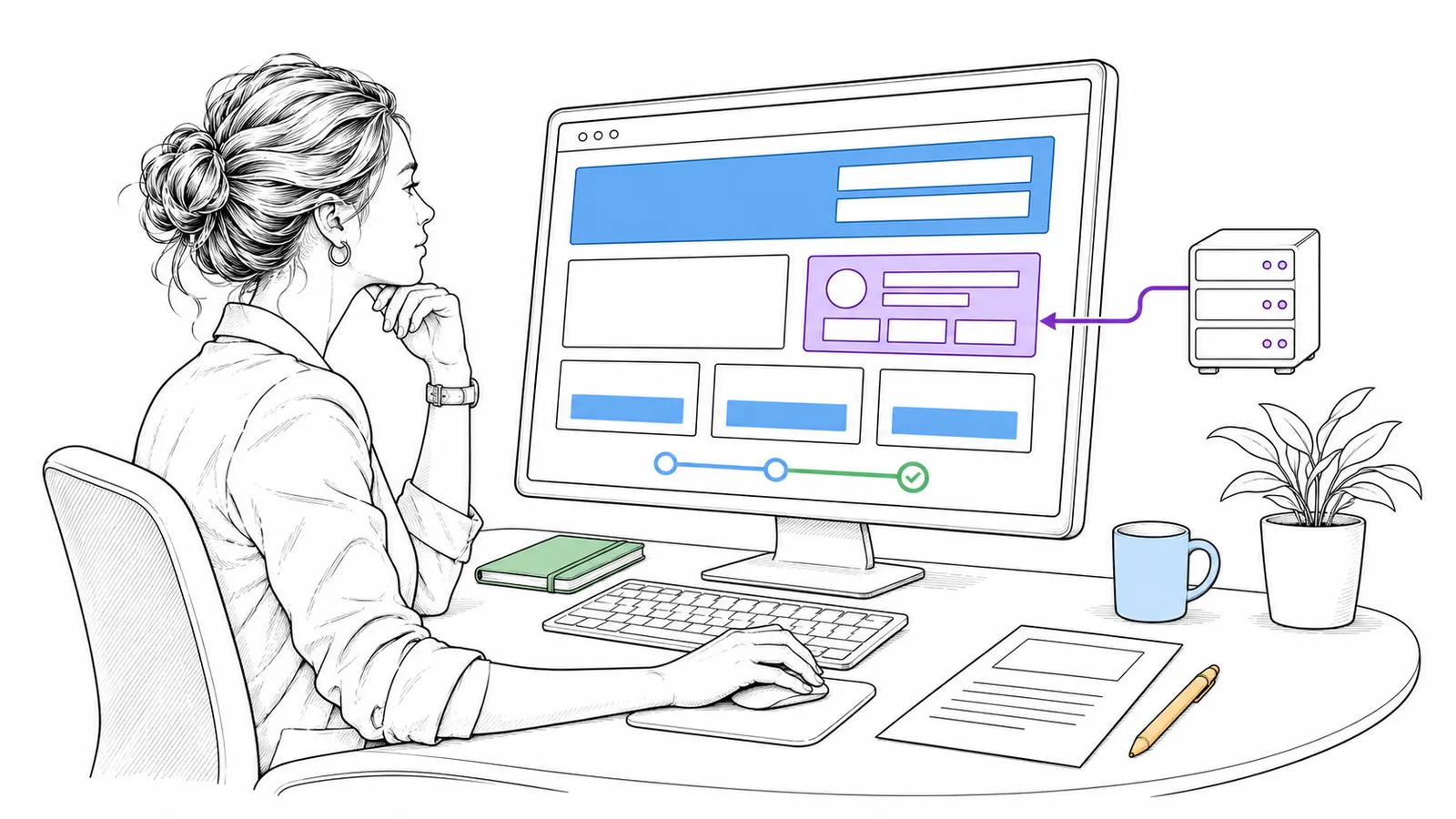
ArtCraft calls itself the IDE for artists: you build a scene in 2D and 3D, and choose the model that renders it.

A web editor reviews a page with fixed sections and a separate block.

History

Astro 5.0: Content Layer and Server Islands
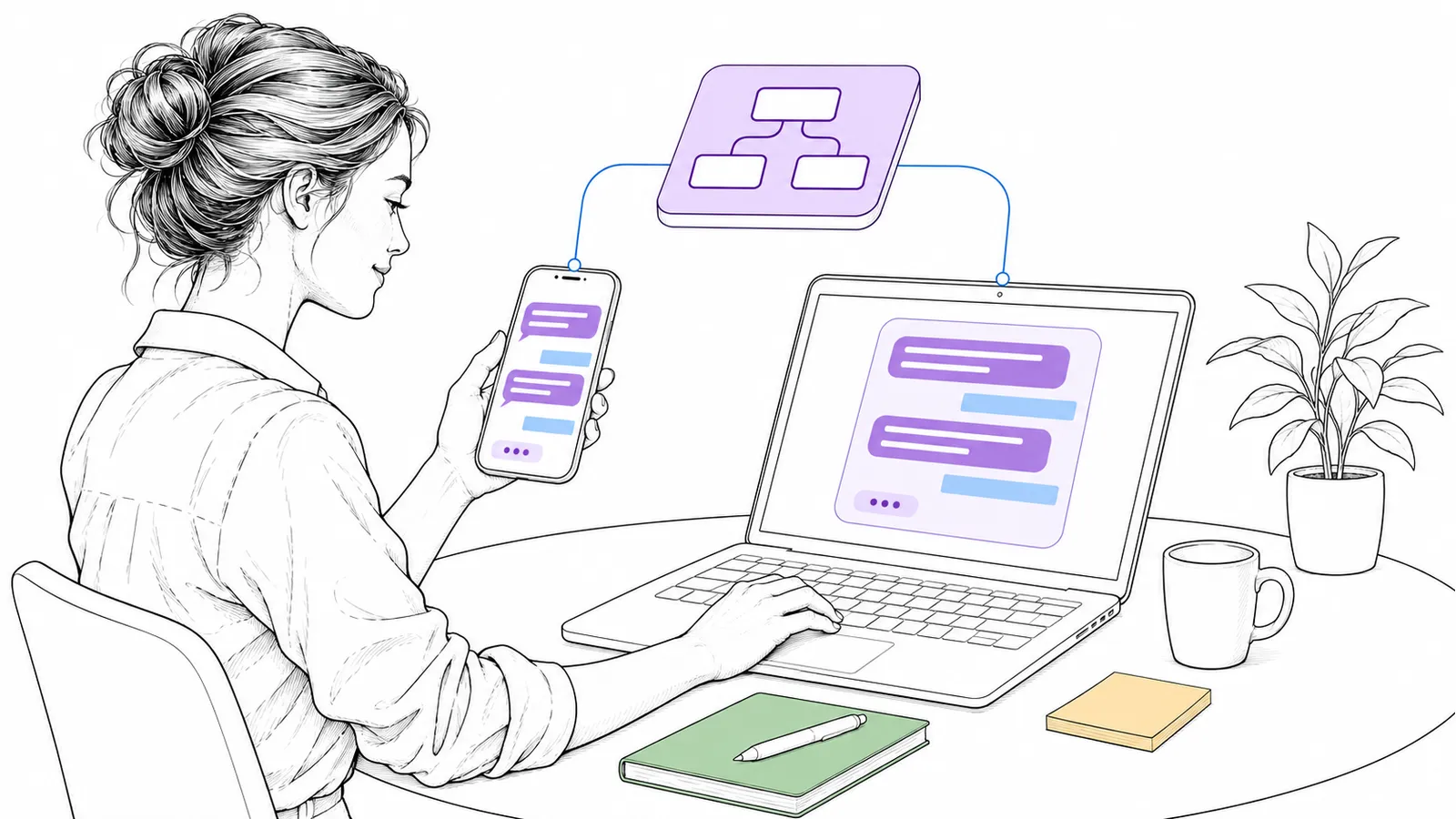
The web framework for content sites can load content from any source, and mix fixed and personal parts.

·

A worker uses a phone beside a laptop with matching purple conversation panels.

History

Bard is now called Gemini

Google gives its chat assistant and its models one name, and starts Gemini Advanced with Ultra 1.0.

·

A creator compares three images and three separate licence sheets.

History

Black Forest Labs starts with FLUX.1
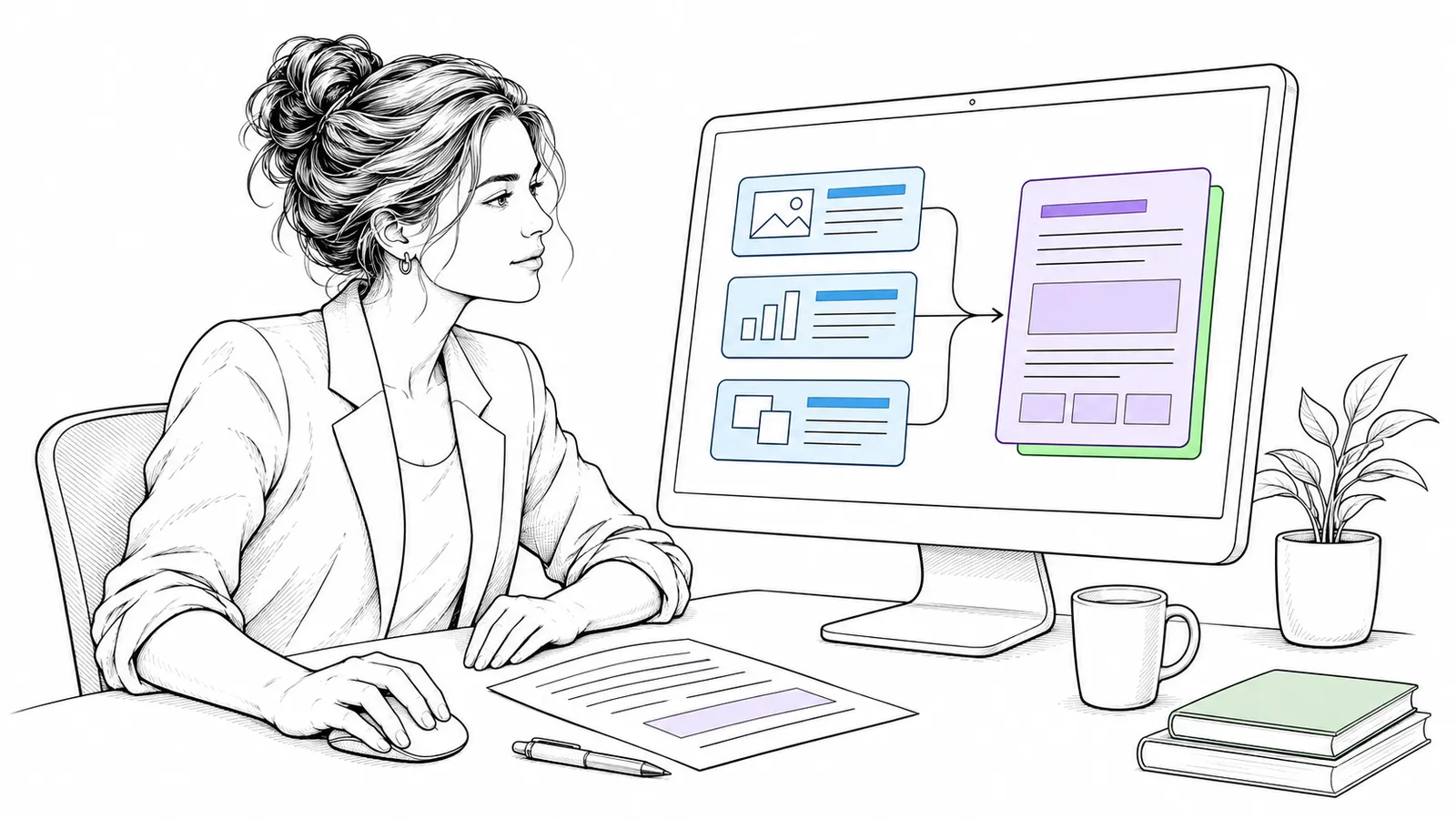
The team behind Stable Diffusion starts its own company and releases three image models, with three licences.

·

A woman reviews sources and a draft on her screen.

History

ChatGPT agent connects research with actions
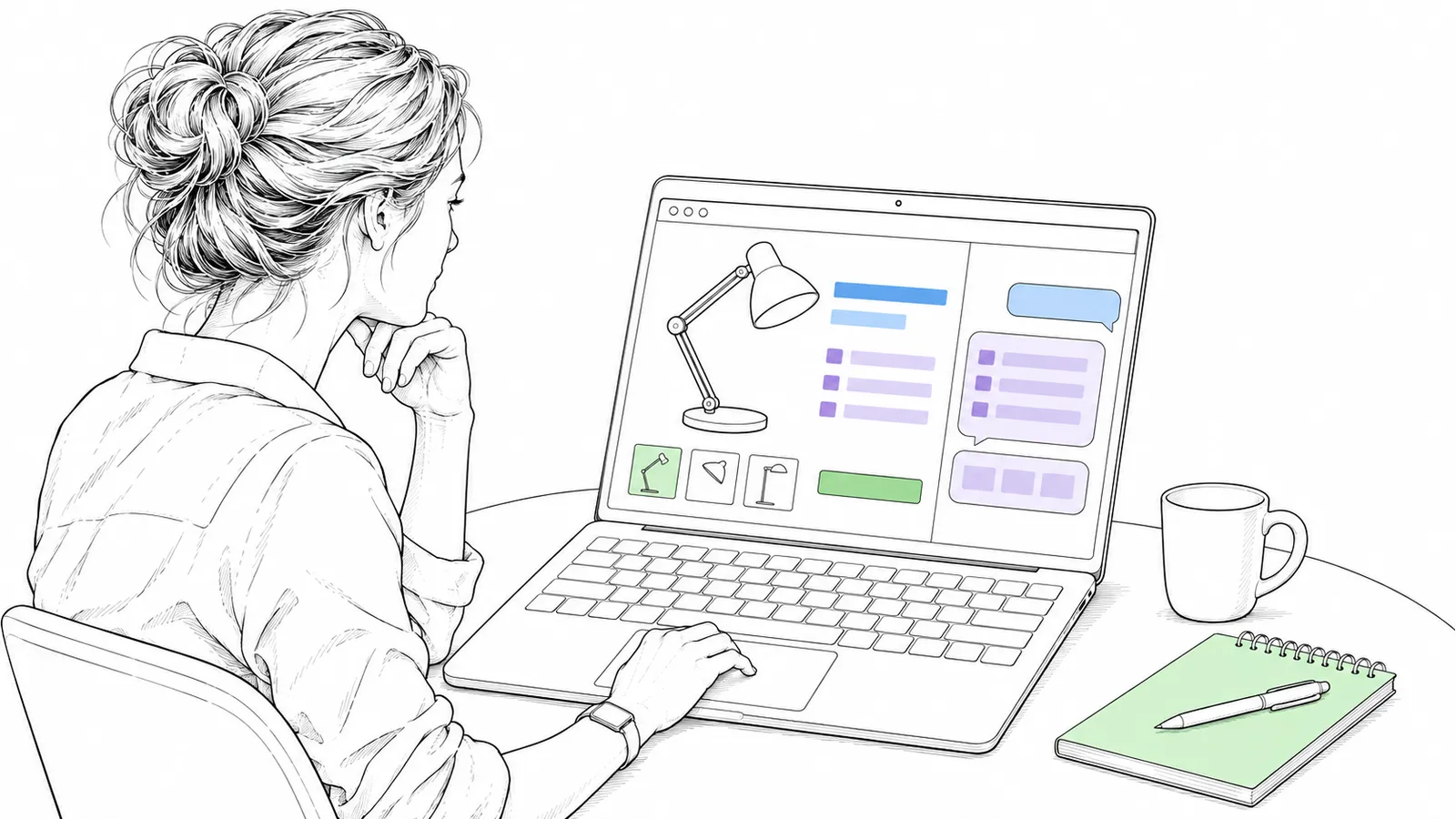
OpenAI brought the approaches of Operator and Deep Research together in one agent.

·

A staff member views a desk lamp in a browser with an assistant panel.

History

ChatGPT Atlas makes the browser part of the assistant
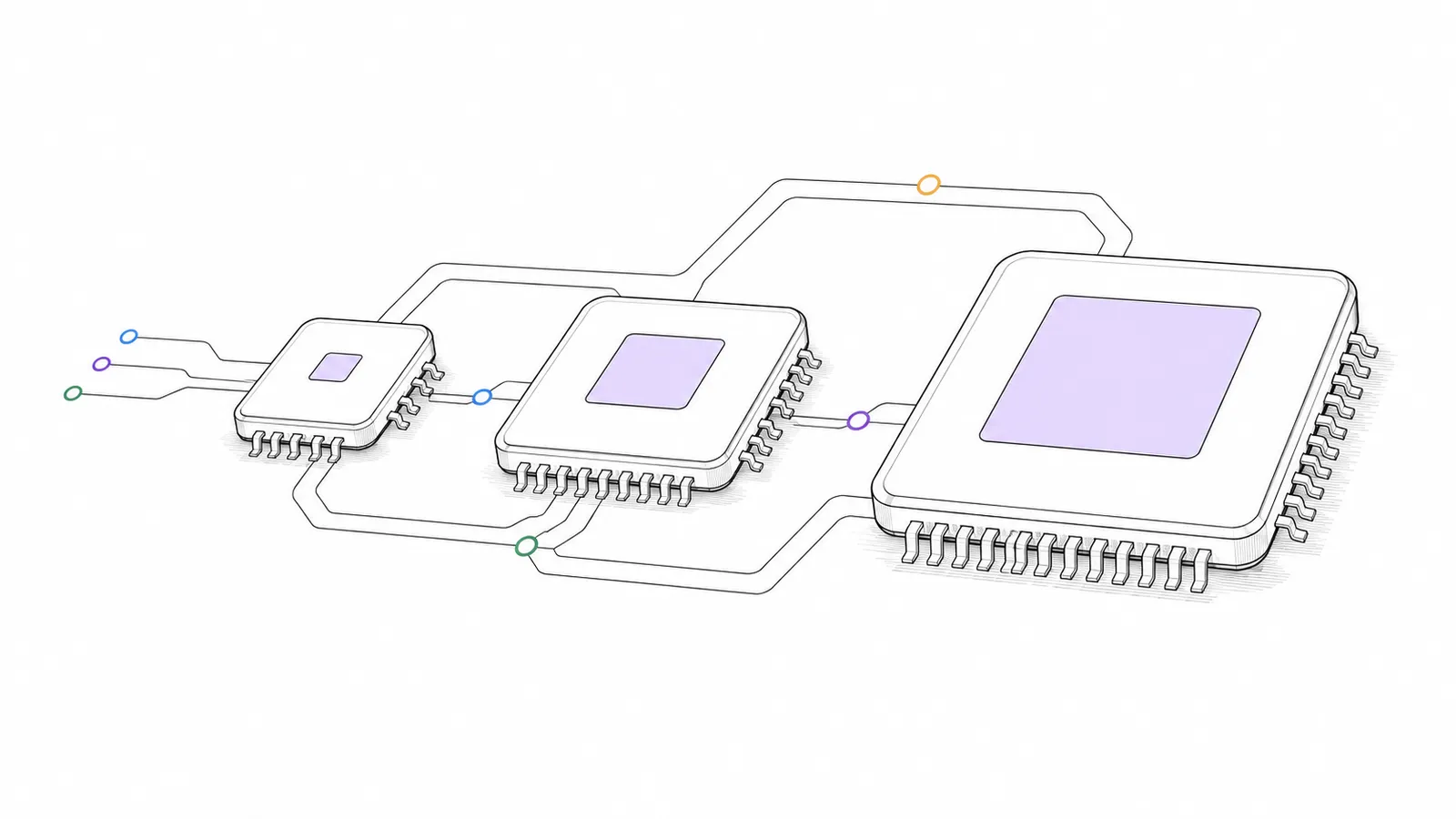
OpenAI introduced its own browser with built-in ChatGPT and an agent.

·

Three chips with purple panels lie side by side from small to large.

History

Claude 3: Haiku, Sonnet and Opus
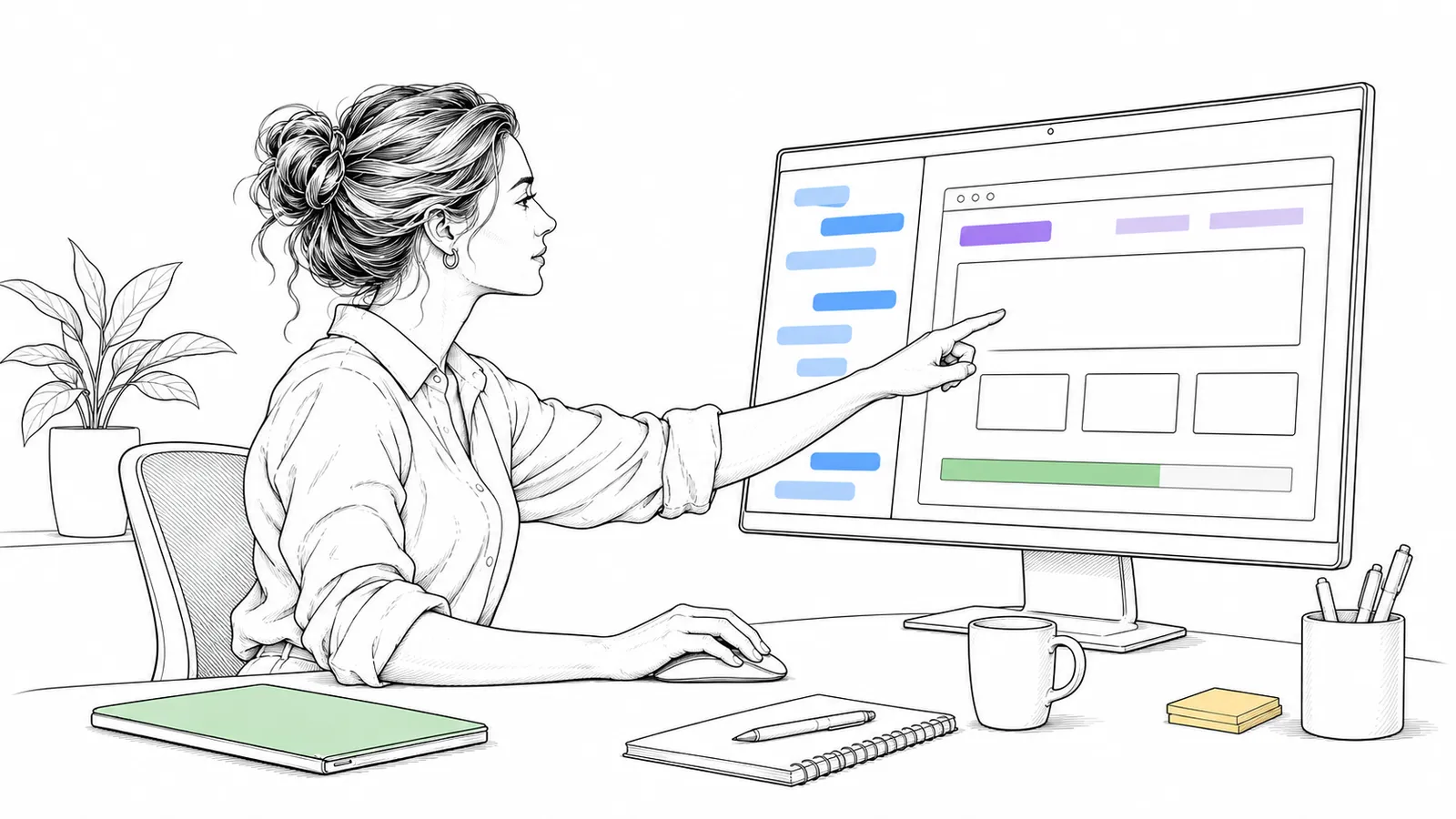
Anthropic releases three models at once, from fast and cheap to its most capable model.

·

A maker works with a conversation and a design side by side.

History

Claude 3.5 Sonnet: faster and smarter than Claude 3 Opus
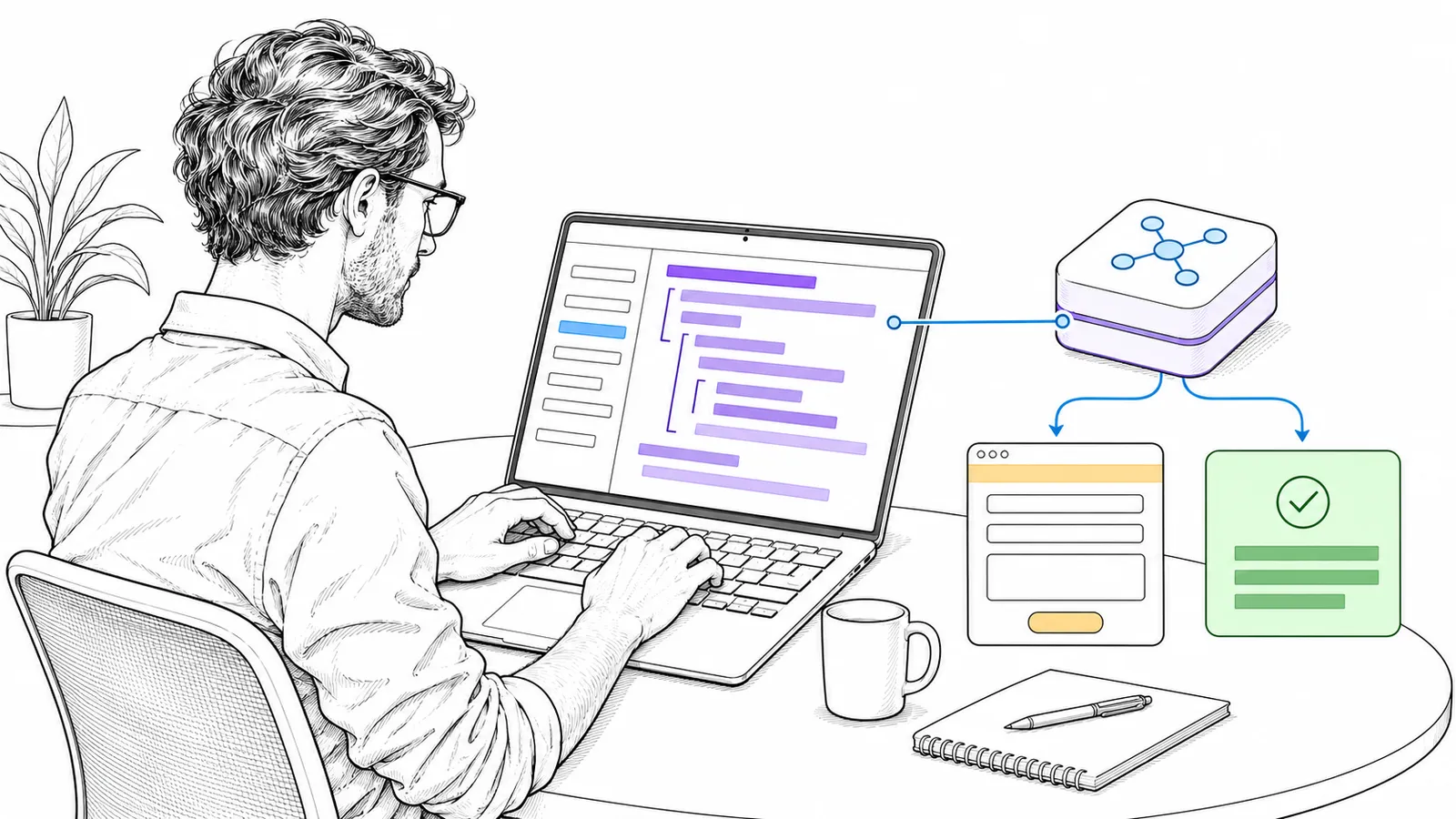
Anthropic released Claude 3.5 Sonnet: better than Claude 3 Opus on many evaluations, twice as fast, and with Artifacts as a new window next to the conversation.

·

A developer works with a terminal and a sample form on a laptop.

History

Claude 3.7 Sonnet arrives alongside Claude Code
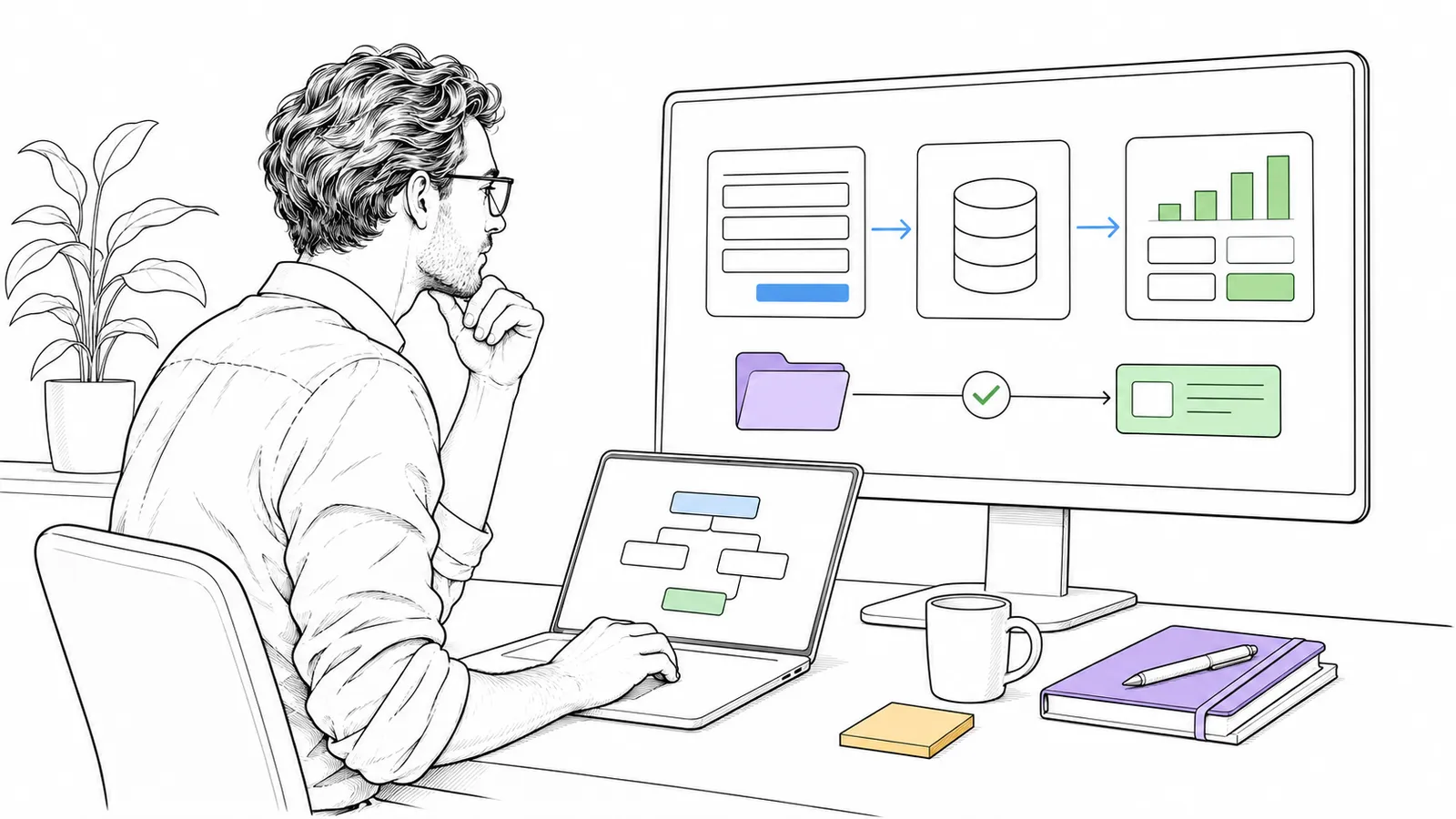
Anthropic combined a model with adjustable reasoning effort and a coding agent for the terminal.

·

A developer reviews the route from a form to a saved result.

History

Claude 4 arrives and Claude Code becomes generally available
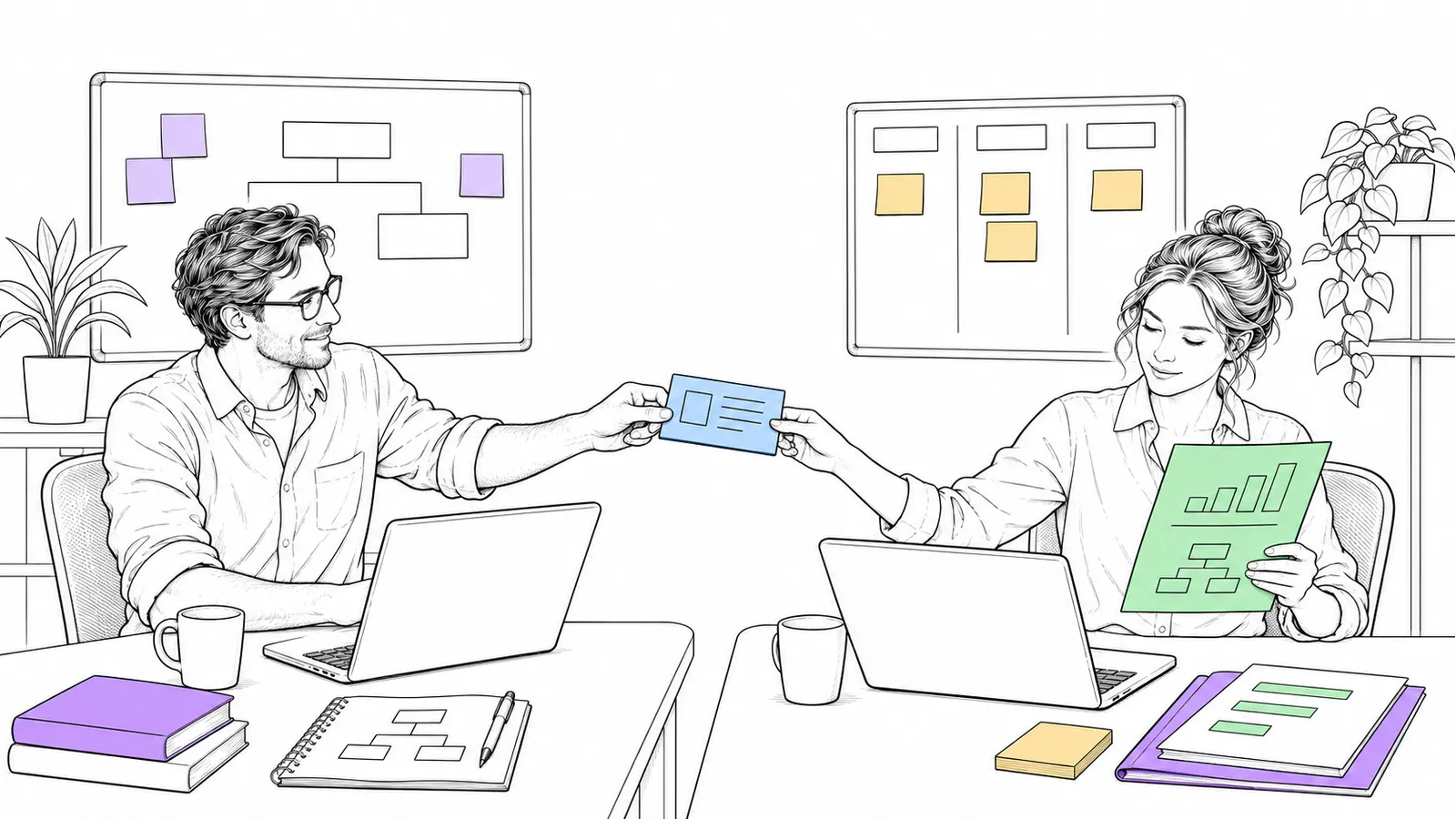
Anthropic introduced Opus 4 and Sonnet 4 with a focus on programming and longer-running tasks.

·

Two developers at separate laptops pass a task card and a result between them.

Knowledge

Claude and Codex together: Claude directs, Codex builds, Claude reviews
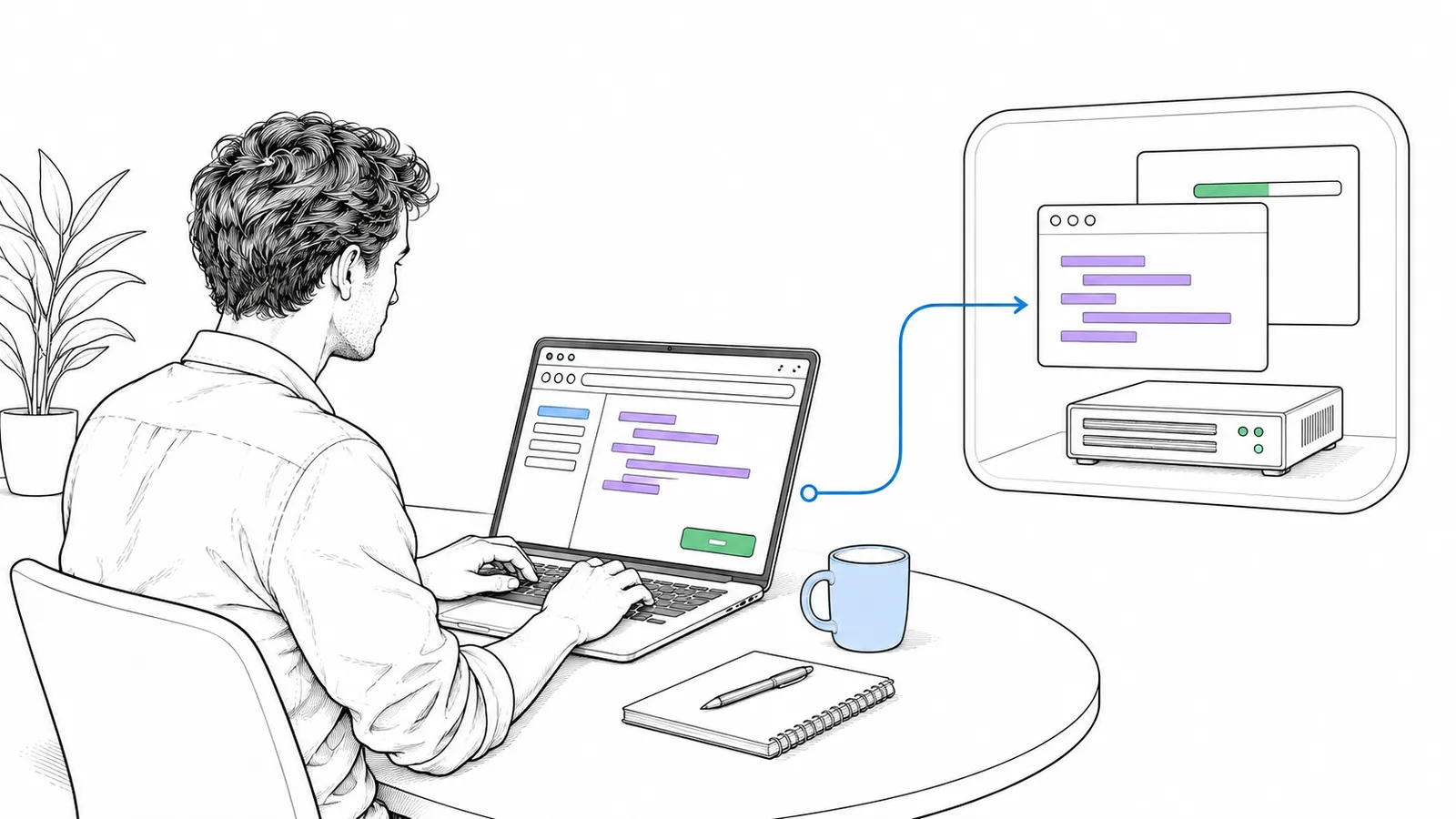
Two coding agents from two makers, each with its own role. What it brings, and where it went wrong.

A developer starts a laptop task in a separate computing environment.

History

Claude Code becomes accessible from the browser
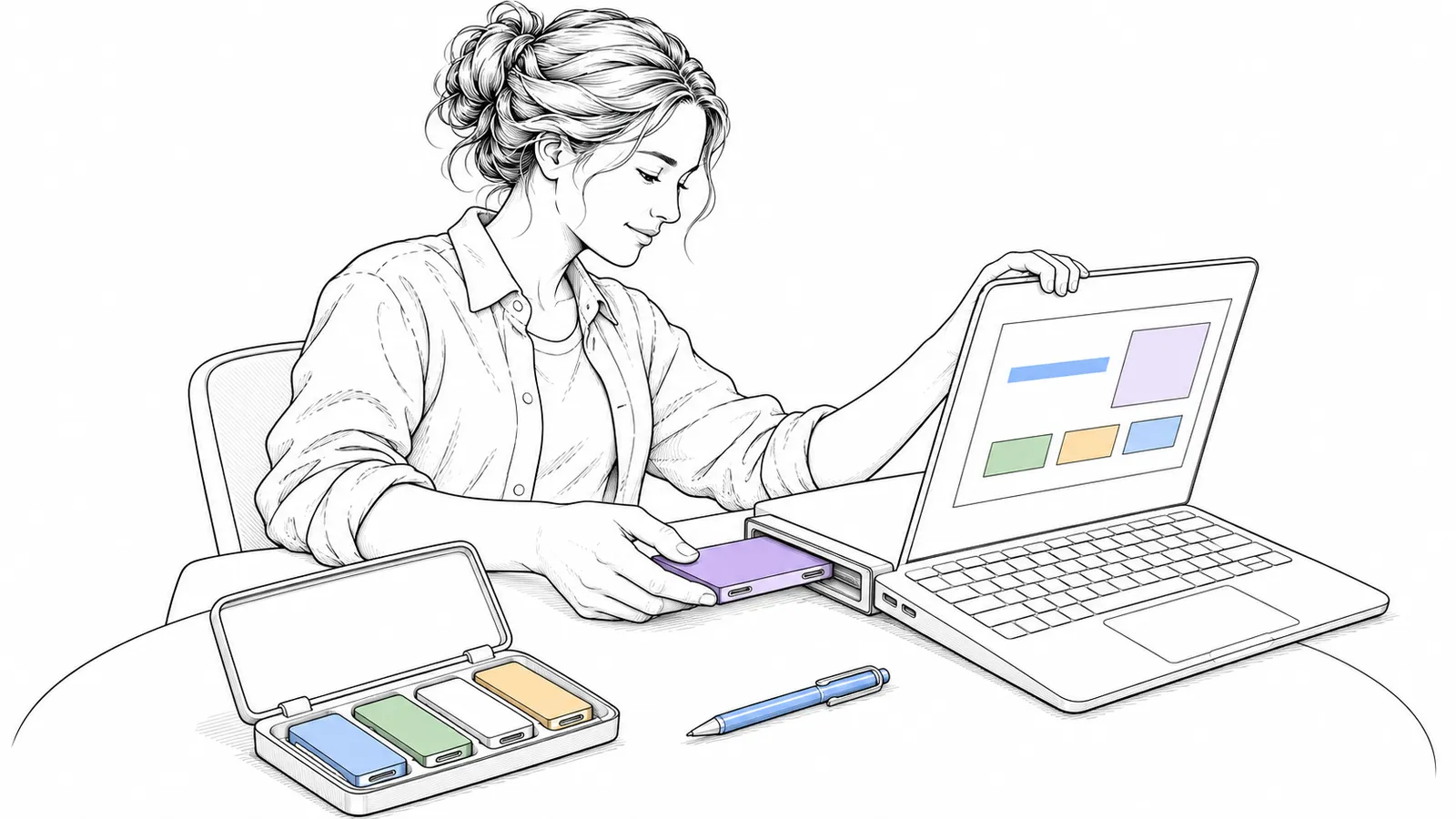
Anthropic introduced coding in isolated cloud environments through the web.

·

A developer places bundled components beside a laptop.

History

Claude Code bundles extensions into plugins
Anthropic made it possible to share commands, agents, hooks and MCP servers together.

·

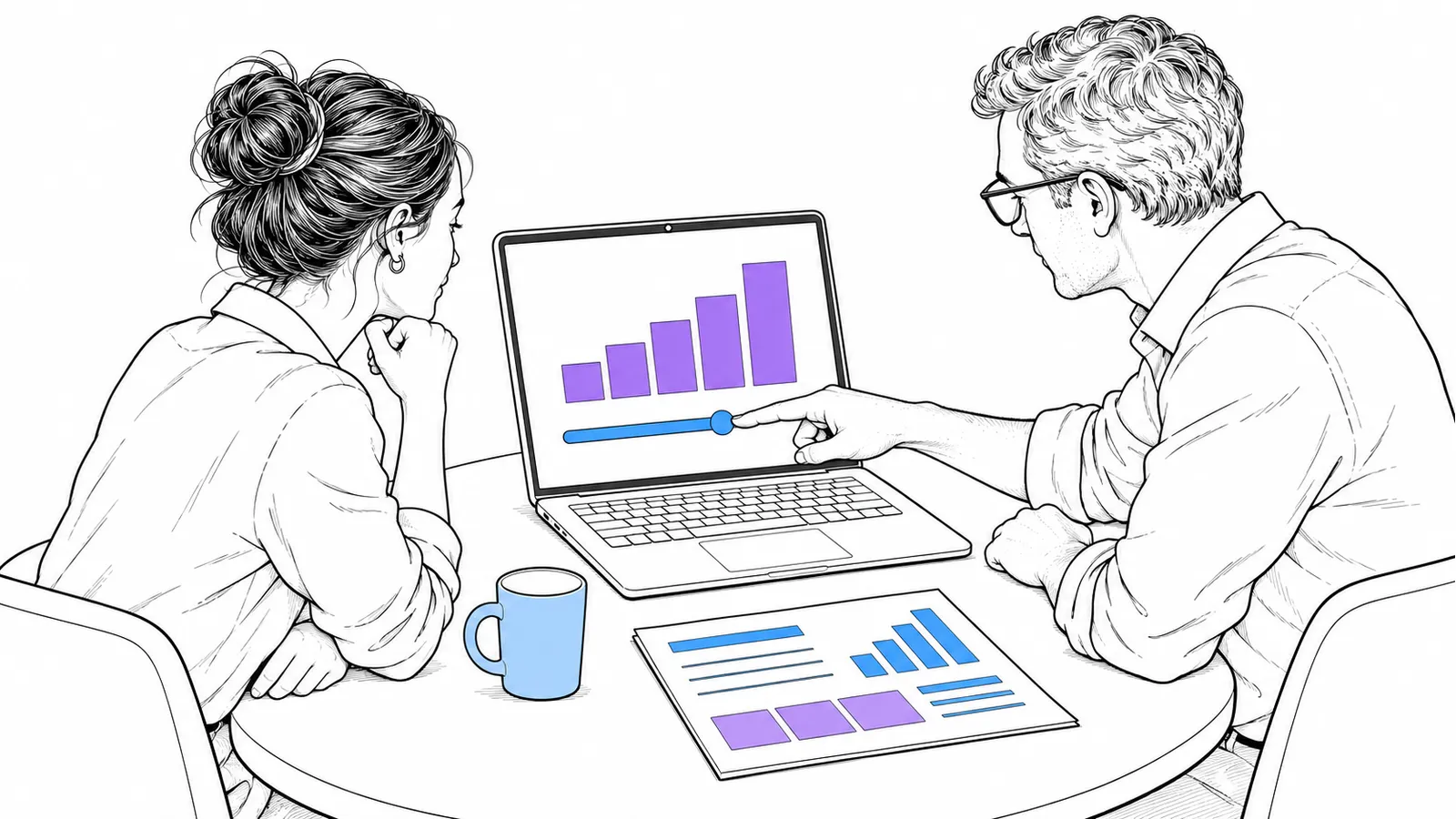
Two colleagues examine a chart with a slider on a laptop.

History

Claude creates charts inside the conversation
From 12 March 2026, Claude could create interactive charts and diagrams inside its answers.

·

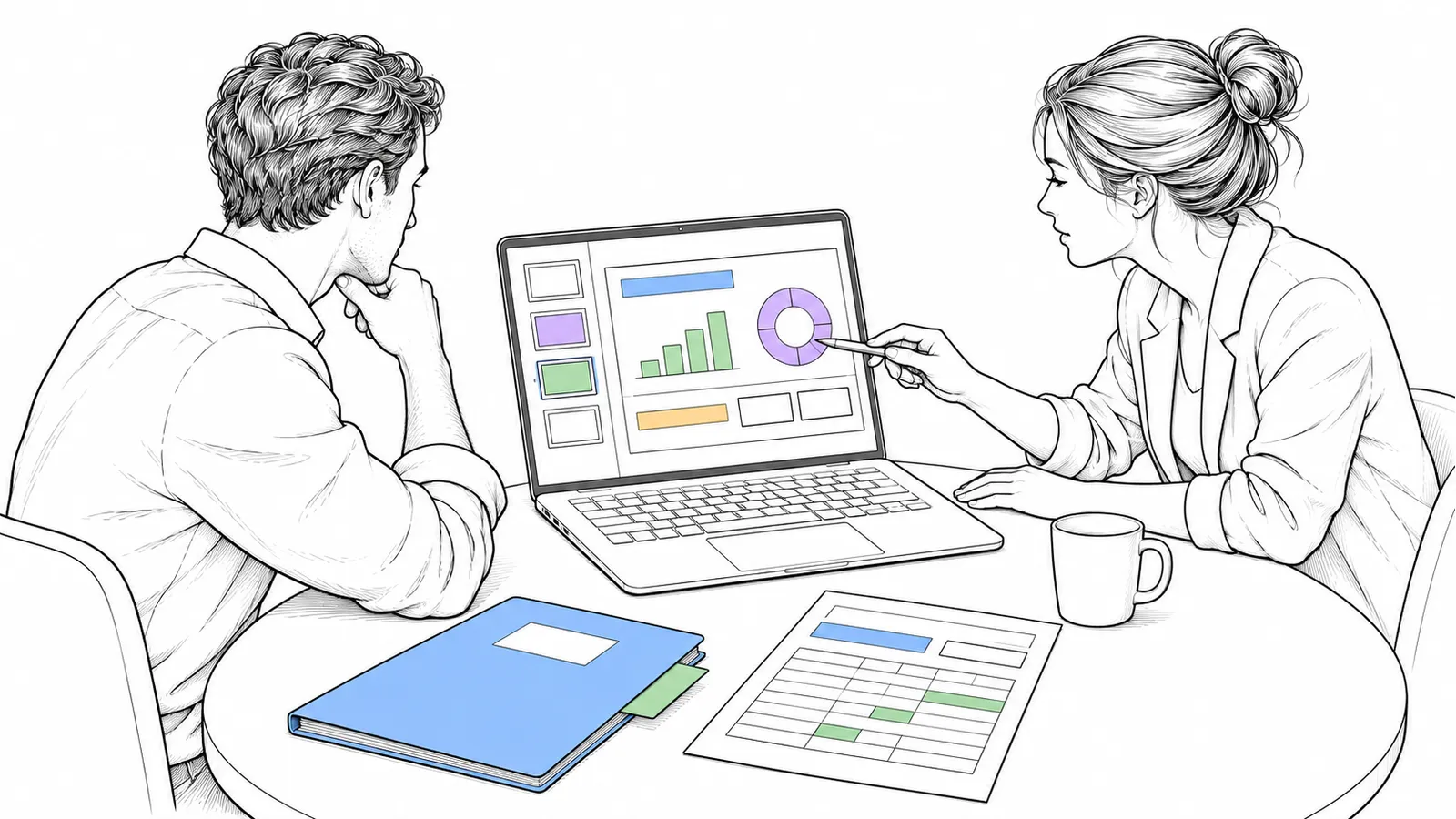
Two colleagues edit a presentation on a laptop.

History

Claude creates editable office files
Anthropic added creation and editing of files including spreadsheets and presentations.

·

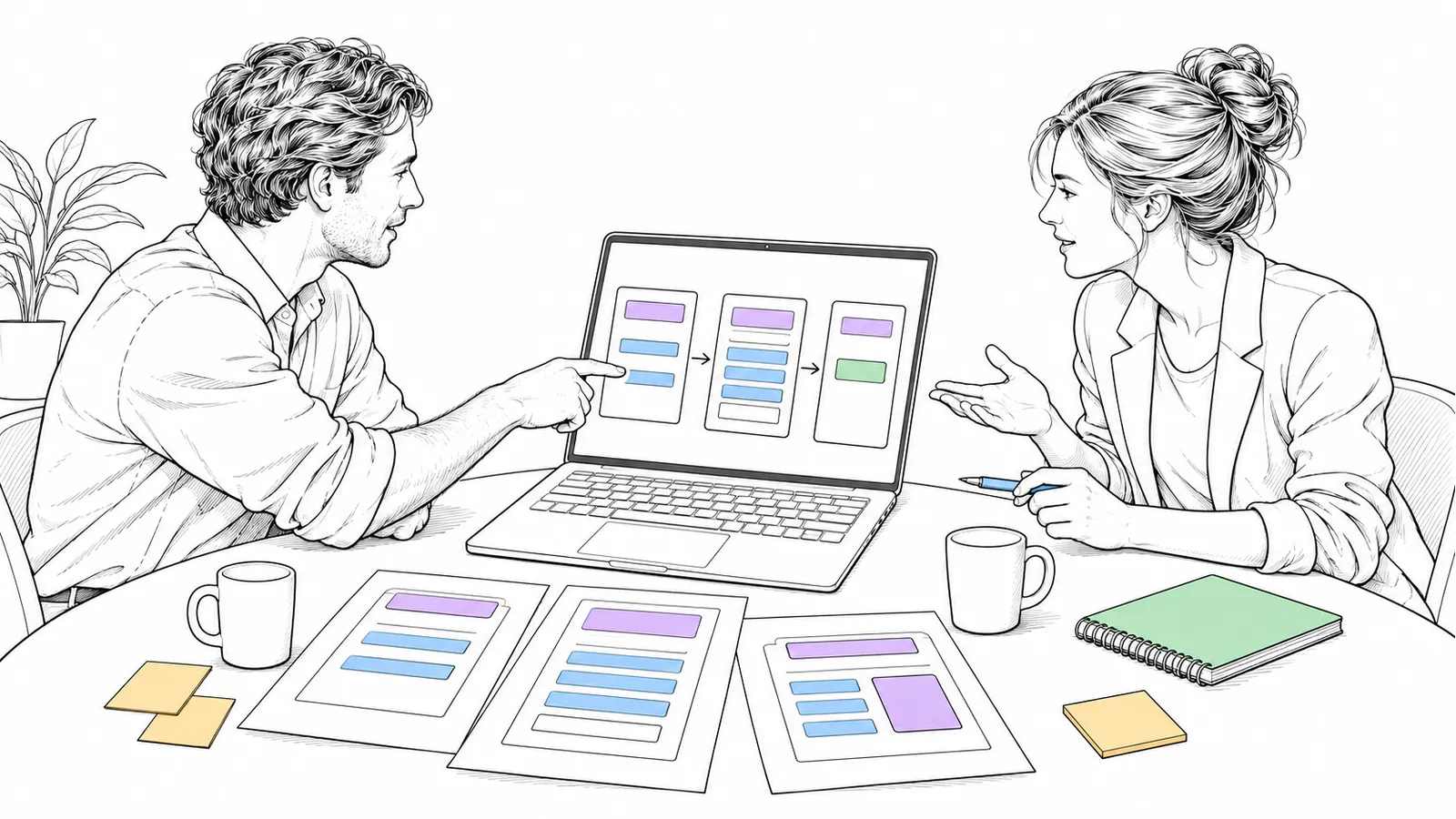
Two colleagues discuss screen sketches on a laptop and on paper.

History

Claude Design brings design into the conversation
Anthropic Labs introduced Claude Design on 17 April 2026 for creating visual work together.

·

An employee examines an overview and source cards inside a work tray.

History

Claude Duet starts as a research preview
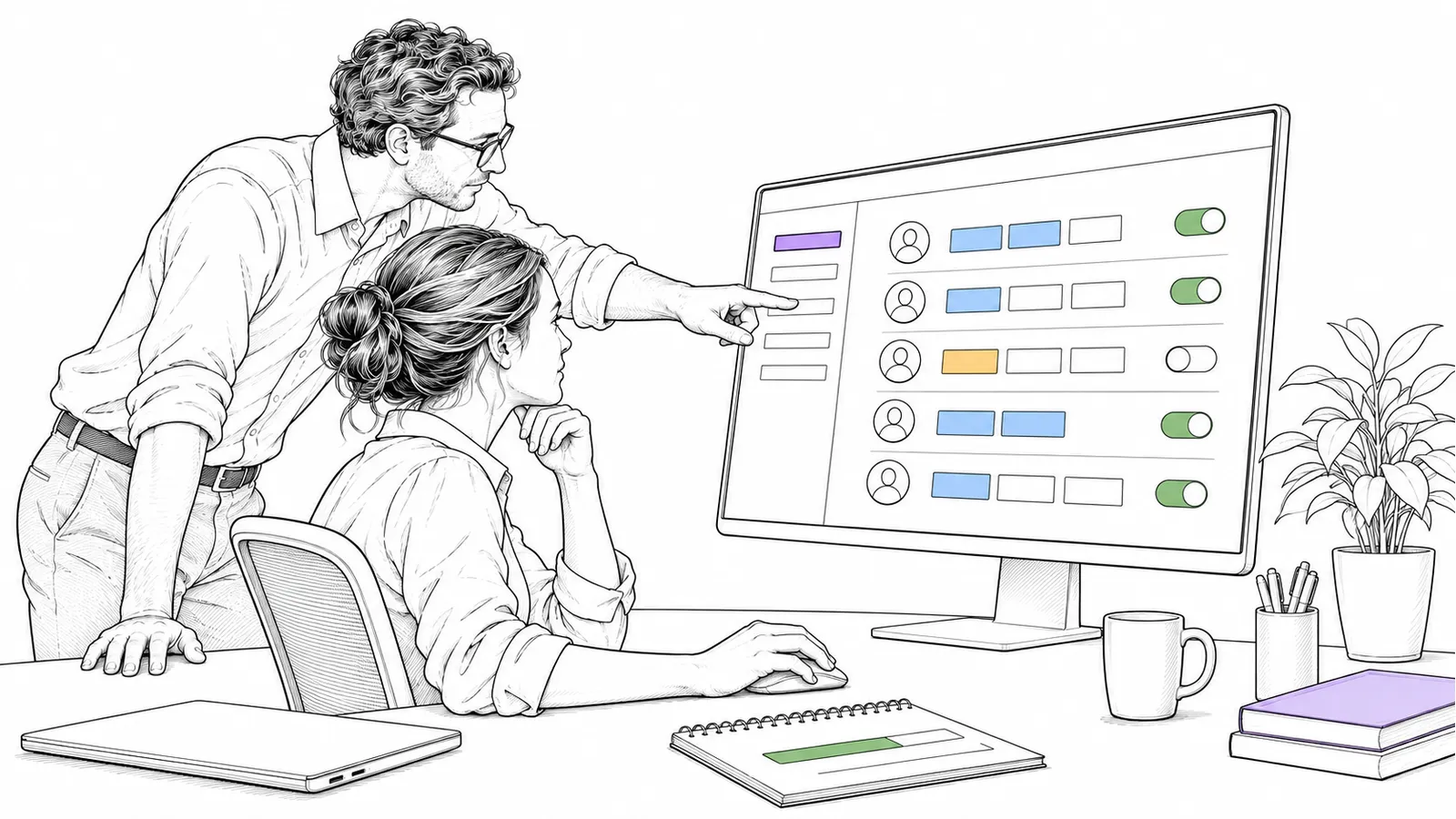
Anthropic opened a research preview of Claude Duet for Pro and Max users on 21 October 2026.

·

An administrator and a colleague examine access settings.

History

Claude Enterprise gains additional administration controls
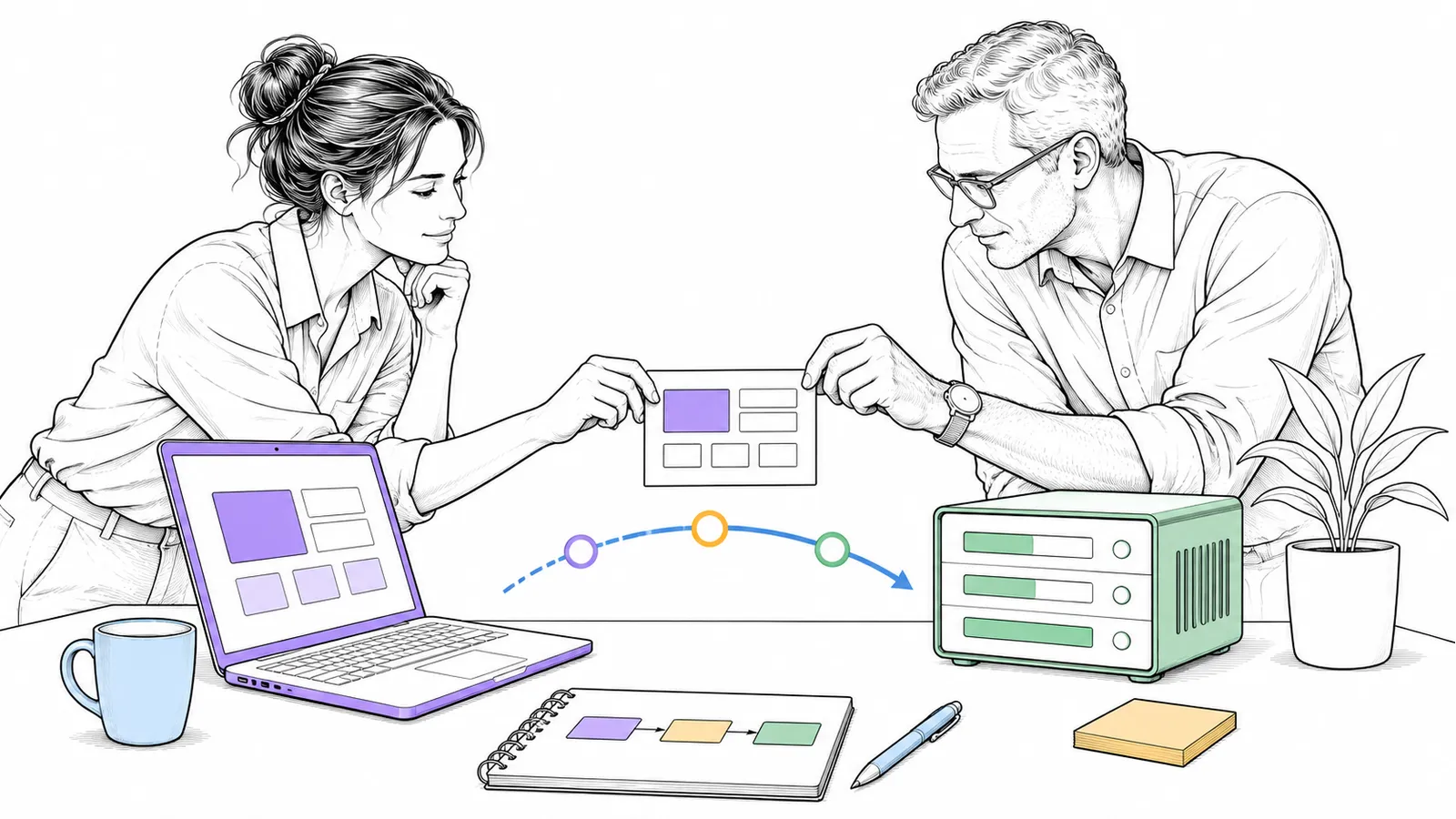
Anthropic introduced additional security and administration features for Claude Enterprise on 5 November 2026.

·

Two people review a design beside a laptop and a server.

Knowledge

Claude for making, Mistral on your own server for fixed processes
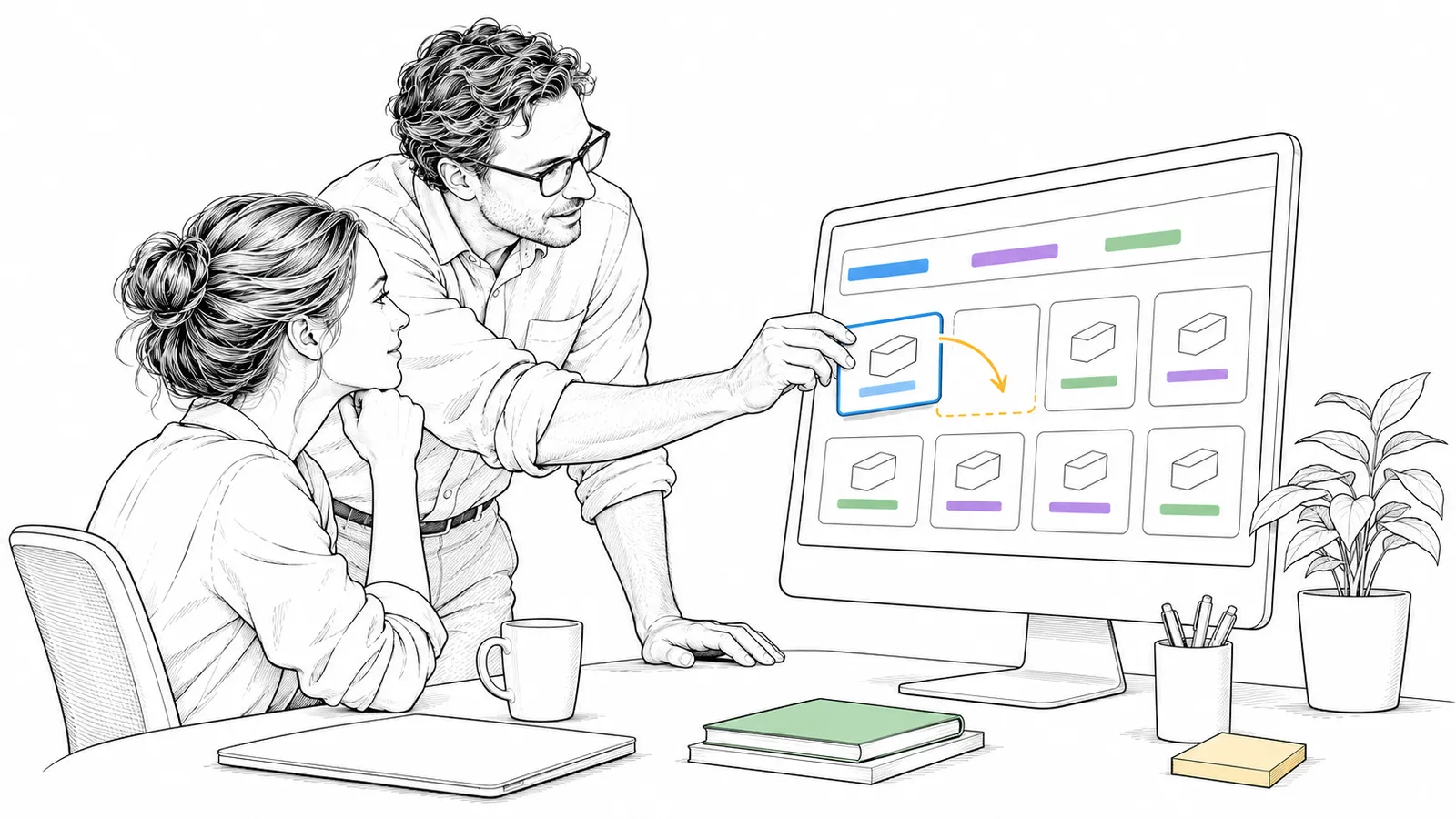
Making and trying something quickly needs a different model than a business process that must run for years. This is how we choose.

A maker shows a colleague an extension in a directory.

History

Claude gets a portal for plugin makers
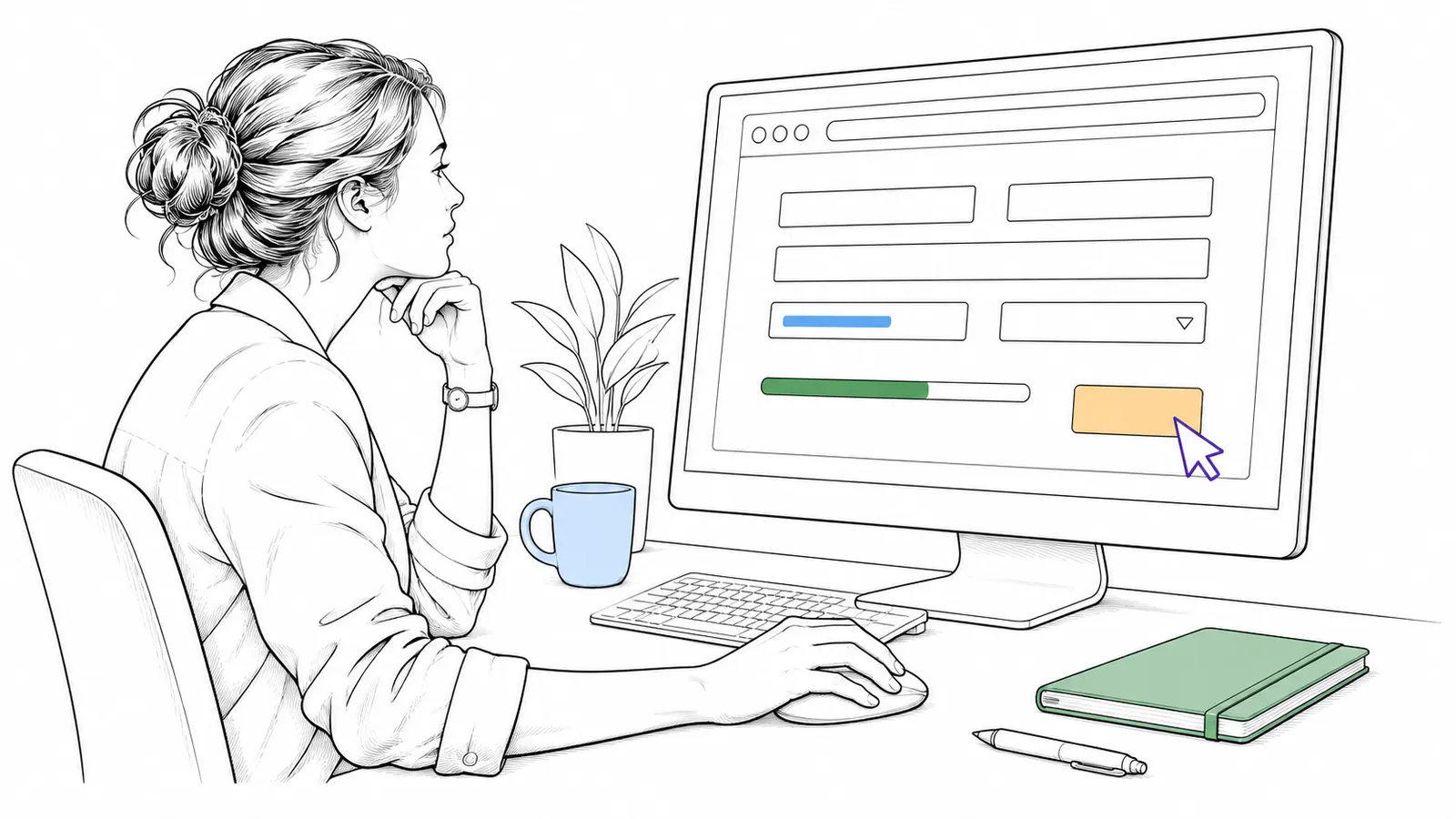
On 25 September 2026, Anthropic introduced a developer portal for plugins in the Claude directory.

·

A worker views a form with a separate amber button.

History

Claude gets hands in the browser
Anthropic introduced an experimental Chrome extension for actions on websites.

·

Two developers review a sequence of steps and an output folder.

History

Claude Opus 4.1 focuses on agent work
Anthropic introduced an Opus update for work including complex coding tasks.

·

Two employees study a chip module, manual and steps on a screen.

History

Claude Opus 5 expands the fifth generation
Anthropic introduced Claude Opus 5 on 24 July 2026 as a new model in the Opus line.

·

Two colleagues view a conversation with a separate task pane on a laptop.

History

Claude Tag lets you delegate work from Slack
From 23 June 2026, Team and Enterprise users could tag Claude in Slack to delegate tasks.

·

A developer watches a pointer select a field on a screen.

History

Claude uses a computer

Anthropic releases an upgraded Claude 3.5 Sonnet and 3.5 Haiku, and a beta in which Claude clicks and types by itself.

·

Two colleagues examine a website with a separate framework and a small server.

History

Cloudflare acquires the Astro team
The acquisition connected the Astro web framework to Cloudflare while the MIT licence remained in place.

·

A developer works with code, an assistant and a terminal on one screen.

History

Codeium releases the Windsurf editor
Codeium launches Windsurf, a code editor with Cascade: an assistant that takes steps in your code by itself.

·

A developer views purple blocks among code bars on a laptop beside a server and a folder.

History

Codestral: Mistral's first code model
Mistral AI releases Codestral, a 22B model for code, under a licence for non-production use.

·

A developer reviews three separate workspaces on a screen.

History

Codex takes coding tasks into separate cloud environments
OpenAI introduced Codex in ChatGPT as an agent for working on multiple coding tasks side by side.

·

Two coding workspaces sit beside one folder and an agreement.

History

Cognition announces its acquisition of Windsurf
The maker of Devin signed an agreement to acquire the Windsurf coding environment.

·

A developer works on a screen while a colleague checks a tablet.

History

Composer 2 gives Cursor a new coding model
Cursor released Composer 2 on 19 March 2026 as a new version of its own coding model.

·

A developer reviews a suggestion and a test on a laptop.

History

Copilot gains a free entry point in VS Code
GitHub made coding assistance accessible through a free version of Copilot in VS Code.

·

A developer reviews connected files and a loop between an error, a change and a check.

History

Copilot gains a mode that continues working on tasks
GitHub presented agent mode for Copilot as a preview in VS Code.

·

Two colleagues work on documents and code on separate laptops.

History

Cowork and Claude Code become more widely accessible
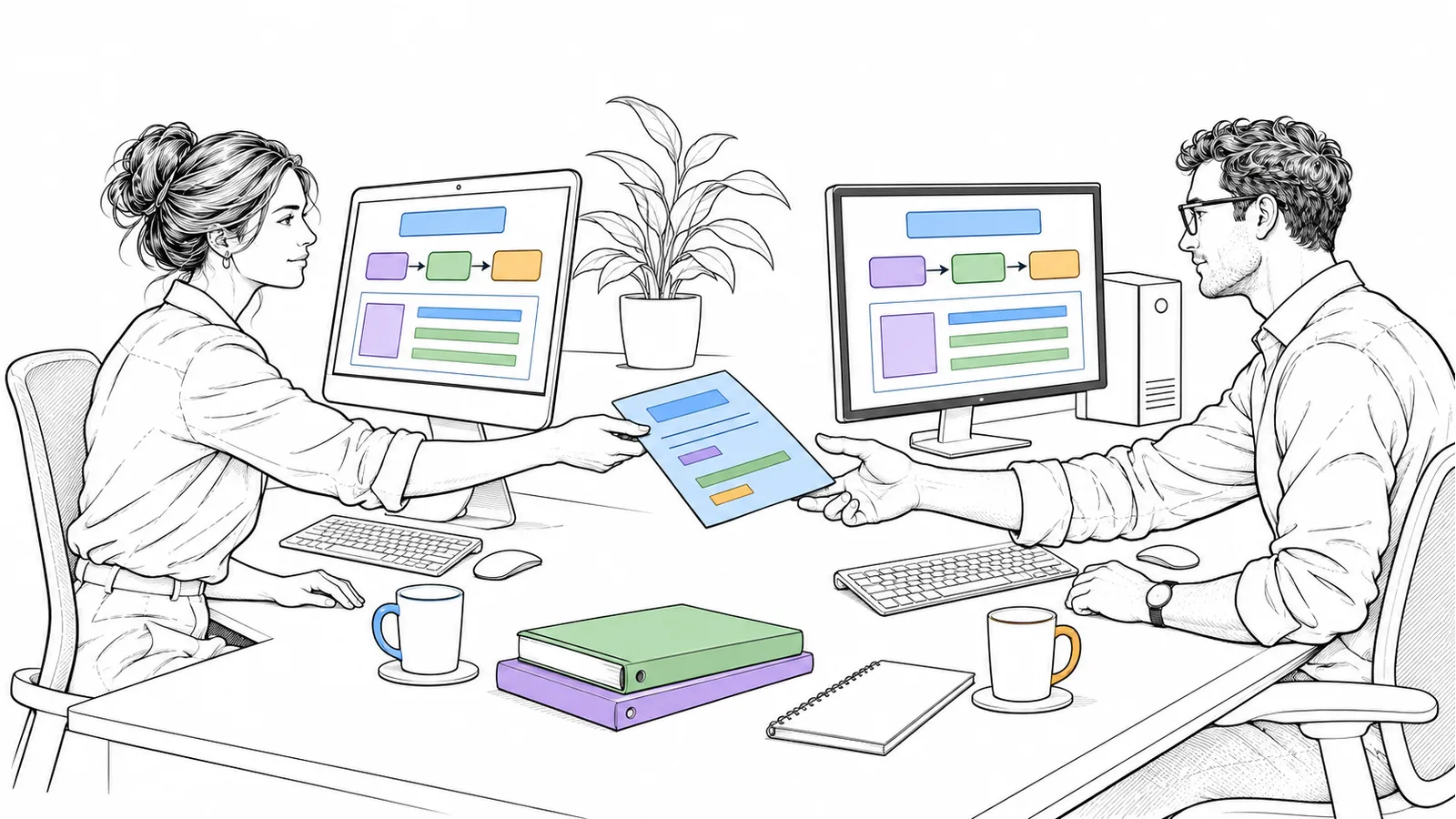
Anthropic added Cowork to Pro and Claude Code to standard Team seats.

·

Two colleagues share an instruction between two different computers.

History

Cowork becomes generally available on Mac and Windows
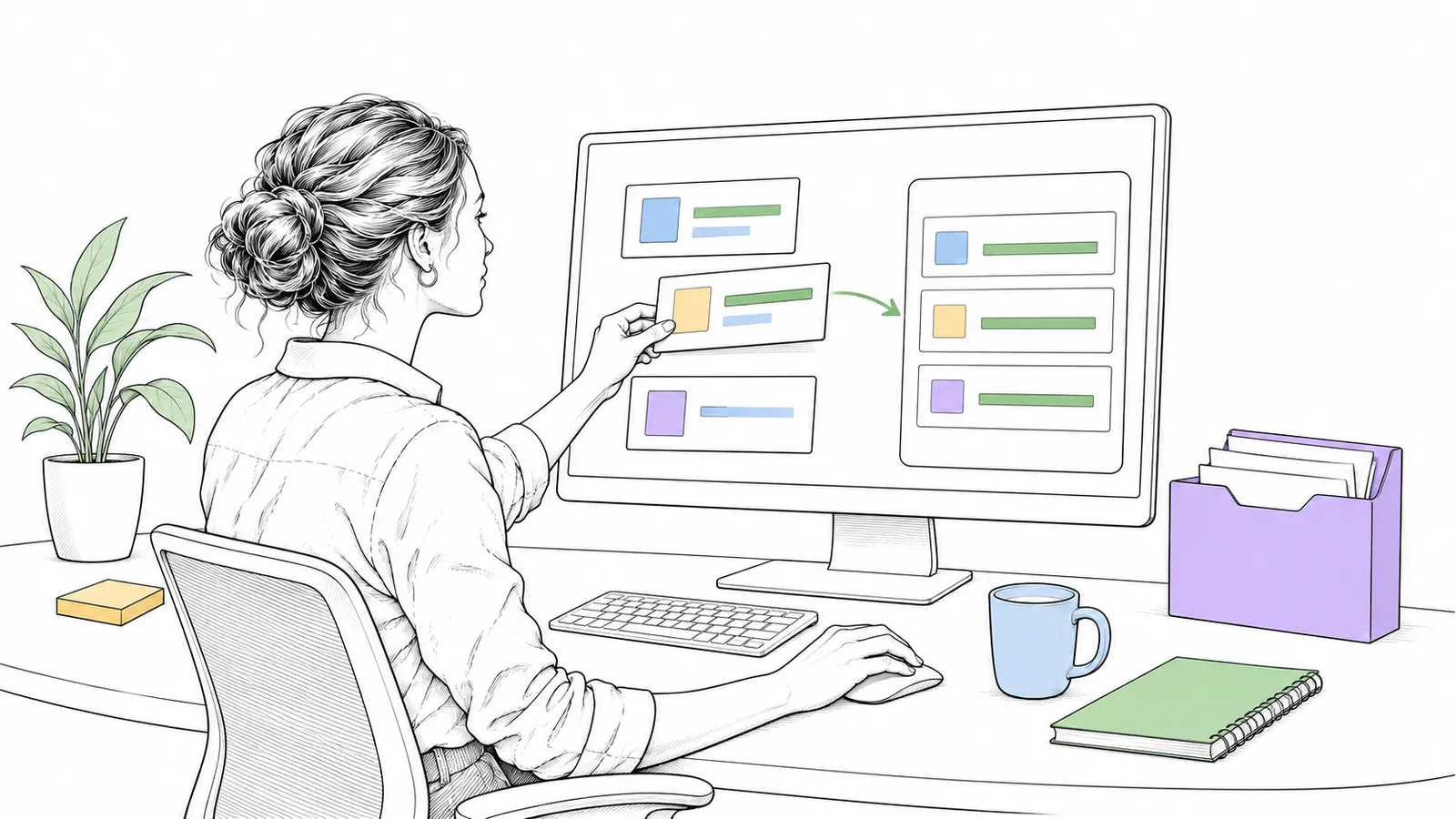
On 9 April 2026, Claude Cowork became generally available in the desktop app for macOS and Windows.

·

A staff member organises documents at a computer with a separate output folder.

History

Cowork brings agent work to the everyday workspace

Anthropic introduced a Cowork research preview for Max users on macOS.

·

An employee views the same task on a laptop and phone.

History

Cowork comes to web and mobile
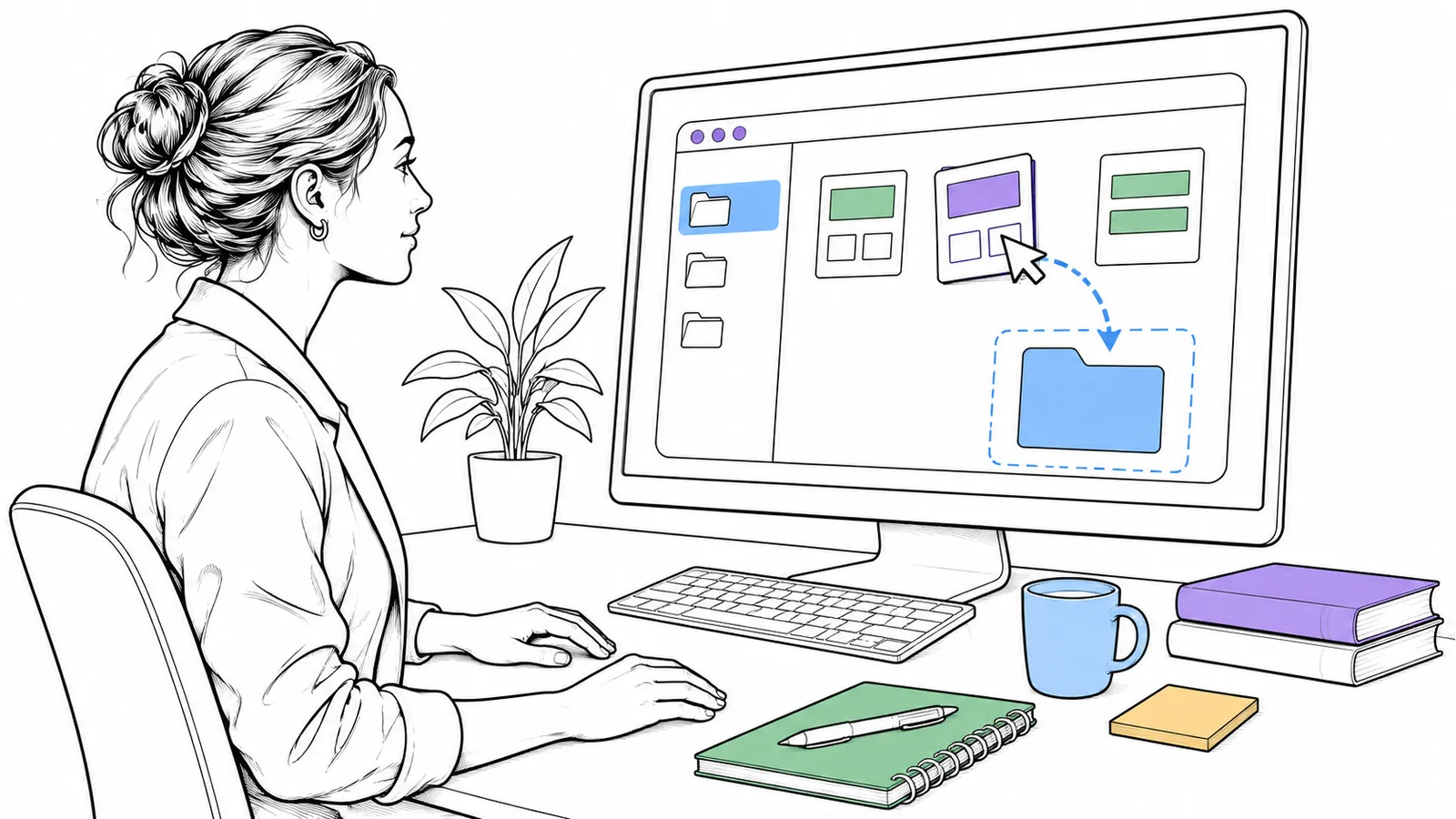
On 7 July 2026, Anthropic announced the rollout of Cowork on web and mobile alongside the desktop version.

·

An employee watches a brochure card move into a folder on a screen.

History

Cowork gains computer control
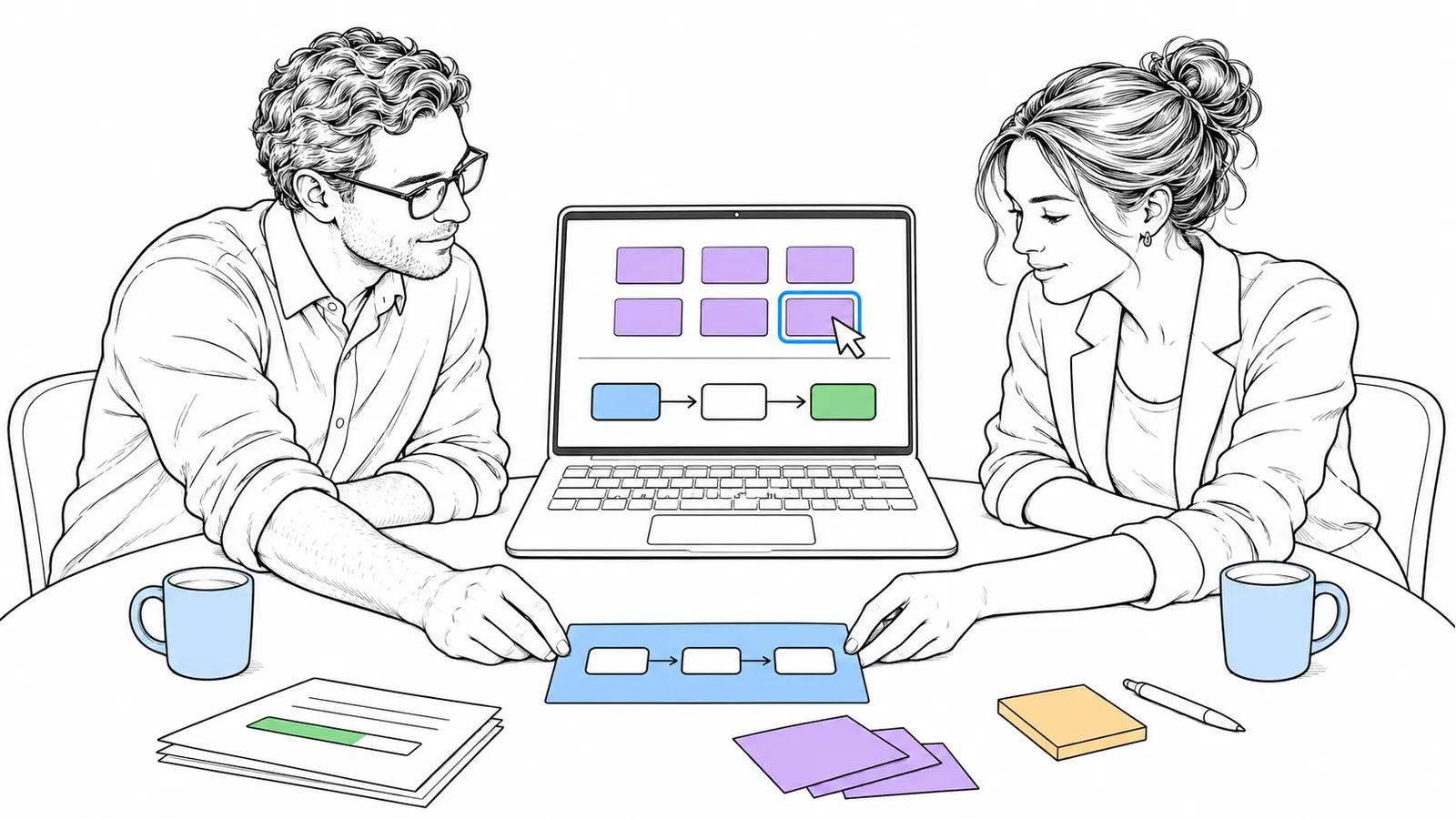
Anthropic introduced computer use in Cowork as a research preview on 23 March 2026.

·

Two colleagues examine extensions on a laptop and share a task card.

History

Cowork gets a plugin marketplace
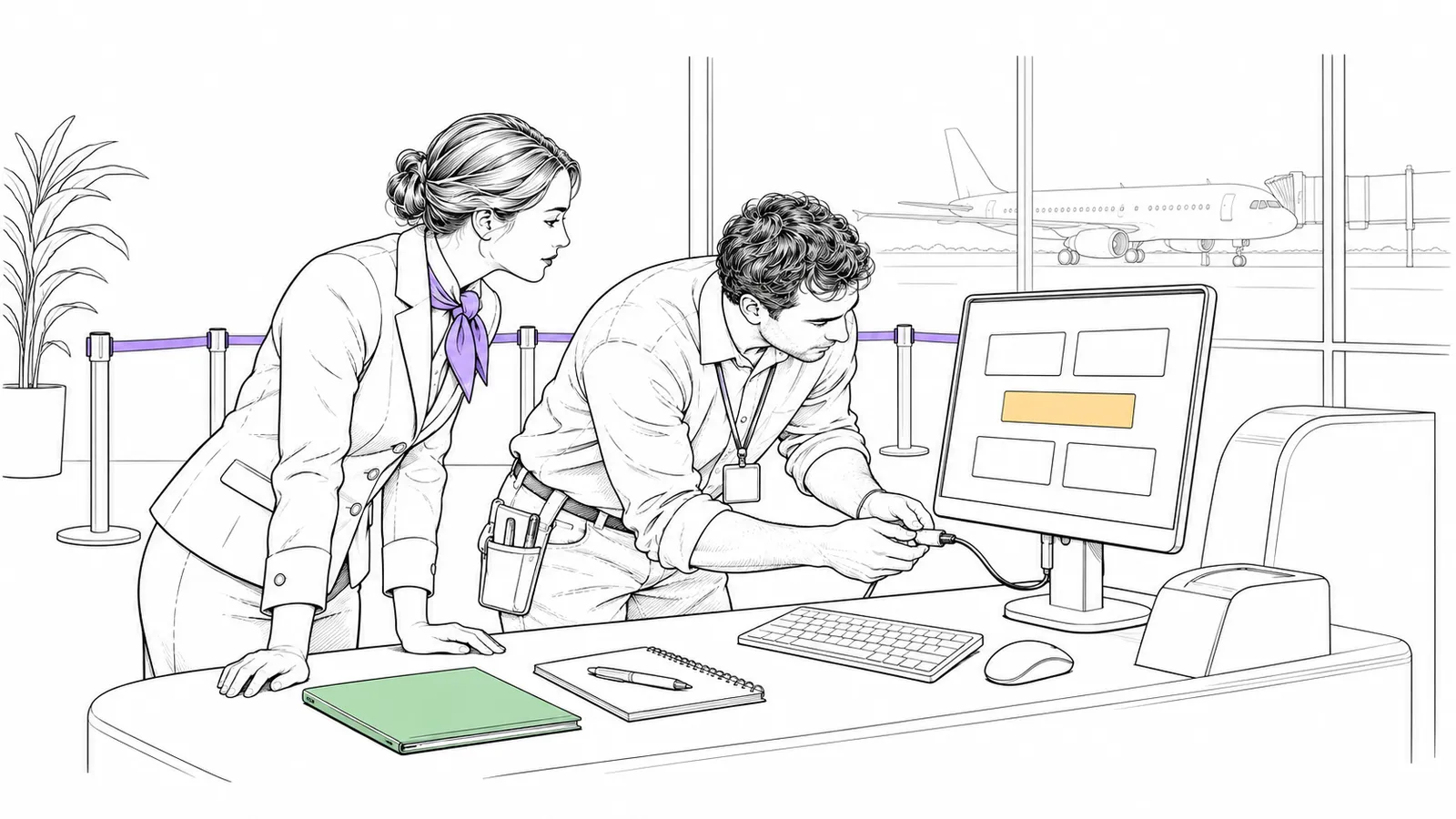
On 24 February 2026, Anthropic introduced a plugin marketplace and administration features for Cowork.

·

A desk worker and a technician examine a frozen computer at an airport.

History

CrowdStrike: one update stops 8.5 million computers
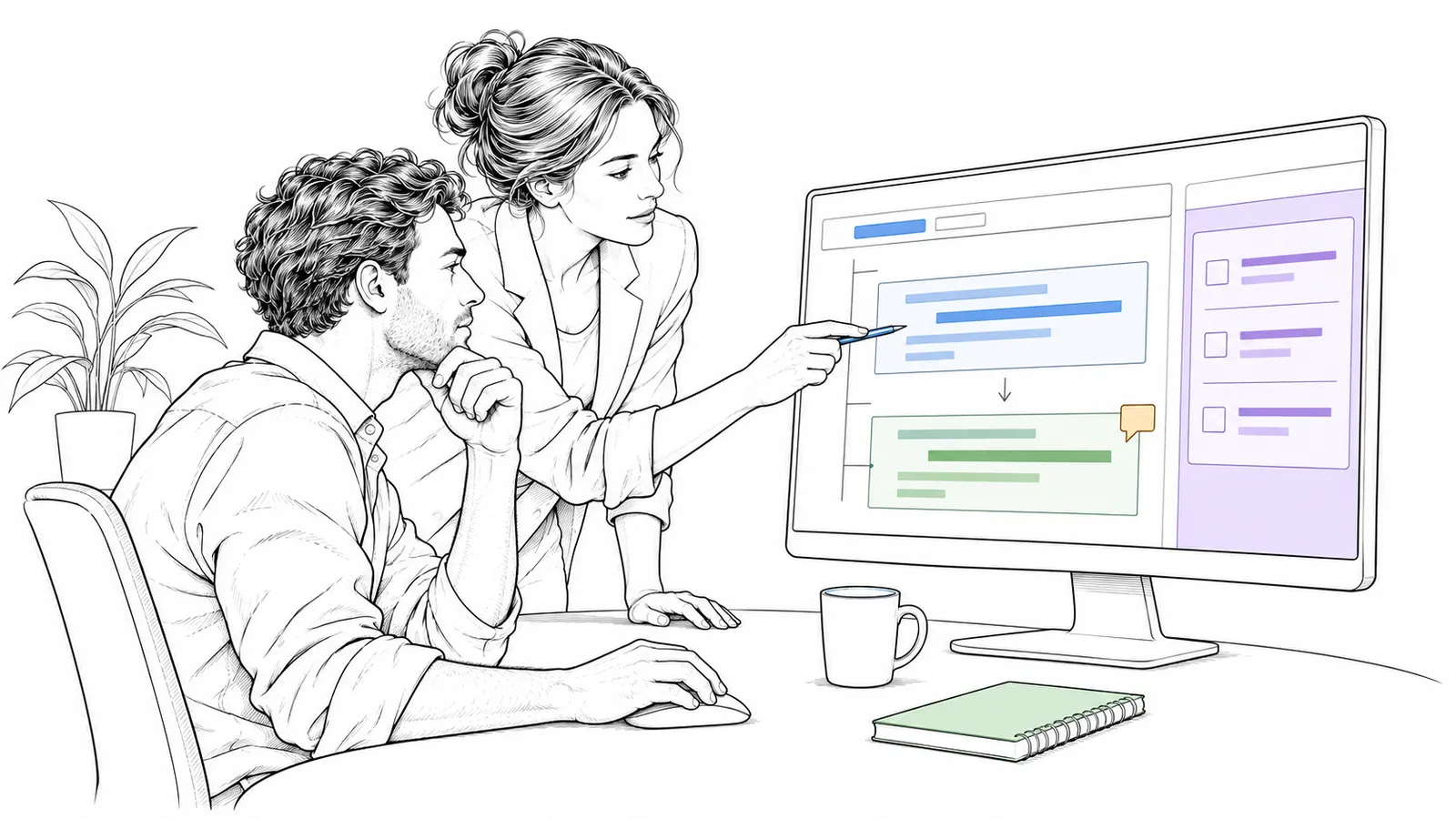
A faulty file in a security update made Windows computers crash around the world. Airports, banks and hospitals stopped for hours or days.

·

Two colleagues review a change and a review point on a screen.

History

Cursor 1.0 combines code review and background work
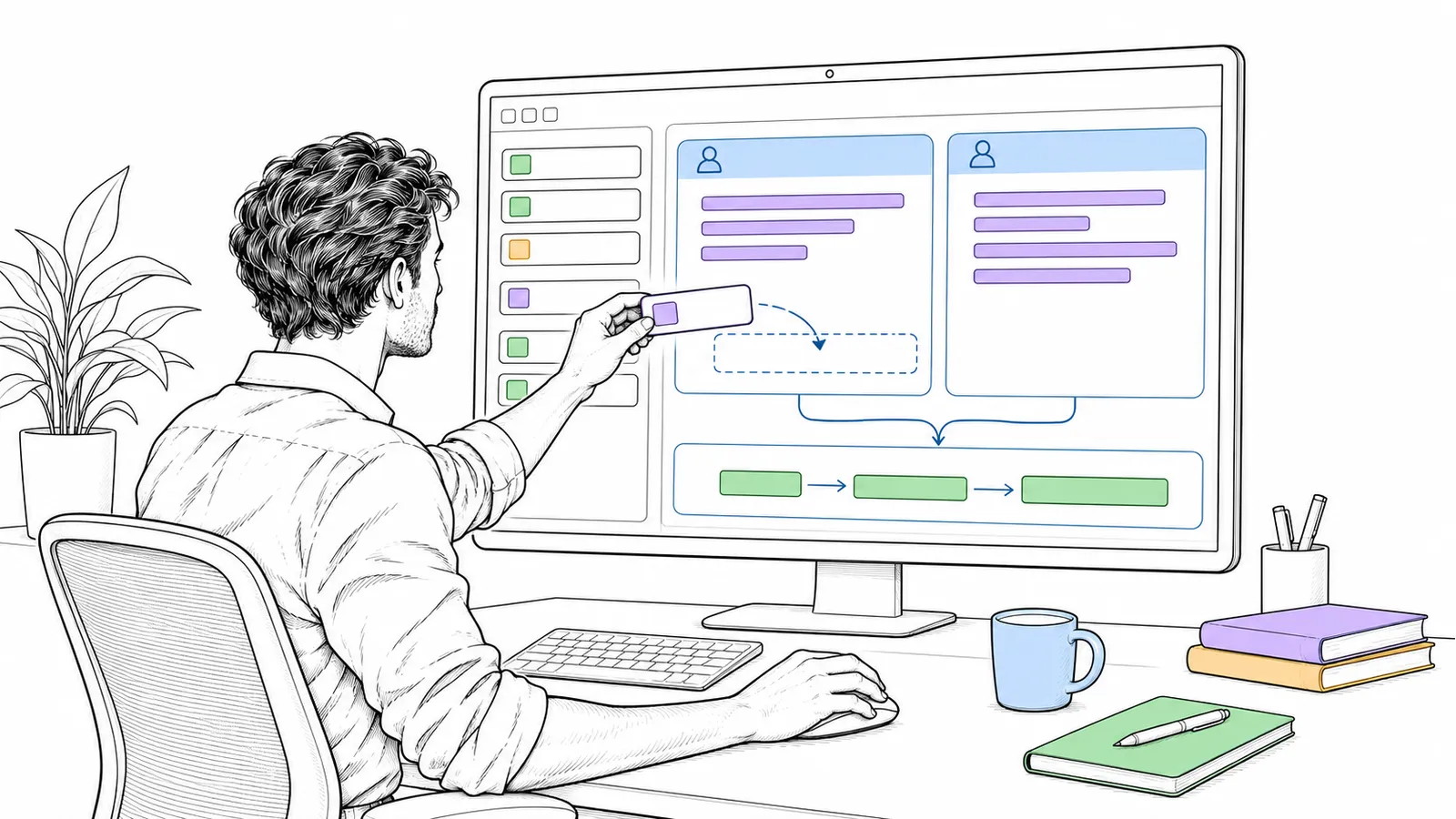
Cursor released version 1.0 with Bugbot, background agents and simpler MCP setup.

·

A developer assigns tasks across two work lanes on a large screen.

History

Cursor 2.0 pairs its own model with multiple agents
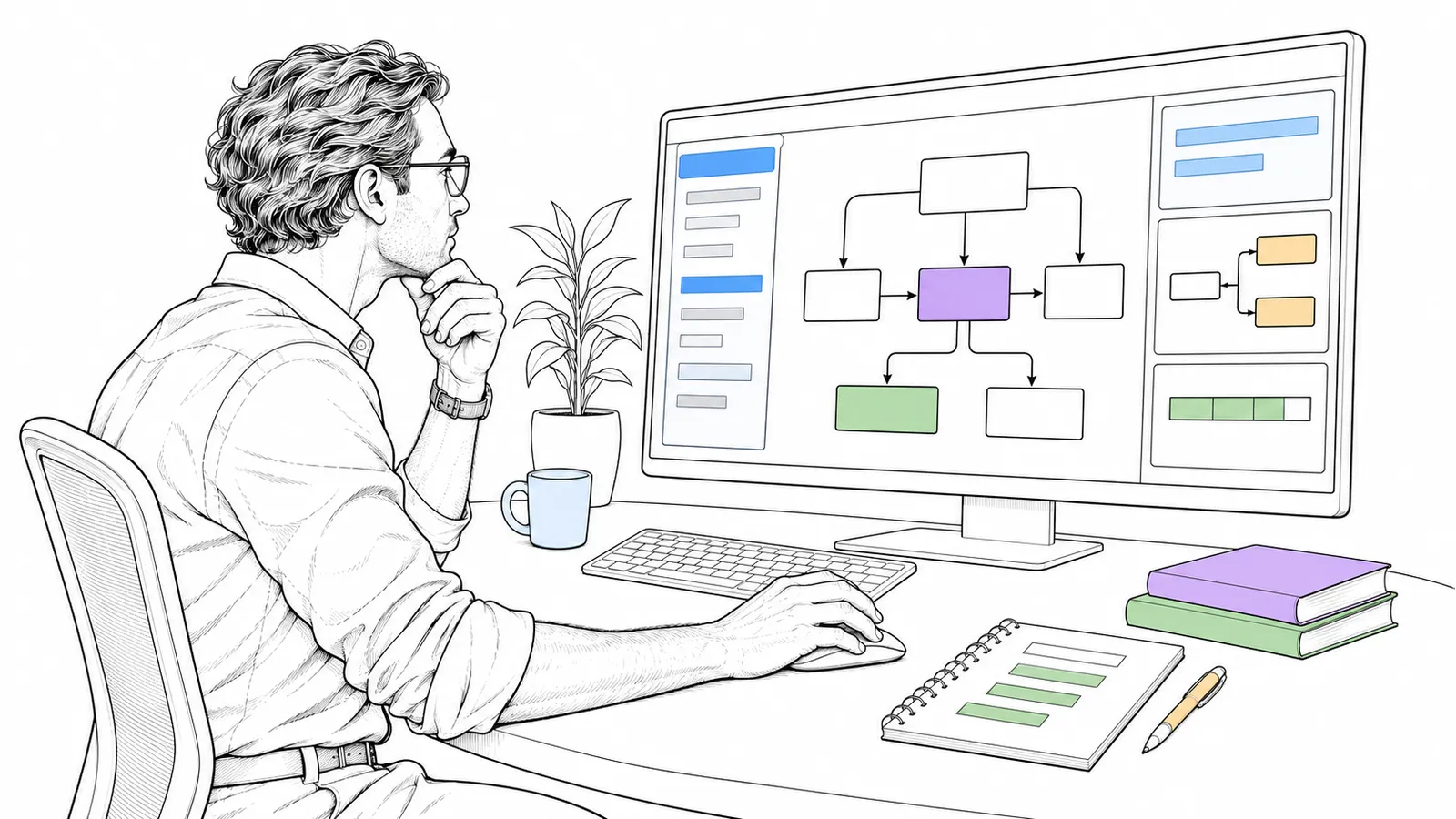
Cursor introduced Composer and a new interface for working with multiple agents.

·

A programmer studies connected blocks on a large screen.

Vlog

Cutter: reverse engineering with a friendly screen
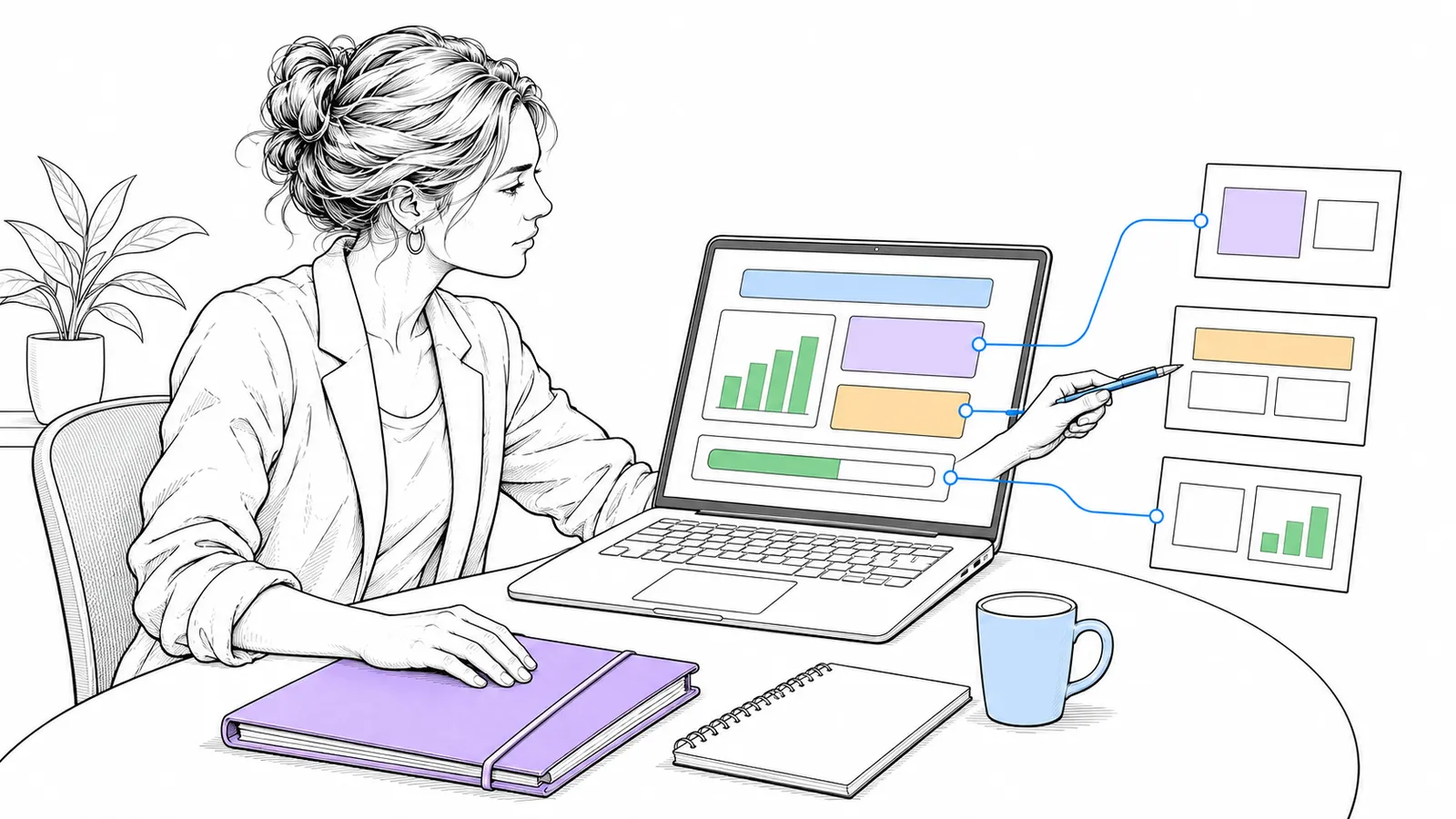
Cutter is a free and open source reverse engineering platform, built on rizin, with the user first.

A researcher compares a laptop report with separate sources.

History

Deep Research turns searching into an assignment
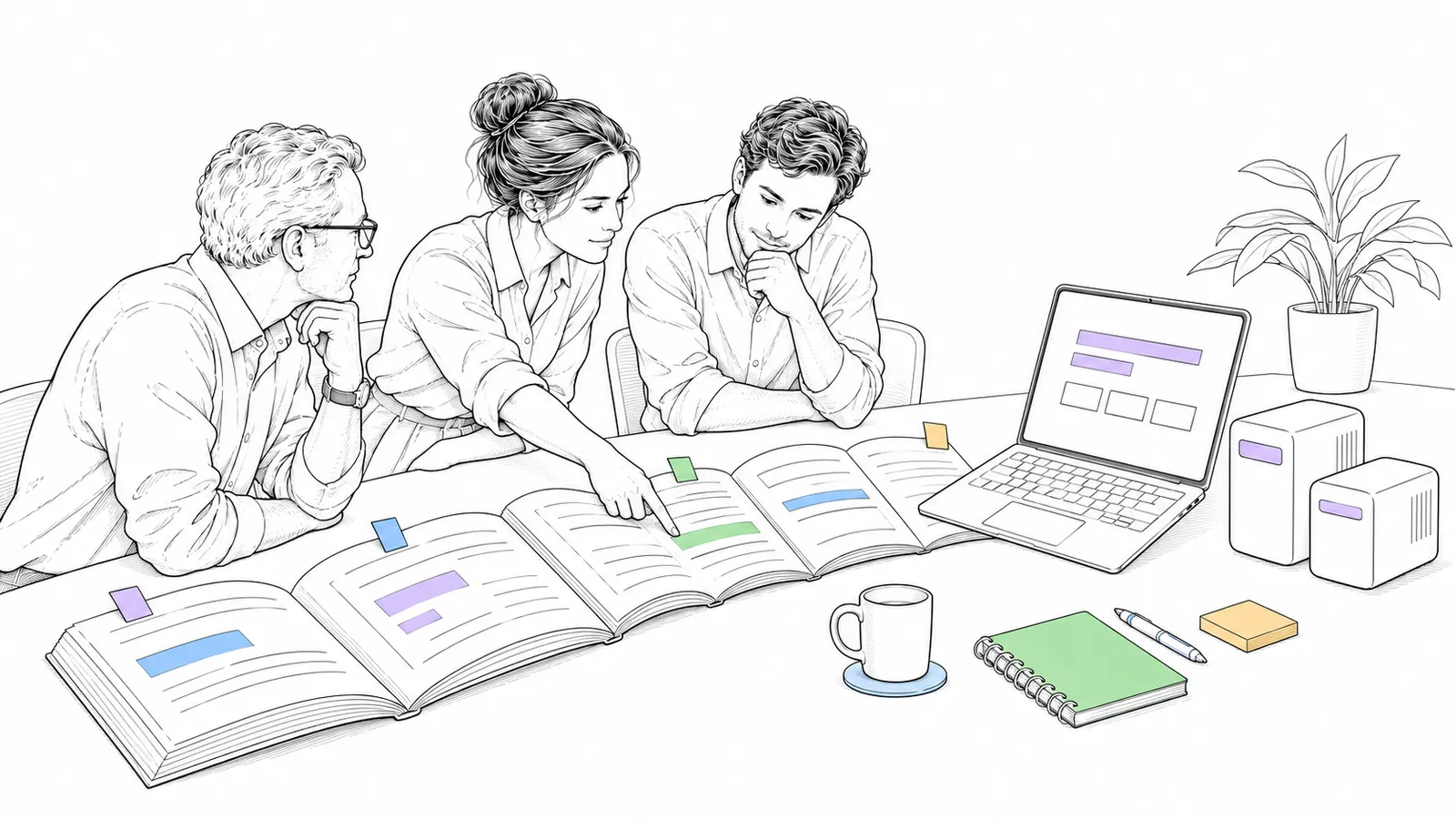
OpenAI introduced an agent that investigates sources and turns them into a report.

·

An employee finds a passage in manuals beside two model modules.

History

DeepSeek presents V4-Pro and V4-Flash
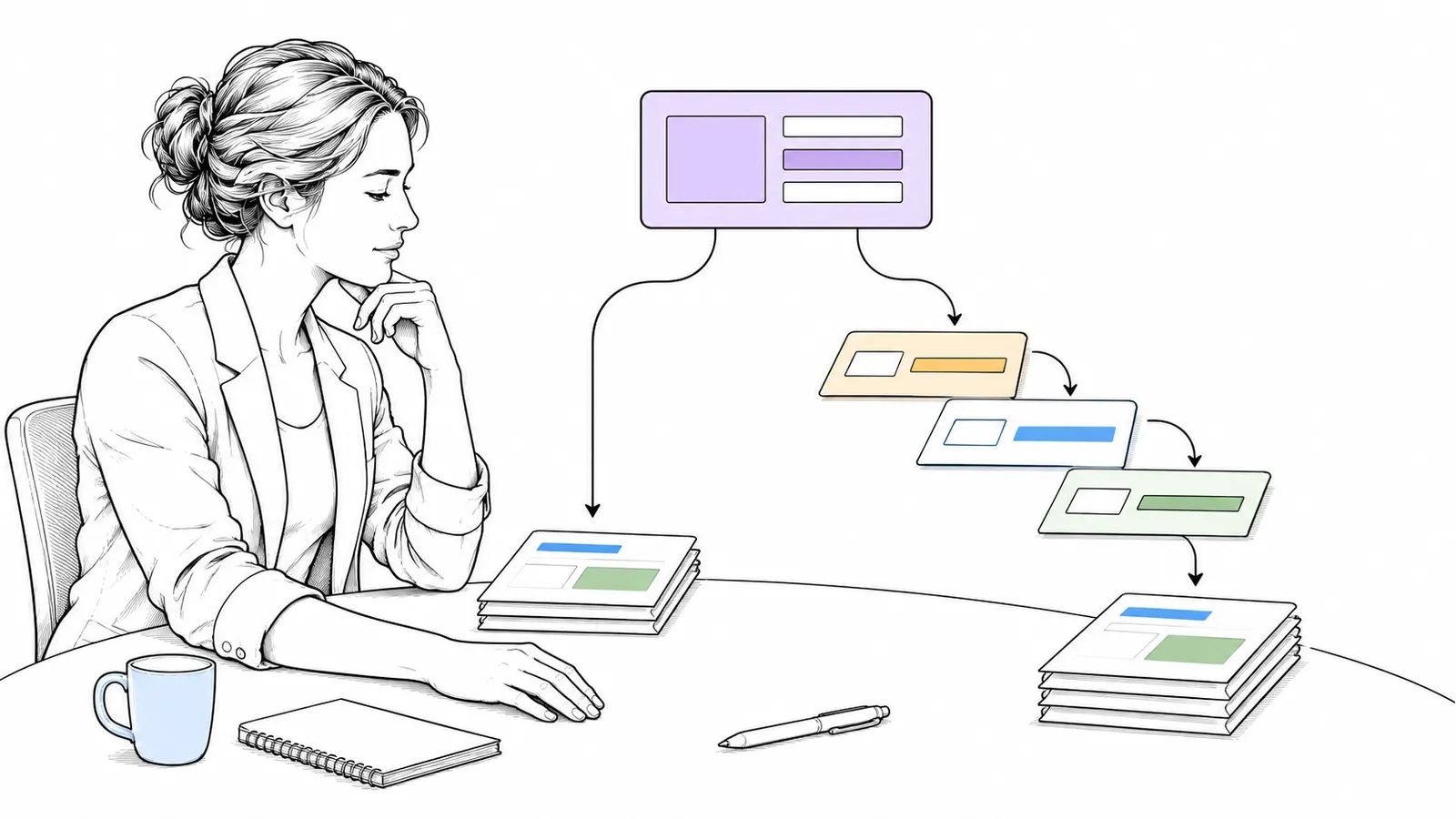
Preview versions of DeepSeek V4-Pro and V4-Flash appeared on 24 April 2026 with a one-million-token context window.

·

A worker compares a direct route with a route with extra steps.

History

DeepSeek V3.1 brings chat and reasoning together
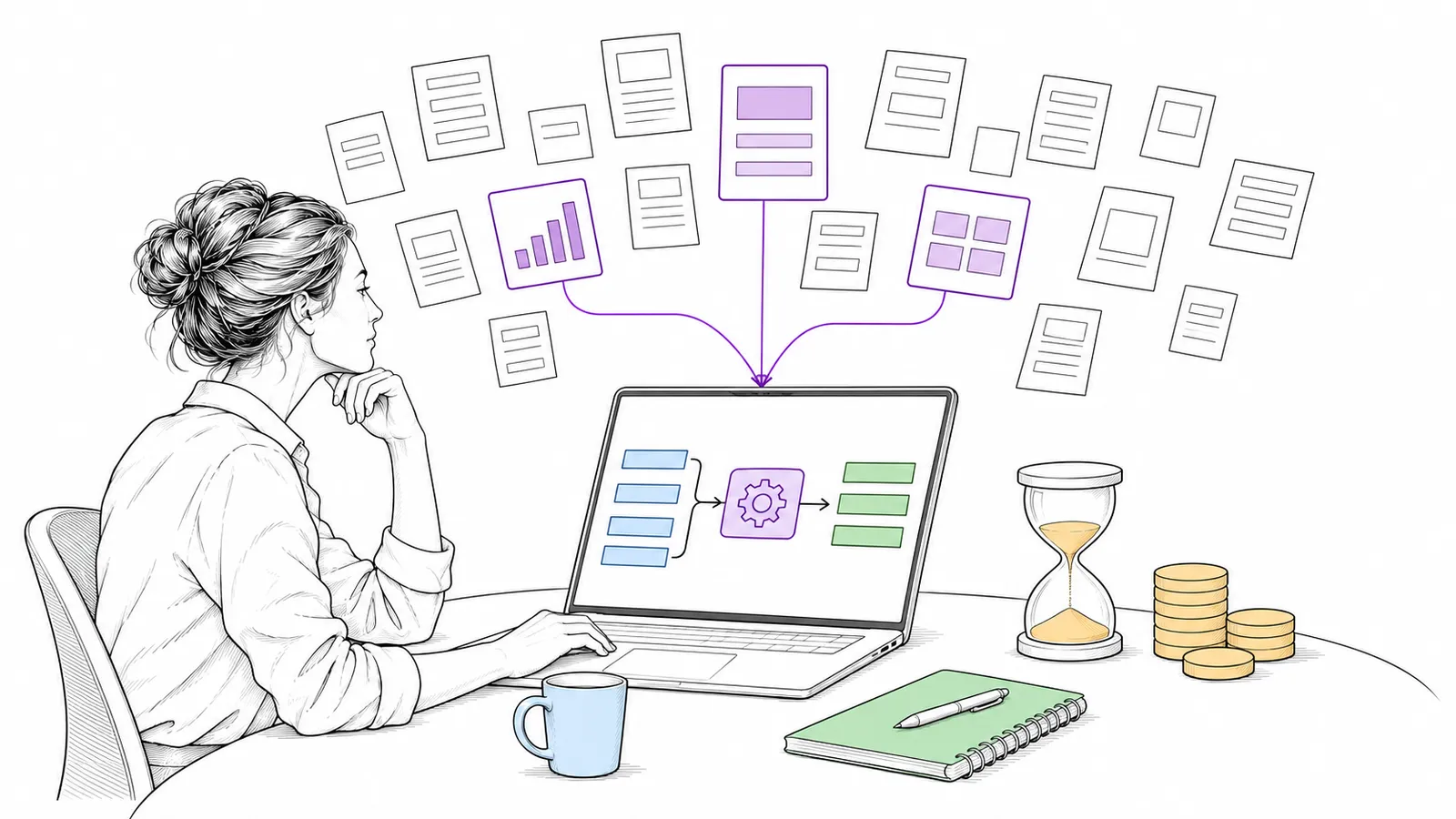
DeepSeek introduced a model with ordinary response and thinking modes.

·

A staff member examines document cards on a laptop beside an hourglass and tokens.

History

DeepSeek V3.2 focuses on more efficient model use
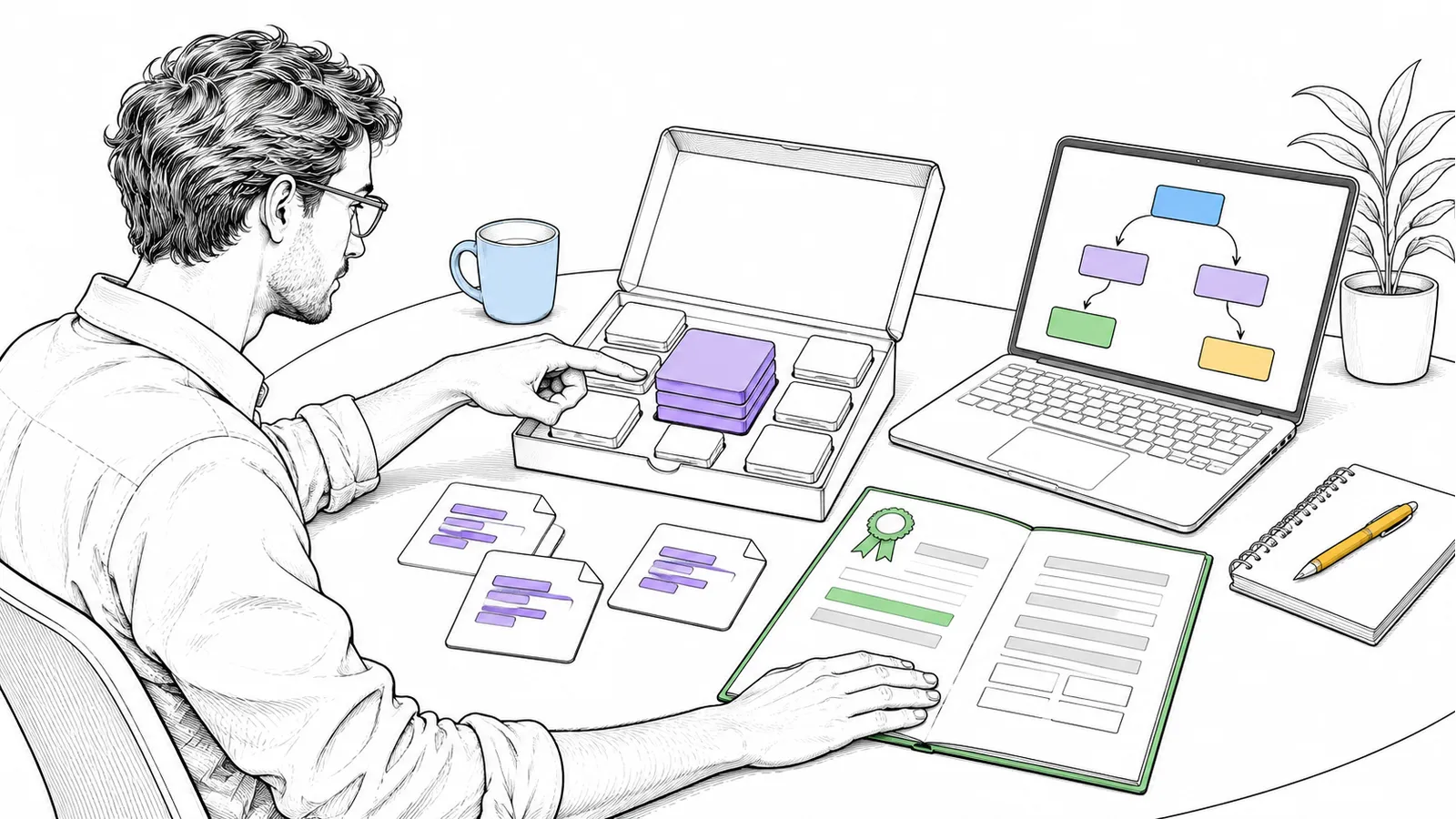
DeepSeek introduced an open model with sparse attention as part of its approach.

·

A developer examines a model module, files and a usage-rights document.

History

DeepSeek-R1 opens a reasoning model for reuse
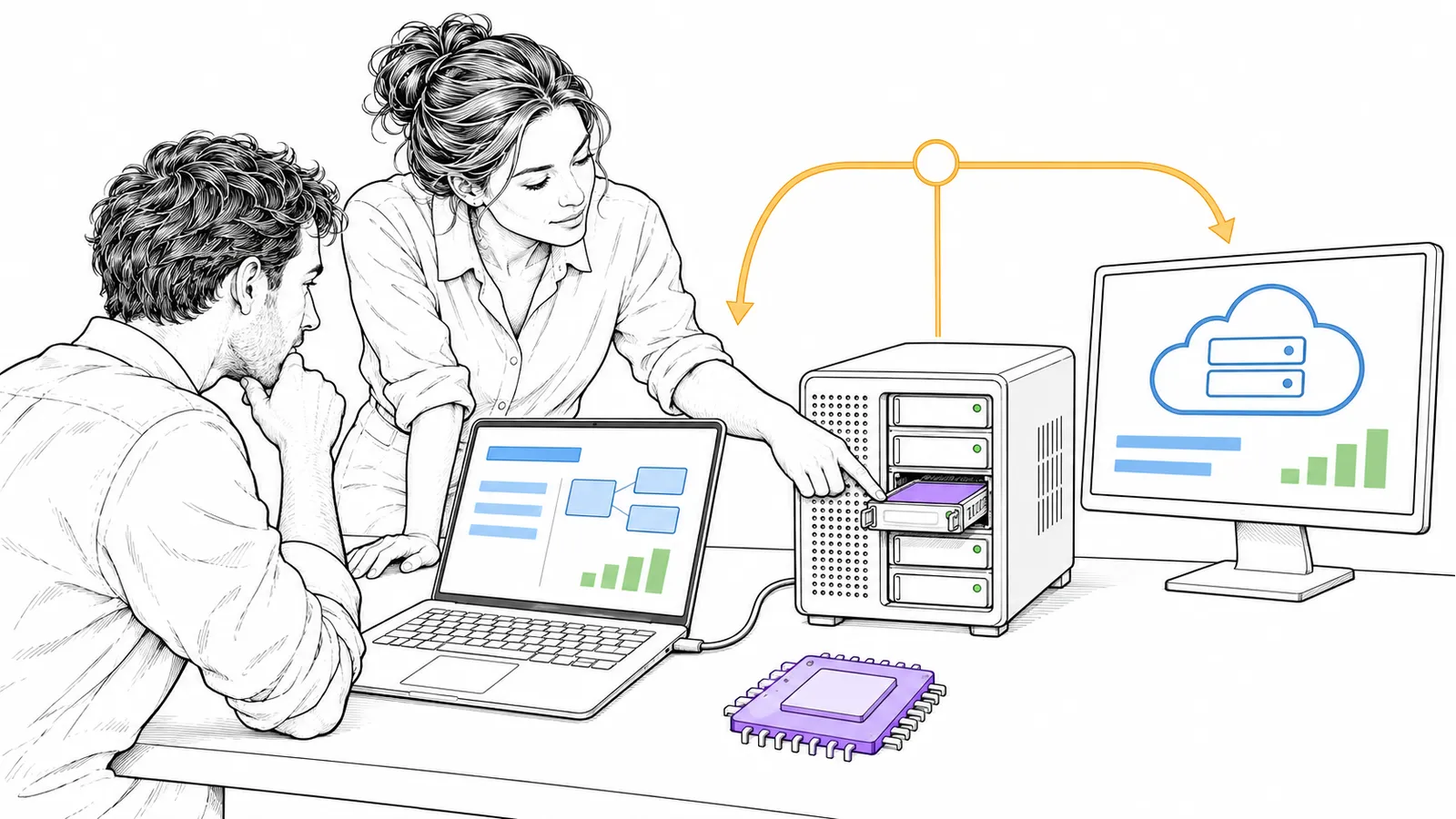
DeepSeek released R1 under an MIT licence with its own comparisons against OpenAI o1.

·

Two colleagues compare a local server with a service on a screen.

History

DeepSeek-V3 makes model weights available
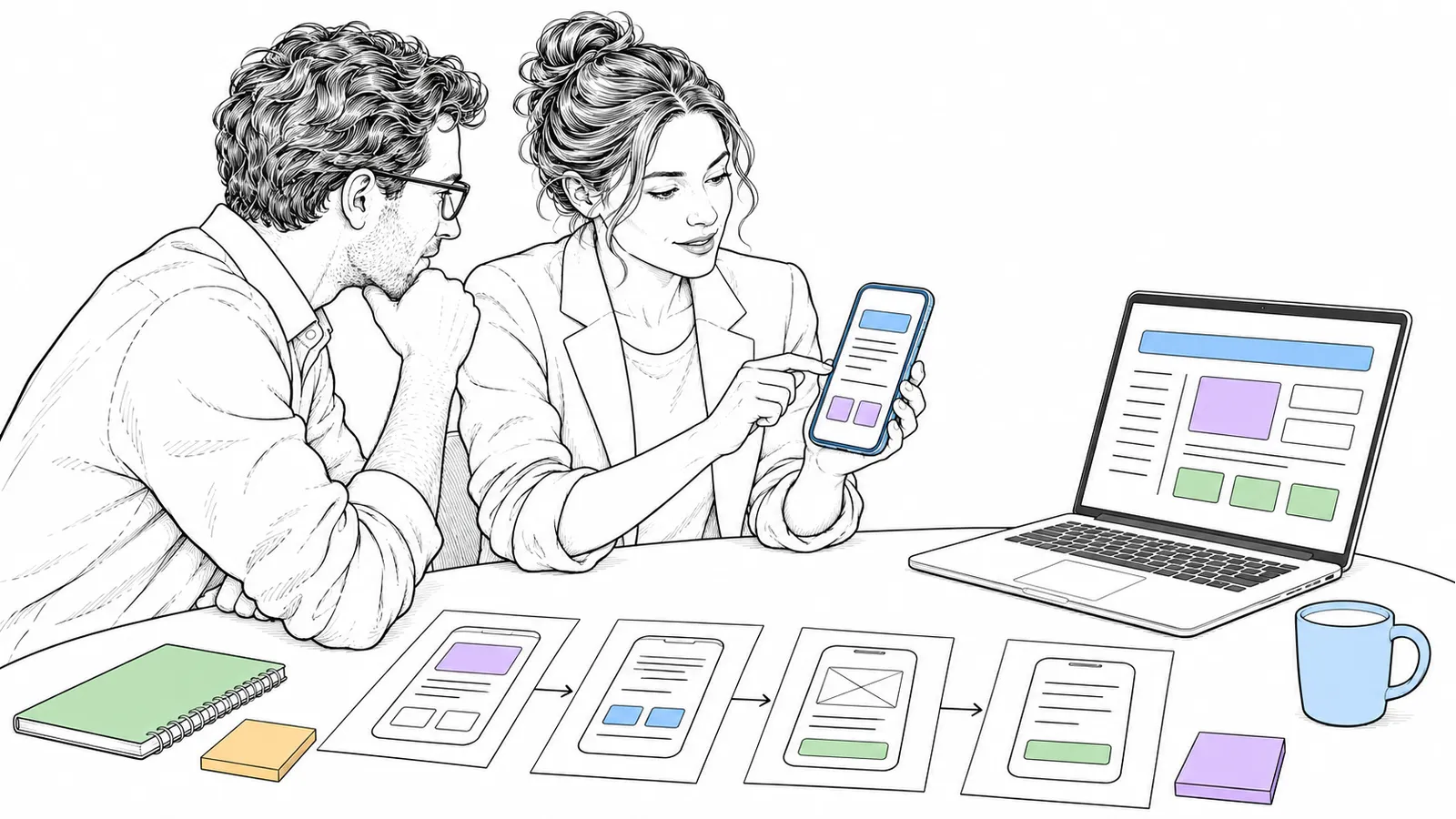
DeepSeek released V3 with available model weights and drew attention with its reported training costs.

·

Two people test a phone beside sketches of several screens.

Knowledge

Design first: a clickable journey before you build
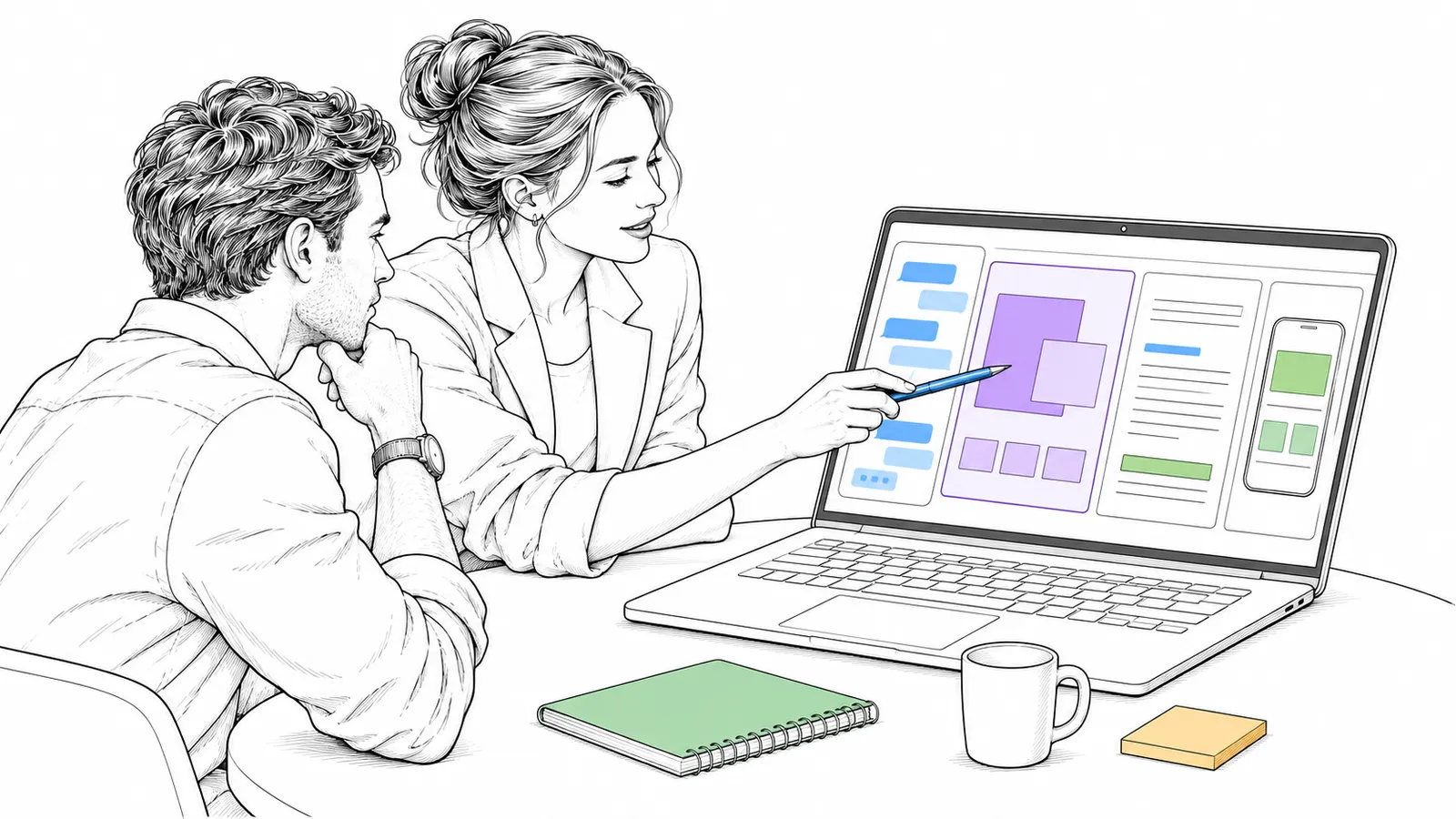
A clickable design lets you show and test what you want before there is one line of real code. This is how we work.

Two colleagues view a conversation, presentation and document on one screen.

History

Designs and documents come to the regular Claude conversation
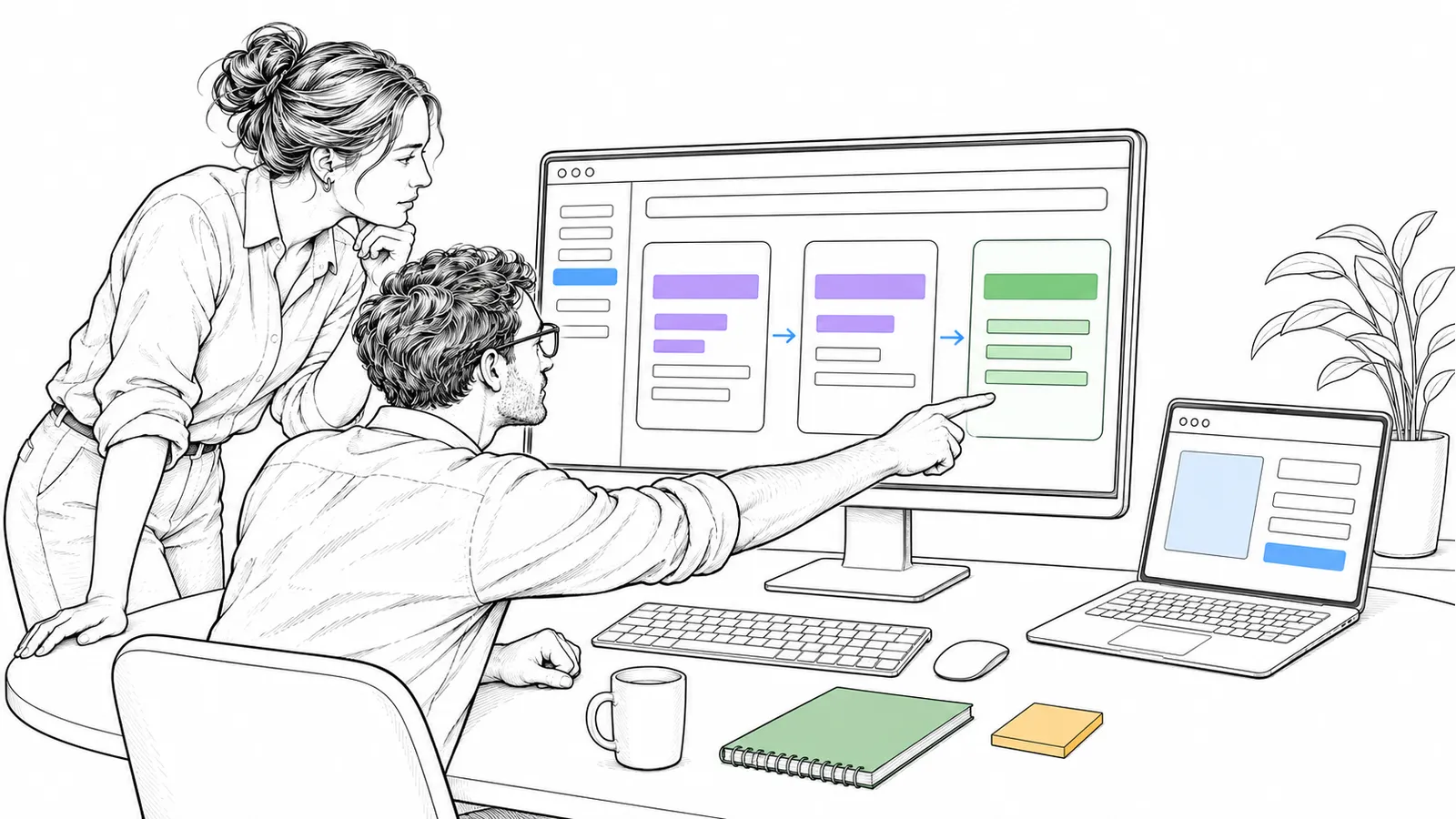
On 16 September 2026, Anthropic announced Cowork tasks, Design, Slides and Docs within regular Claude conversations.

·

A developer and a colleague review three tasks on a large screen.

History

Devin 2.0 lowers the entry point for a coding agent
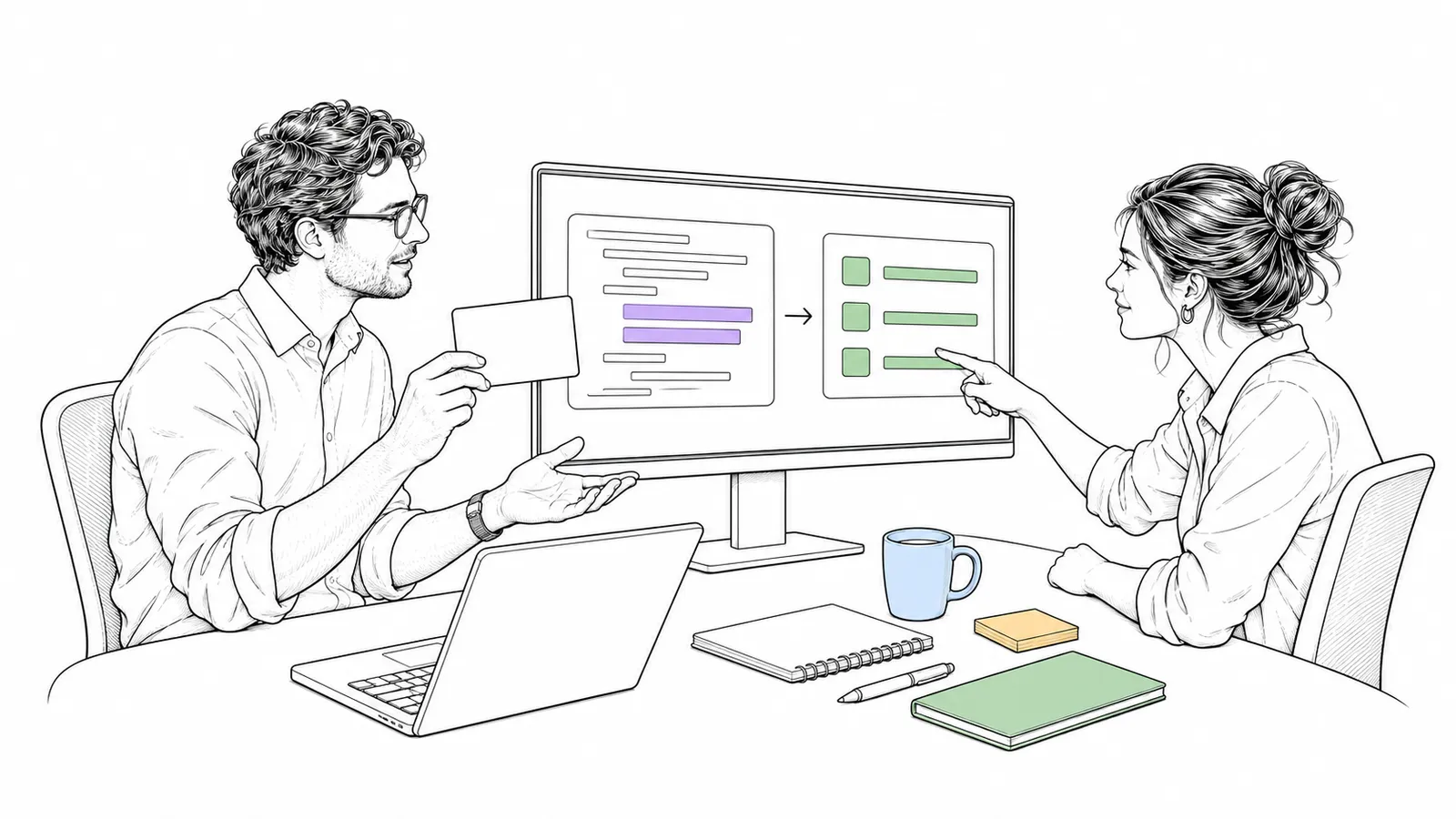
Cognition presented a new workspace for Devin with an entry plan starting at twenty dollars.

·

Two developers review a small change and its test.

History

Devin is generally available

Cognition opens Devin to teams, from $500 a month, with advice that still holds: give the agent a way to test its work.

·

A developer views a screen with three work panes and a row of task cards.

History

Devin: Cognition shows an AI developer
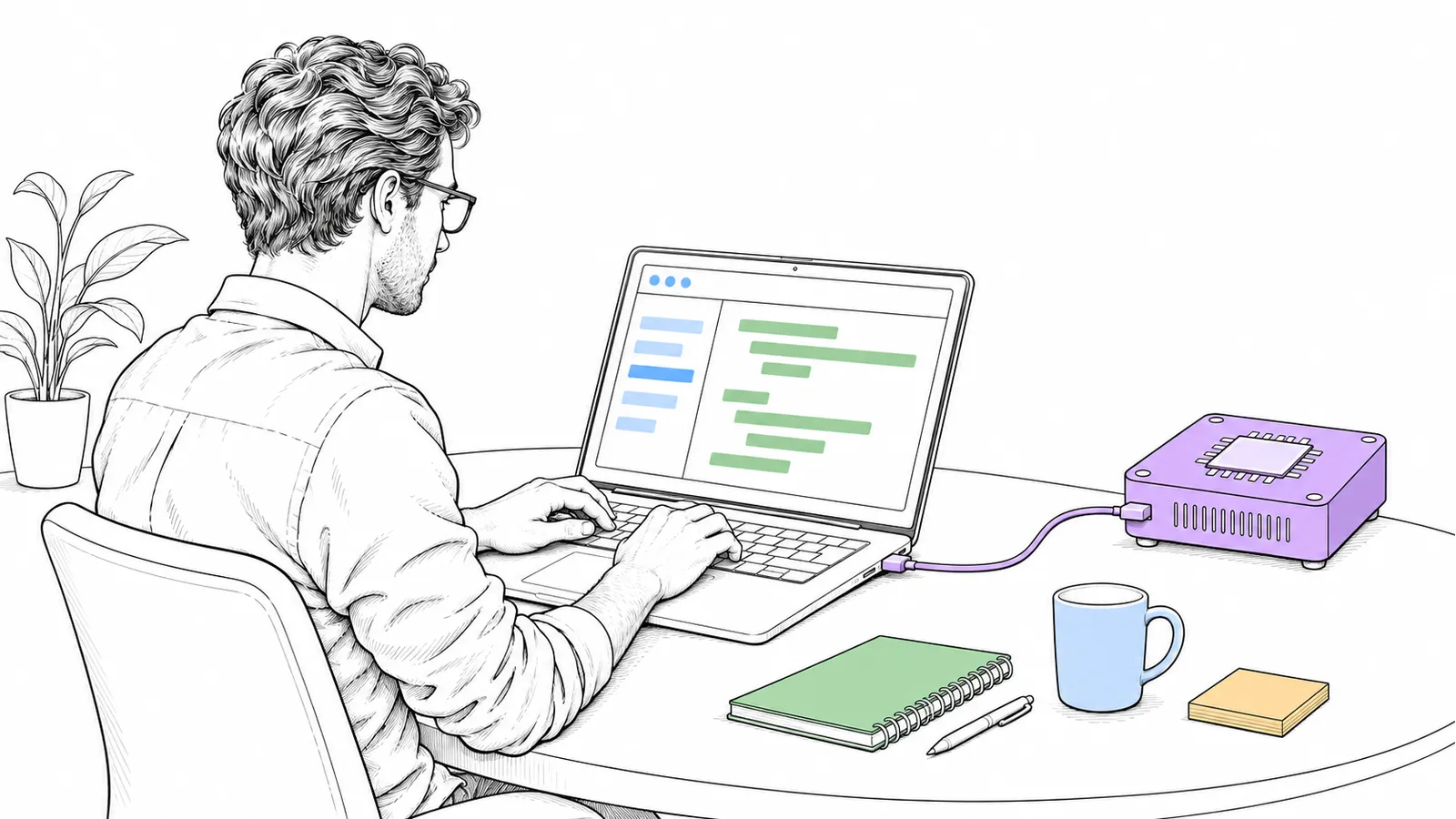
Cognition shows Devin, an agent with its own shell, editor and browser that carries out programming tasks.

·

A developer uses a terminal window on a laptop beside a separate chip.

History

Devstral 2 arrives alongside Mistral Vibe
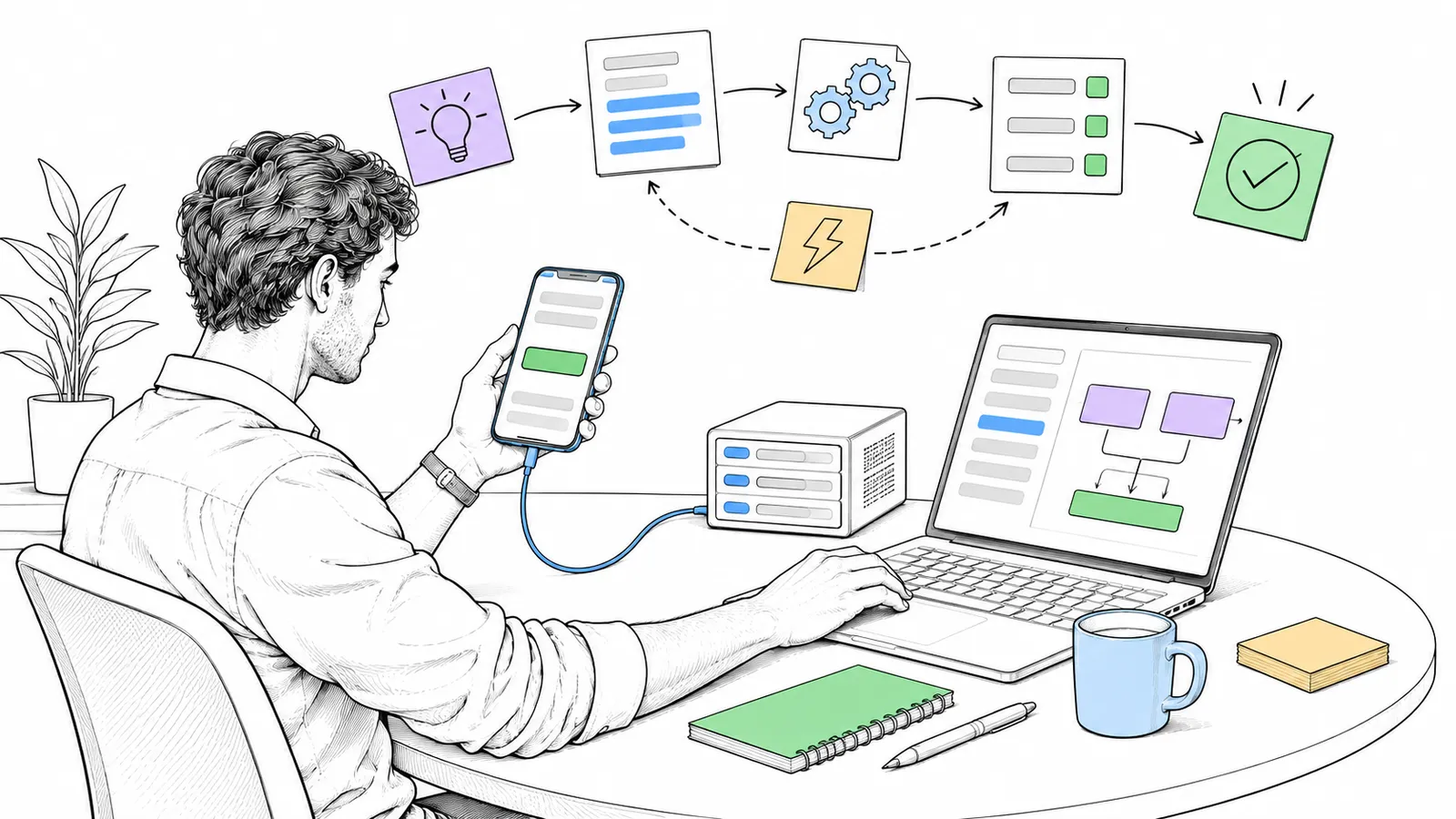
Mistral introduced a coding model and a corresponding terminal agent.

·

A developer tests a phone beside a laptop and a server.

Knowledge

End to end first, including the deploy
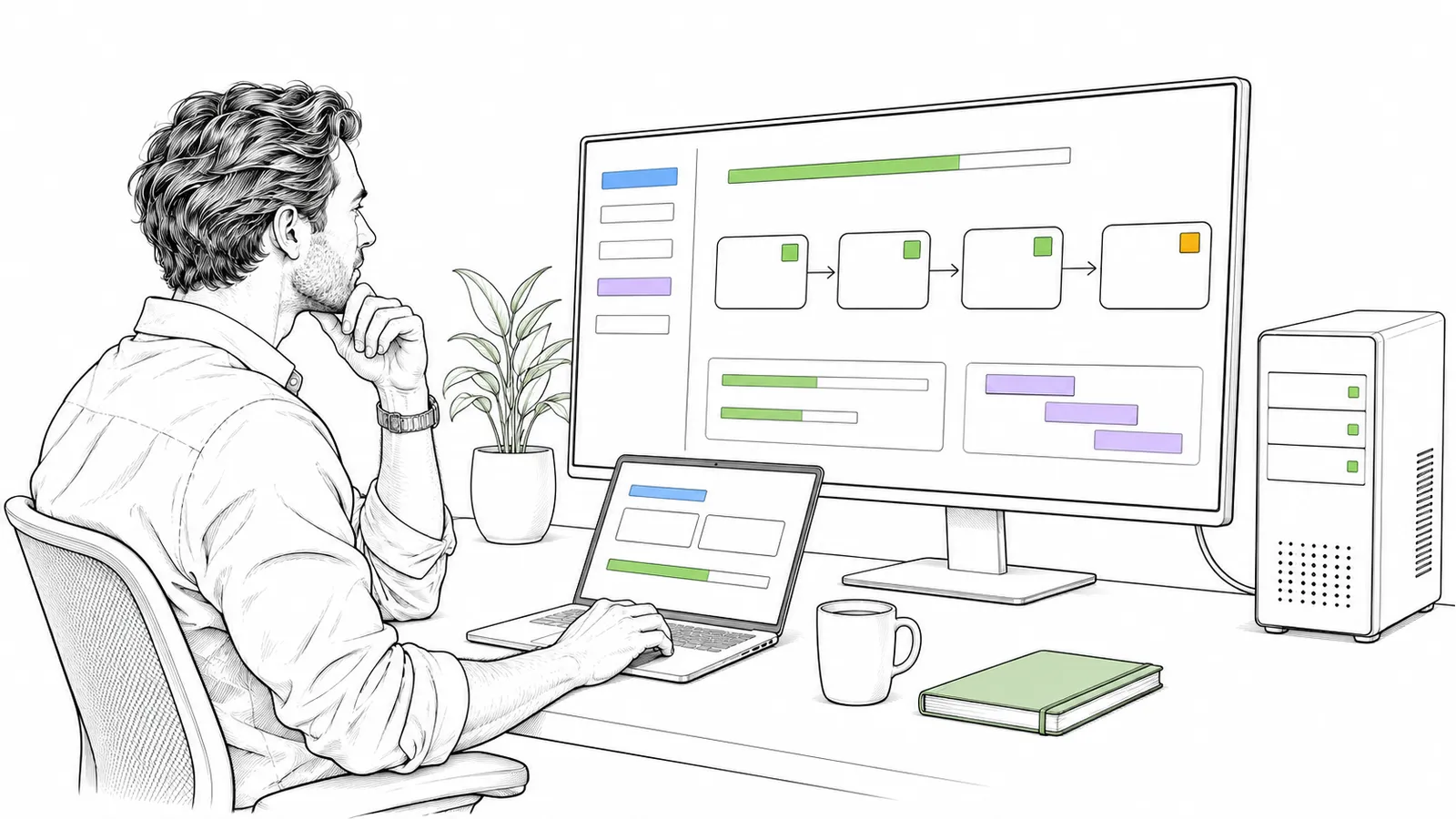
First build the thinnest version that really works from start to end, deployed and all. Only then make it wider and nicer.

A developer views a series of checks on a screen.

Knowledge

Every step tested on its own, and deployed automatically with CI/CD
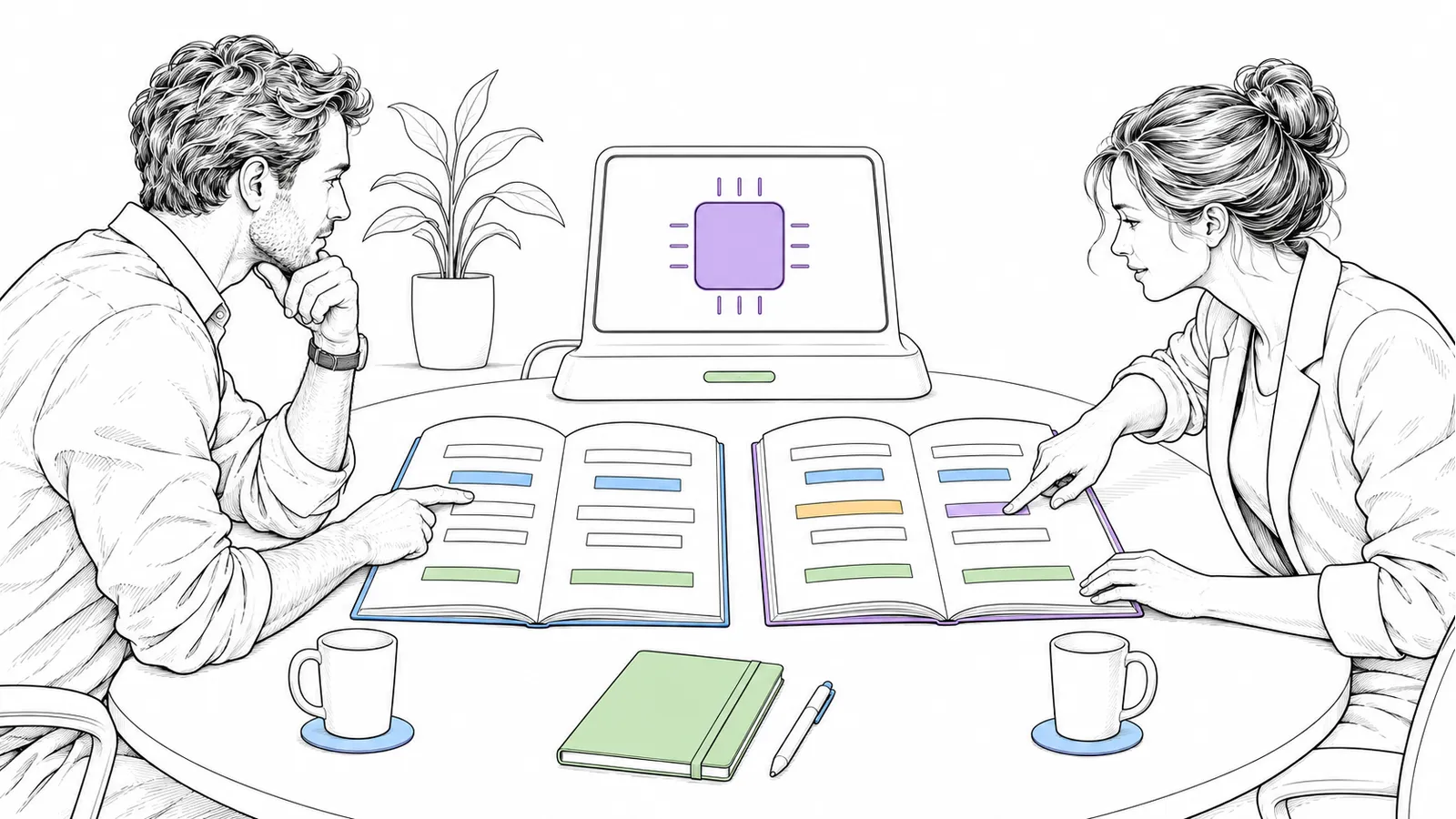
When each step has its own test, you know at once where an error is. CI/CD runs those tests at every change and deploys the result.

Two colleagues compare open instructions beside a model module.

History

Fable 5 opens a new Claude generation
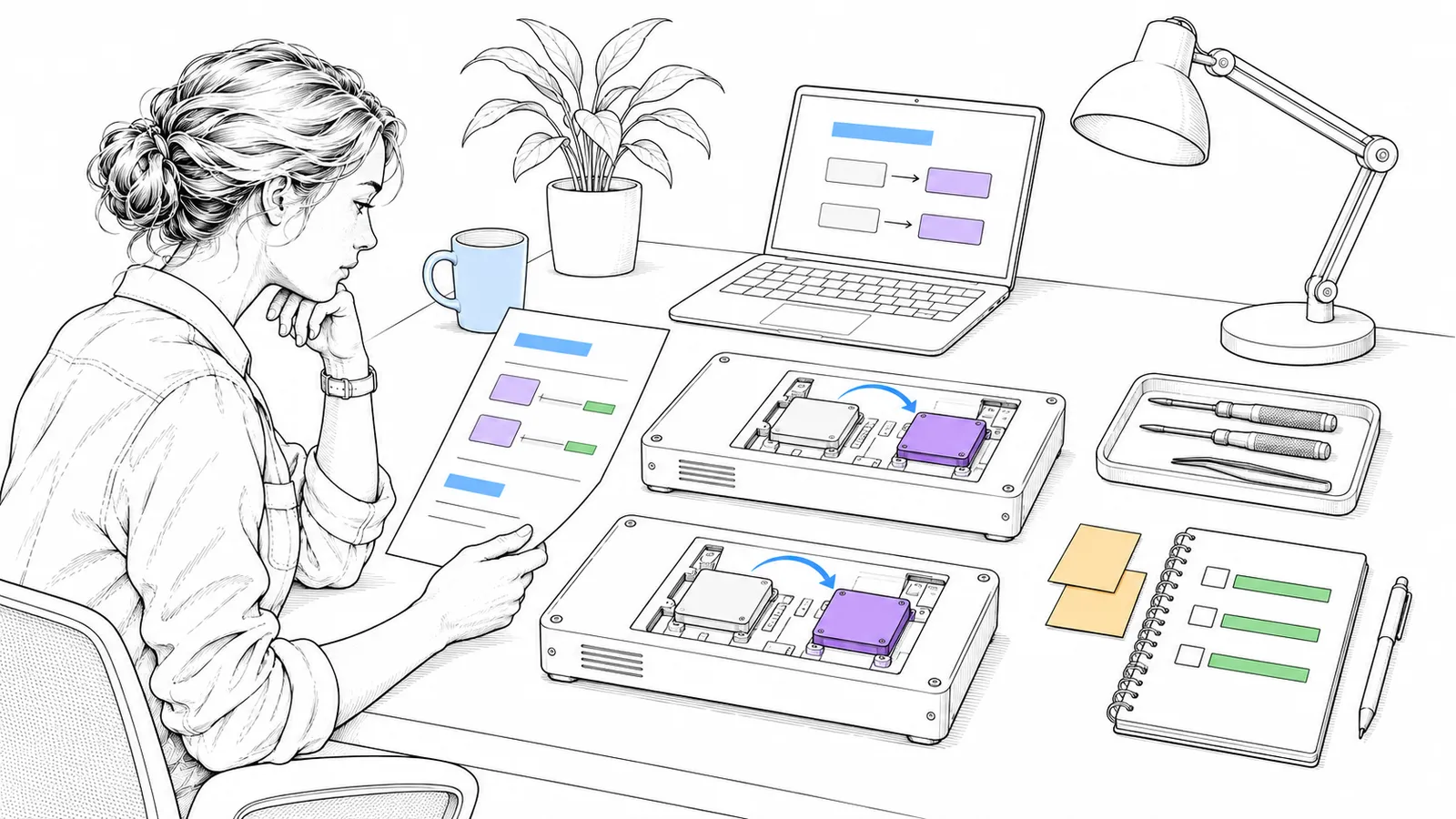
Anthropic introduced Claude Fable 5 on 9 June 2026 as the start of a new model generation.

·

An employee studies two model modules and a change sheet.

History

Fable and Mythos get version 5.1
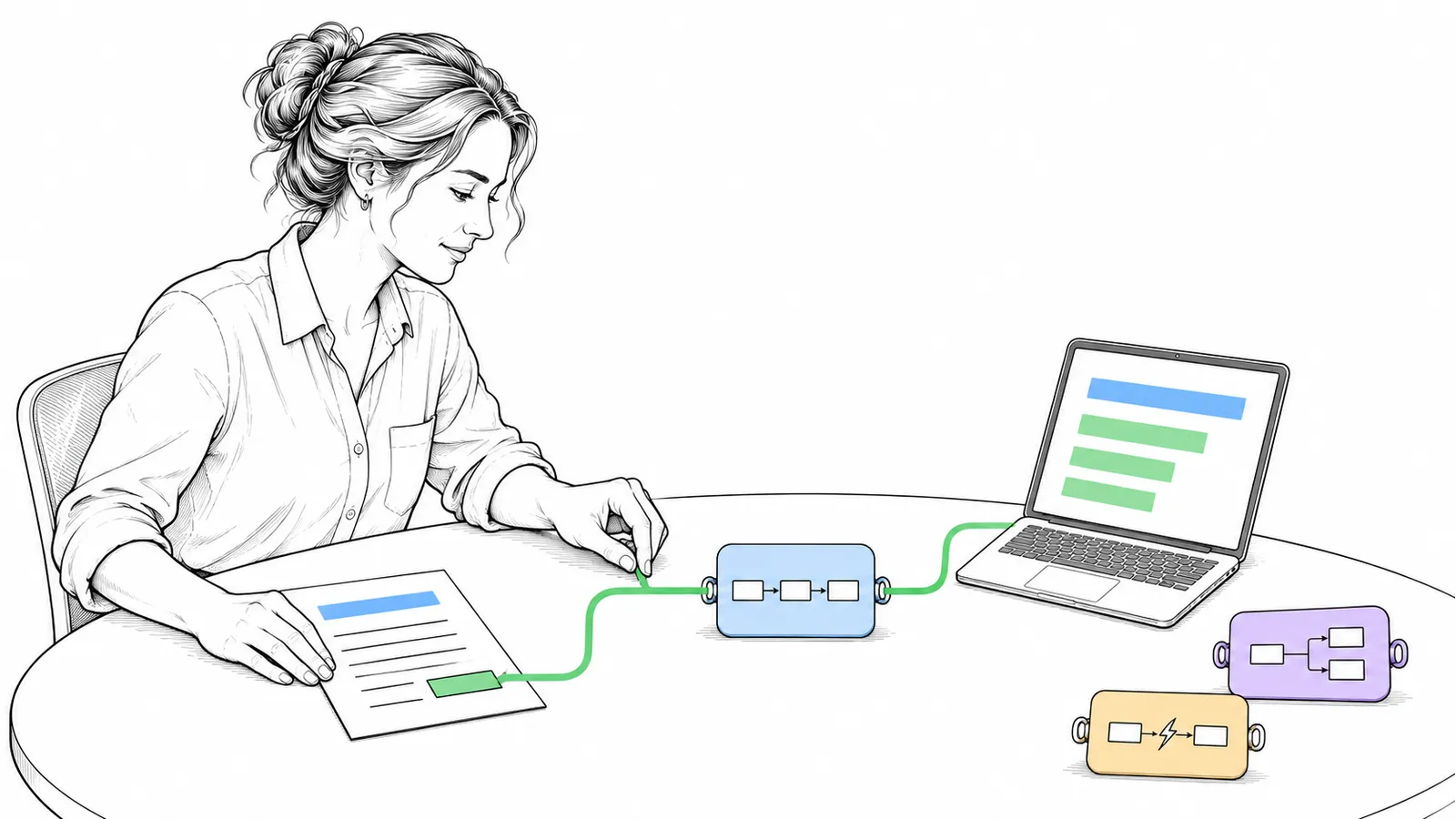
Anthropic introduced Claude Fable 5.1 and Claude Mythos 5.1 on 1 September 2026.

·

A worker connects a document through one small module to a working screen.

Knowledge

First the thinnest real line, end to end
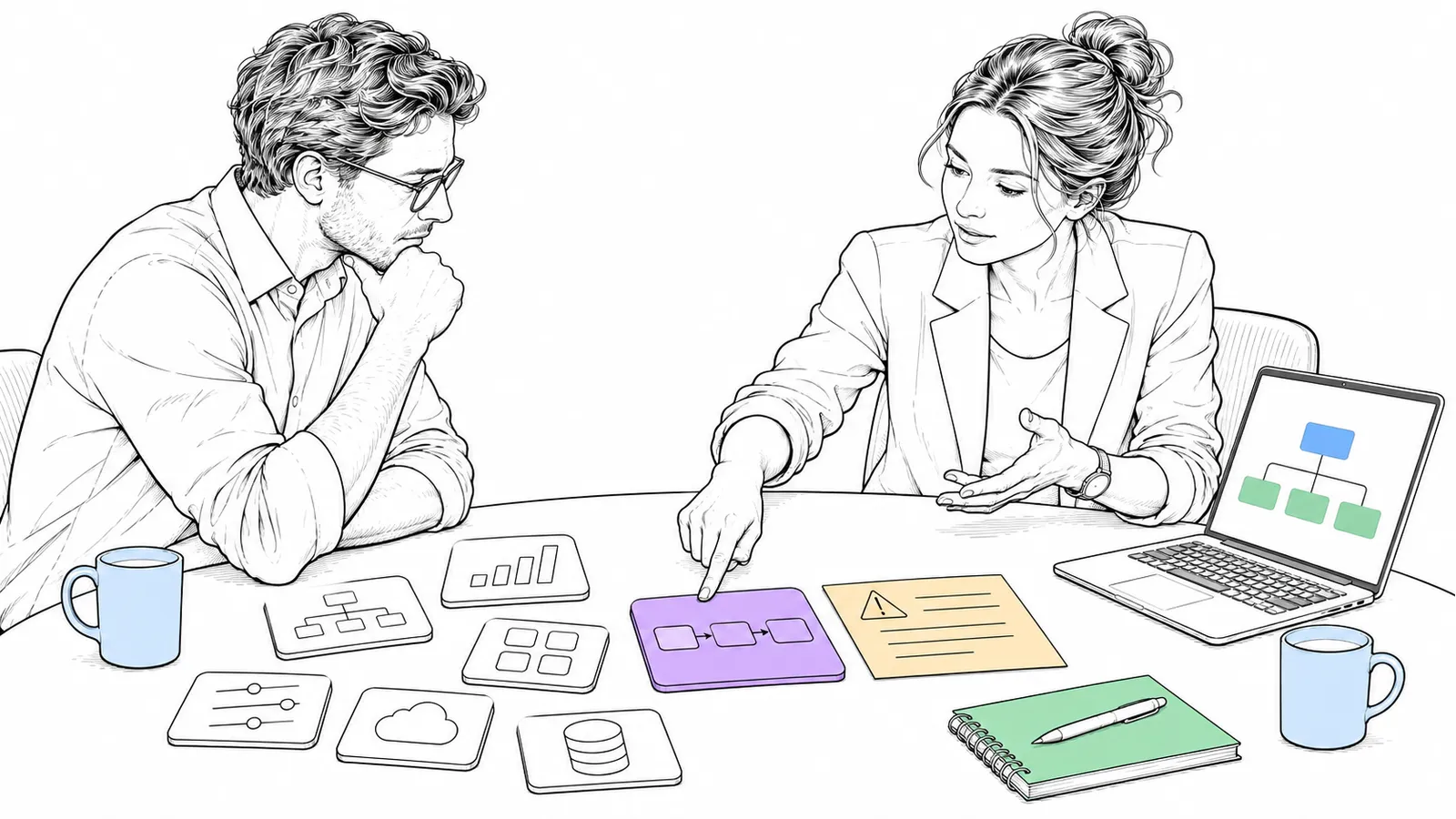
What we learn from Karpathy's recipe for training neural networks: first build the smallest whole that truly works, and only then make it better.

Two people compare loose modules with one selected module beside an orange card.

Knowledge

Five things in your AI toolkit you can replace
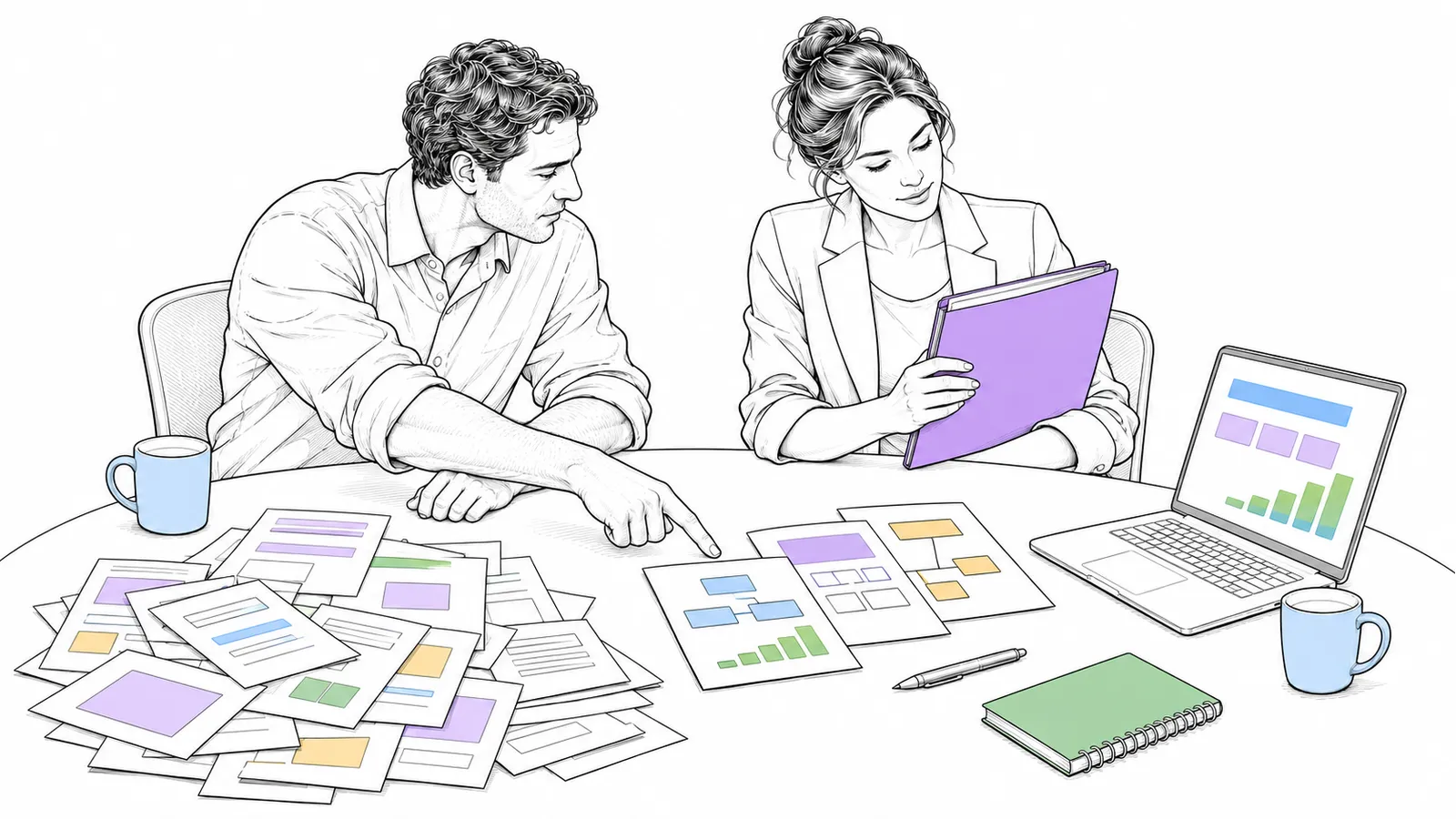
A LinkedIn post by David Arnoux names five replacements. For each: what it is, what it replaces, when it fits a small business, and what we use.

A designer compares two images of the same tool.

History

FLUX.1 Kontext edits images using text and image input
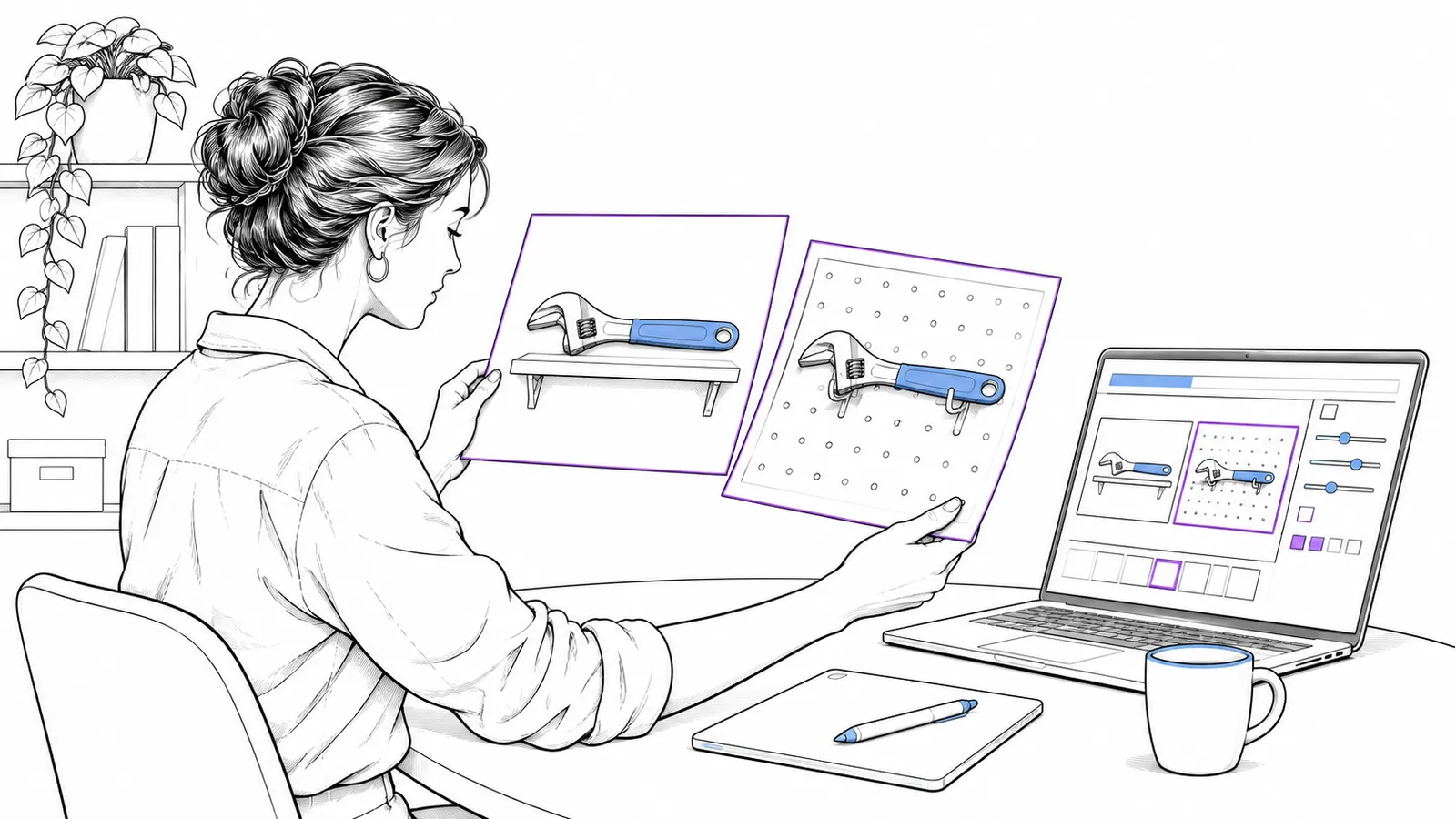
Black Forest Labs introduced a model family for creating and selectively editing images.

·

A designer combines images of a jug and a setting on a screen.

History

FLUX.2 works with multiple reference images
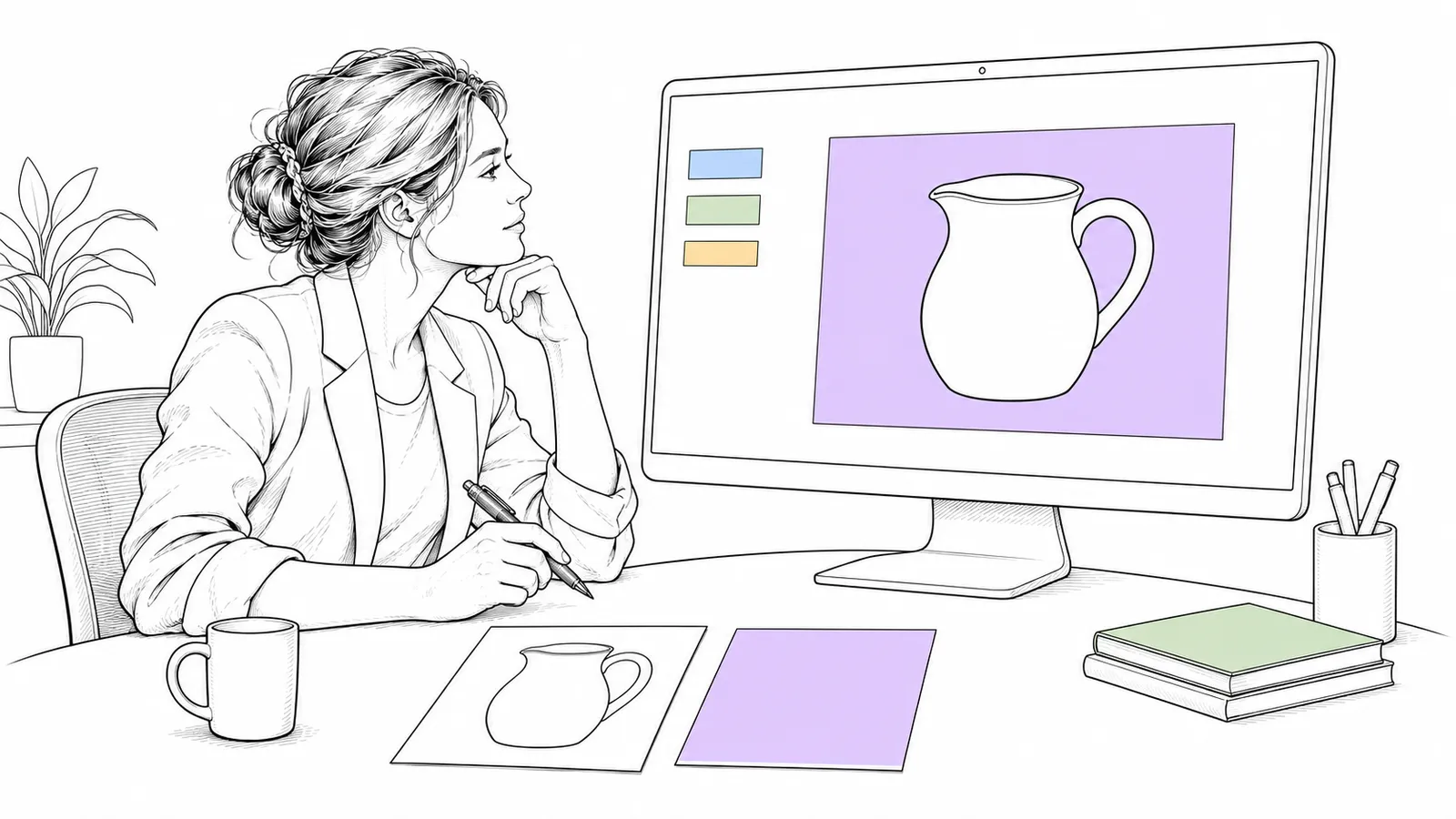
Black Forest Labs introduced an image model that can use several examples.

·

Two people select documents beside a laptop.

Knowledge

From prompt engineering to context engineering
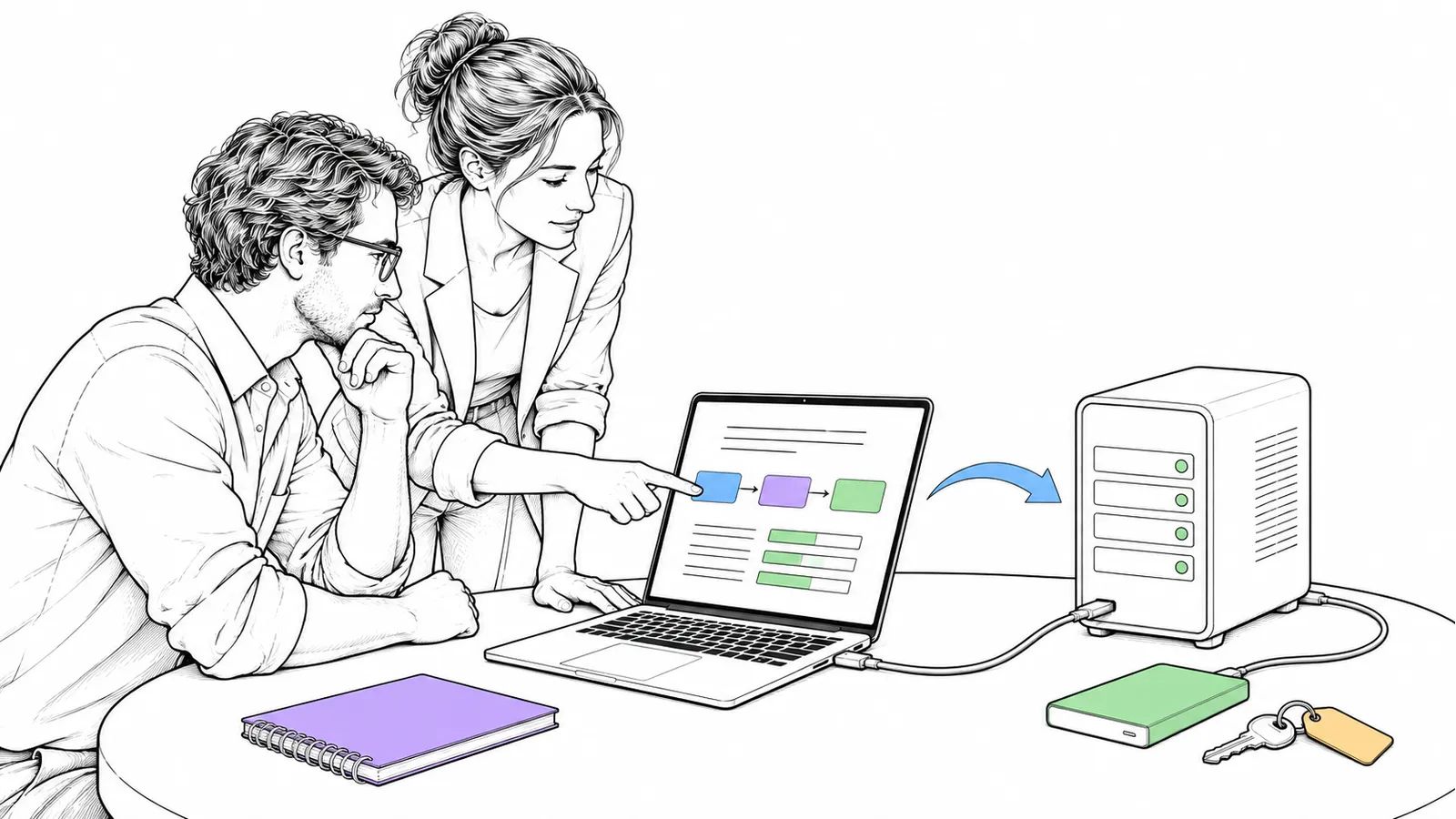
The right word in your prompt matters less than the right information in the model's working memory.

Two people inspect an app on a laptop beside a server, a key and a backup drive.

Knowledge

From your Lovable project to a lasting solution
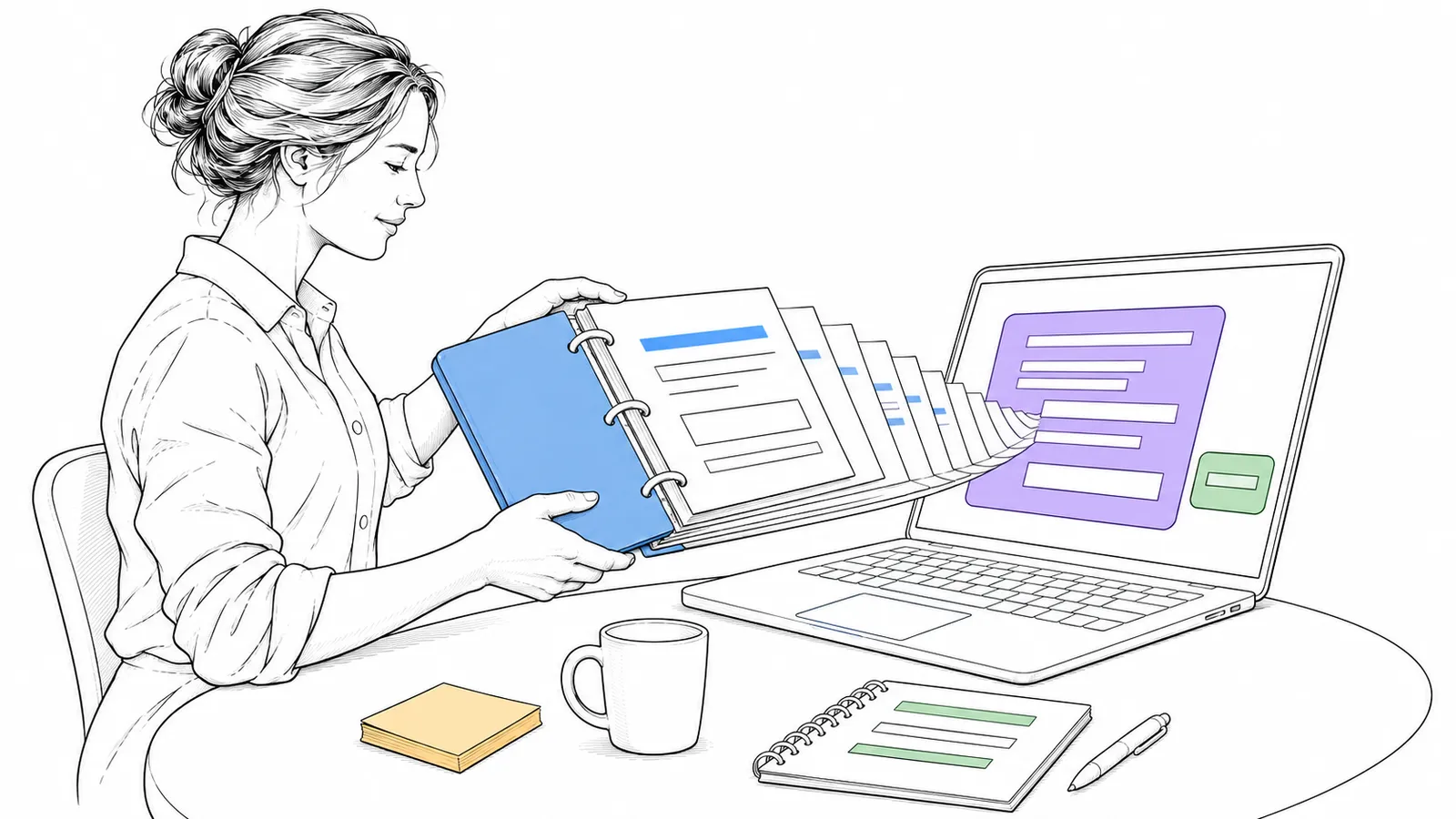
With Lovable or Claude you go fast. Then you want it to keep working: with tests, access rights, backups and a server of your own.

A worker studies a thick dossier beside a laptop with a large purple document panel.

History

Gemini 1.5 Pro reads a million tokens
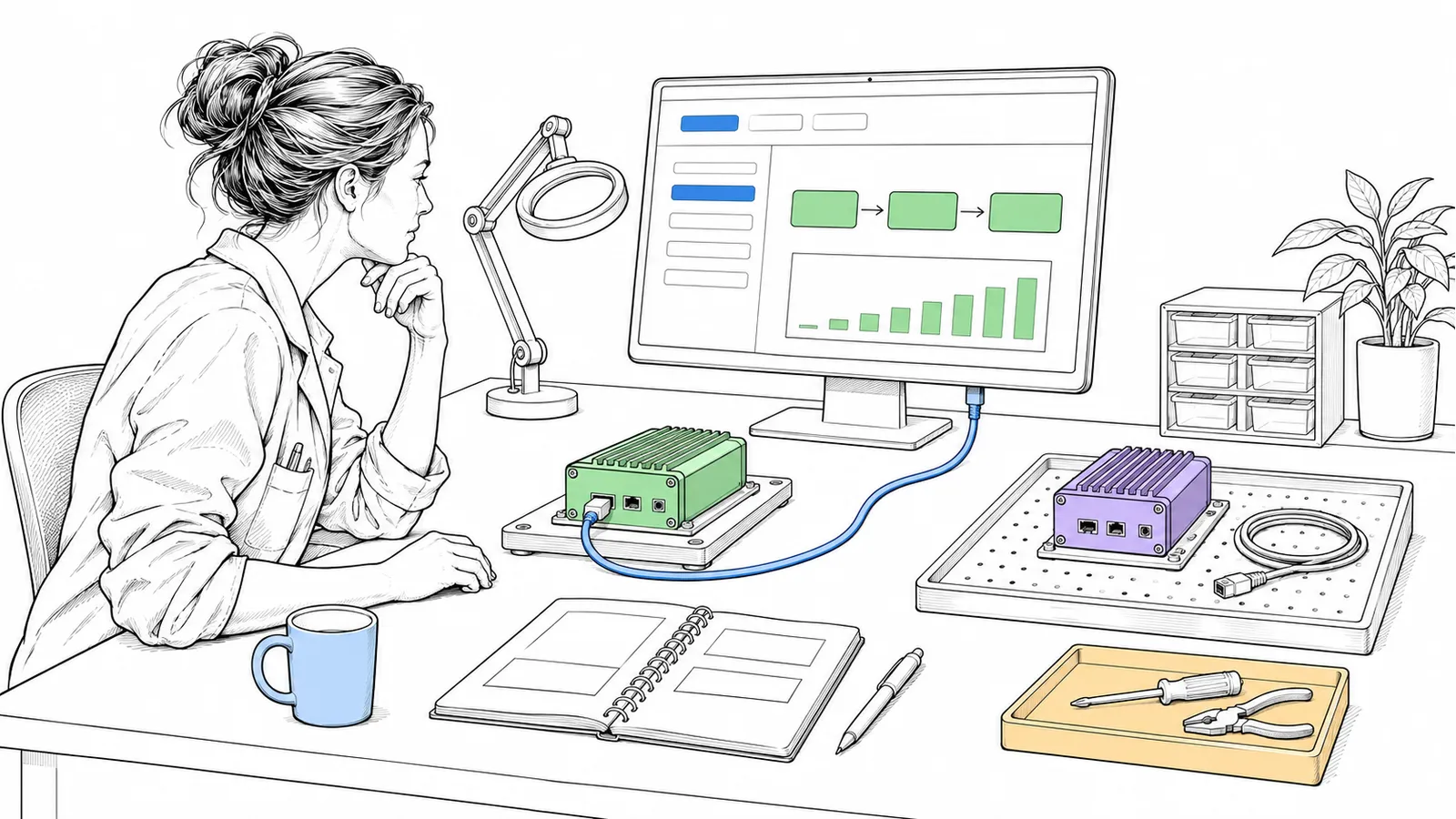
Google shows a model that handles up to 1 million tokens of context, first as a limited preview for developers.

·

A technician examines a connected module and a separate module on a test tray.

History

Gemini 2.0 Flash becomes generally available
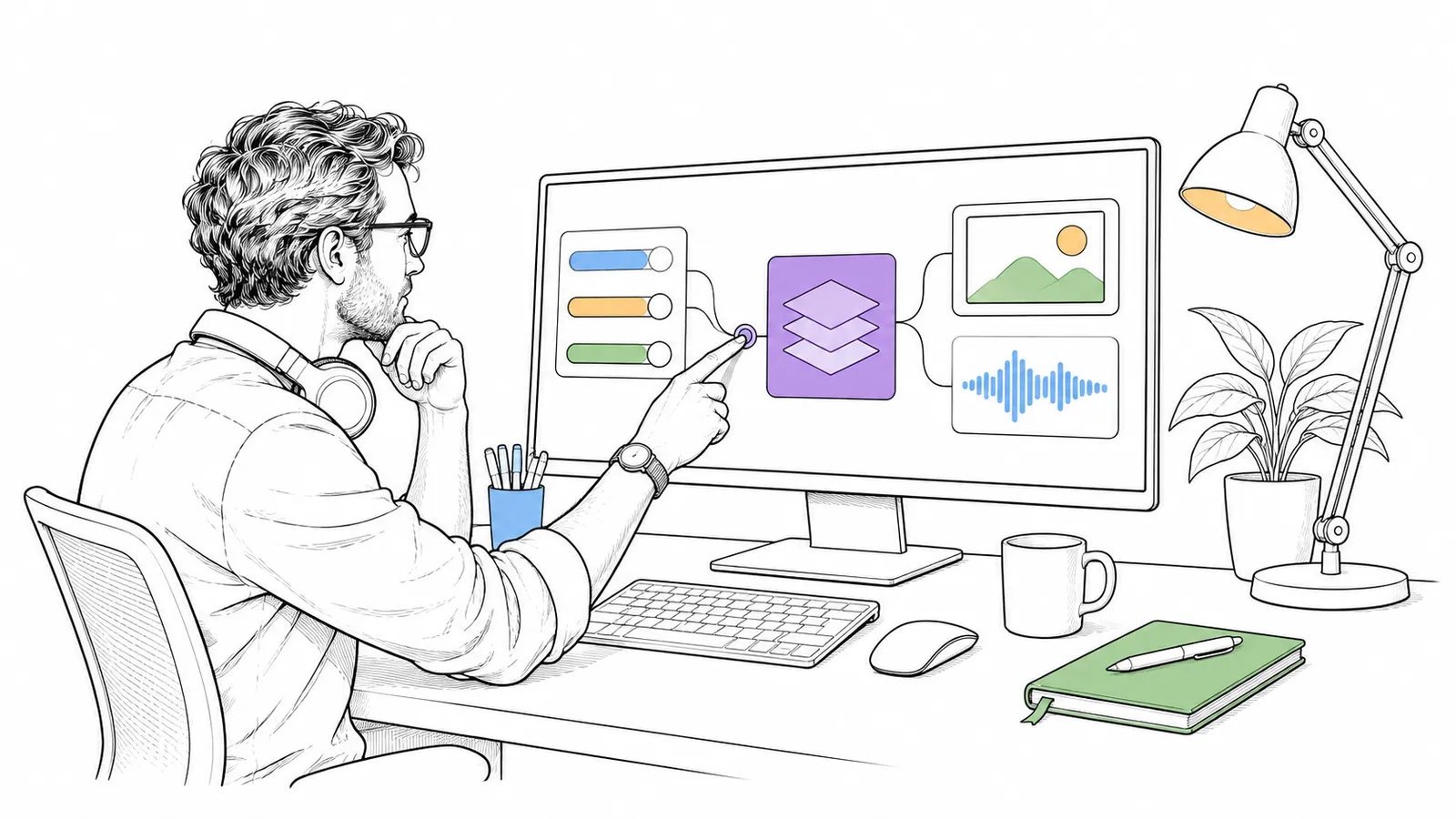
Google made Flash available for production use and also presented an experimental Pro version.

·

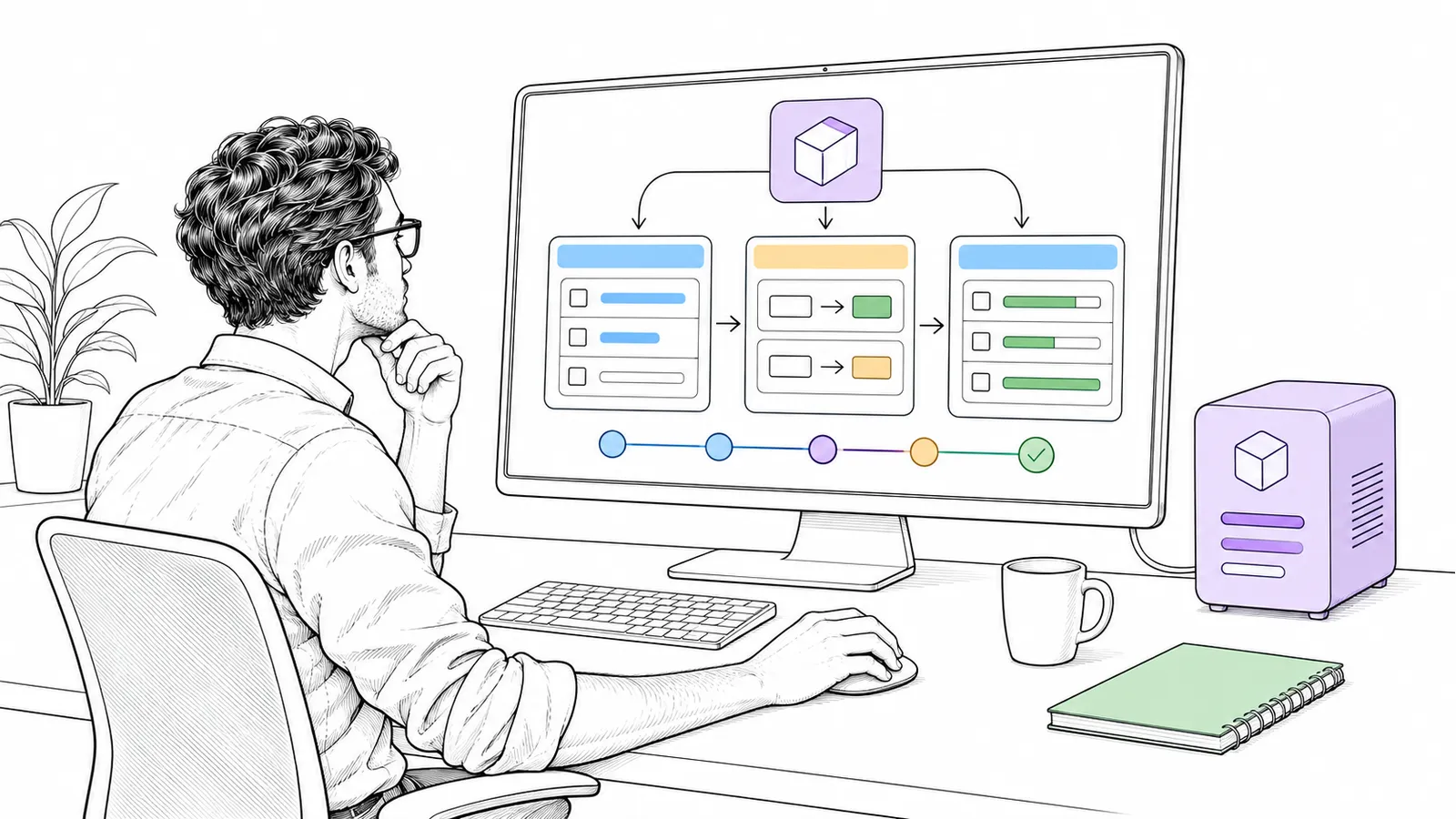
A developer reviews how a model connects images, audio and a tool.

History

Gemini 2.0 Flash, a model for agents
Google releases Gemini 2.0 Flash: faster than 1.5 Pro, with image and speech output and built-in tools.

·

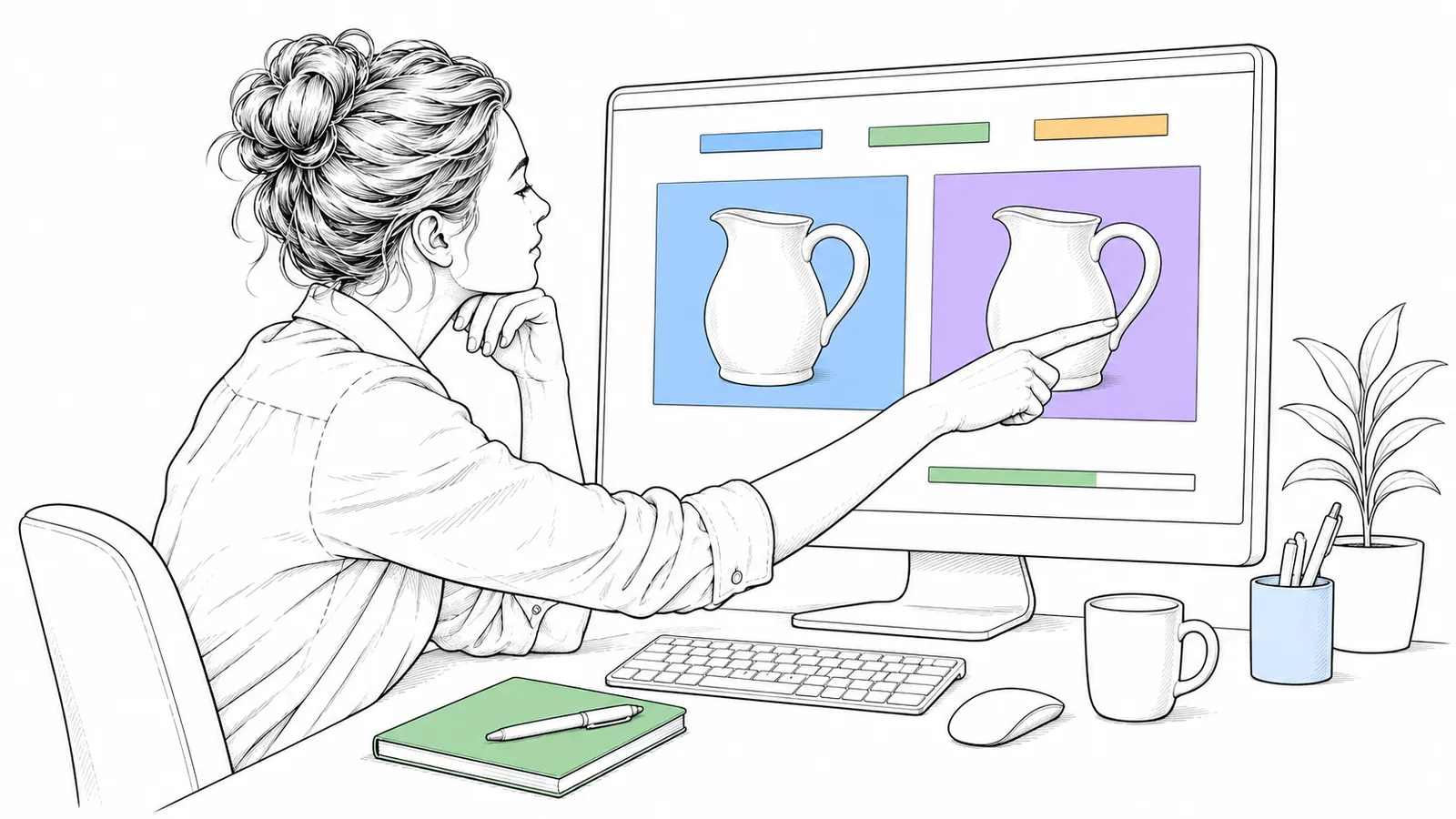
A designer compares two images of the same jug with different backgrounds.

History

Gemini 2.5 Flash Image puts image editing in the conversation
Google introduced the image model that also became known as nano banana.

·

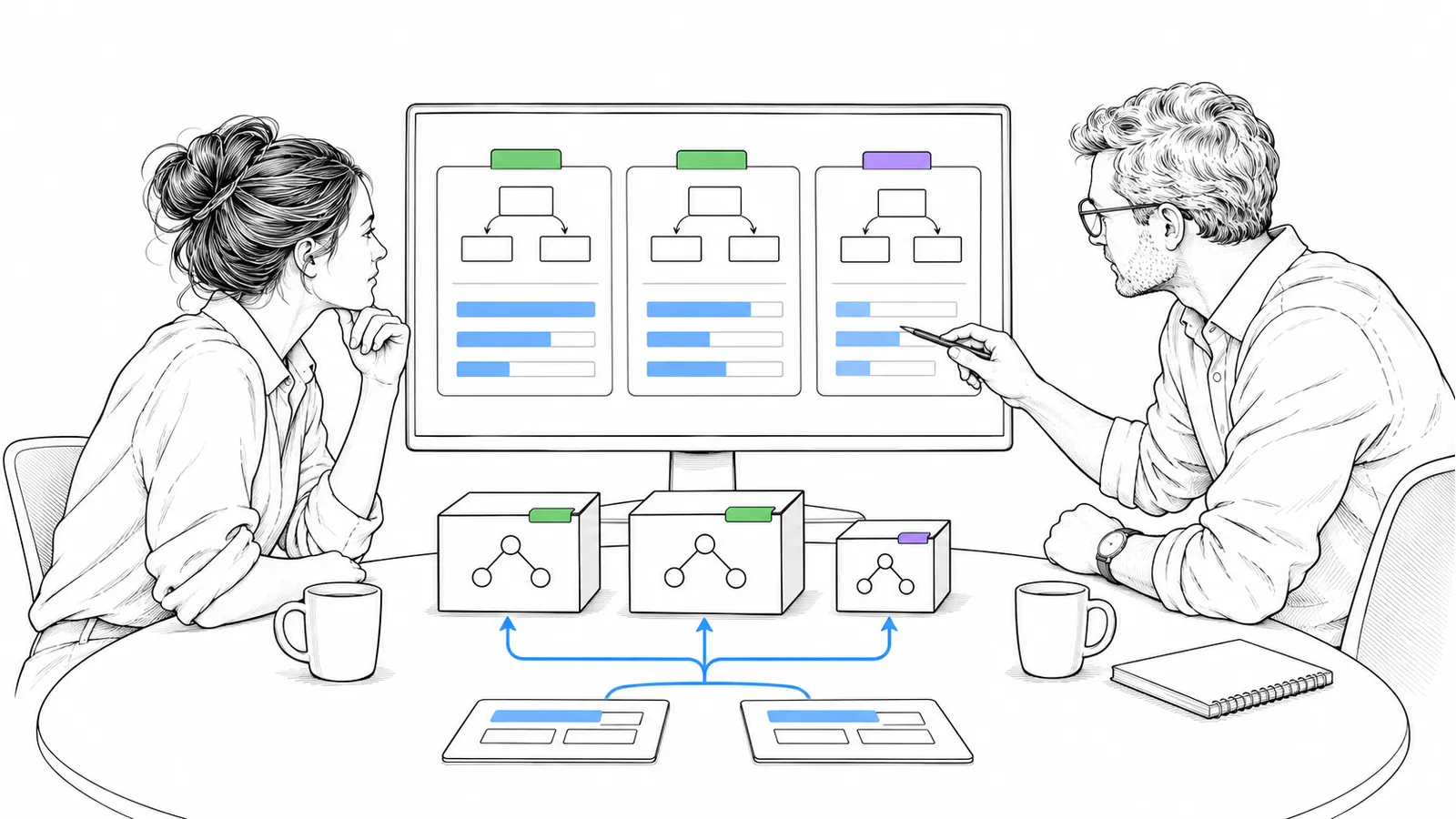
Two people compare model outputs using the same trial cards.

History

Gemini 2.5 Pro and Flash get stable versions
Google made Pro and Flash generally available and introduced Flash-Lite as a preview.

·

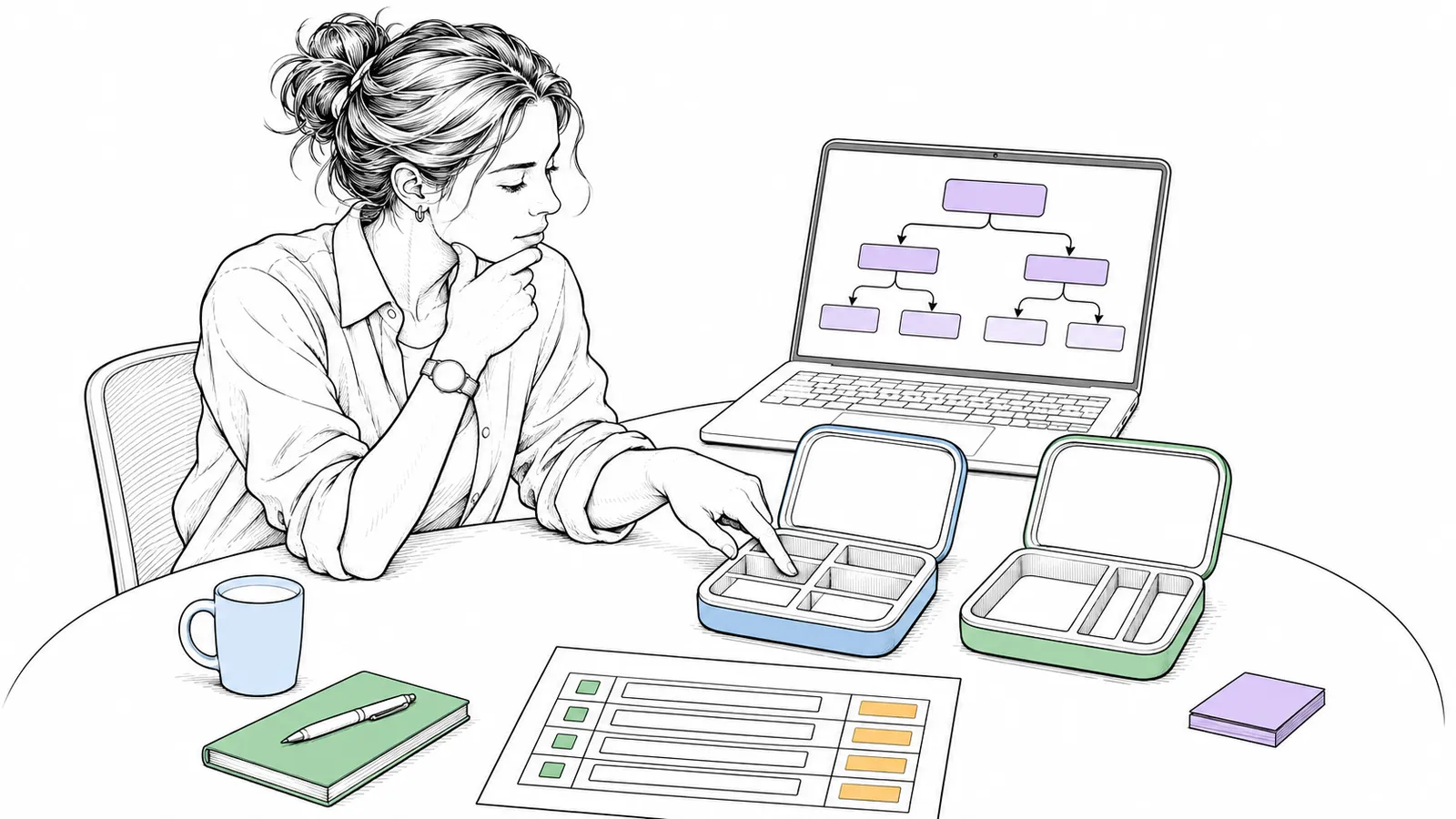
An employee compares two storage cases with a requirements sheet and a laptop.

History

Gemini 2.5 Pro starts as a thinking model
Google introduced an experimental Pro version focused on reasoning and programming.

·

A developer examines a coding workspace with task panels beside a separate module.

History

Gemini 3 arrives with a workspace for agents
Google introduced Gemini 3 Pro and the Antigravity coding environment.

·

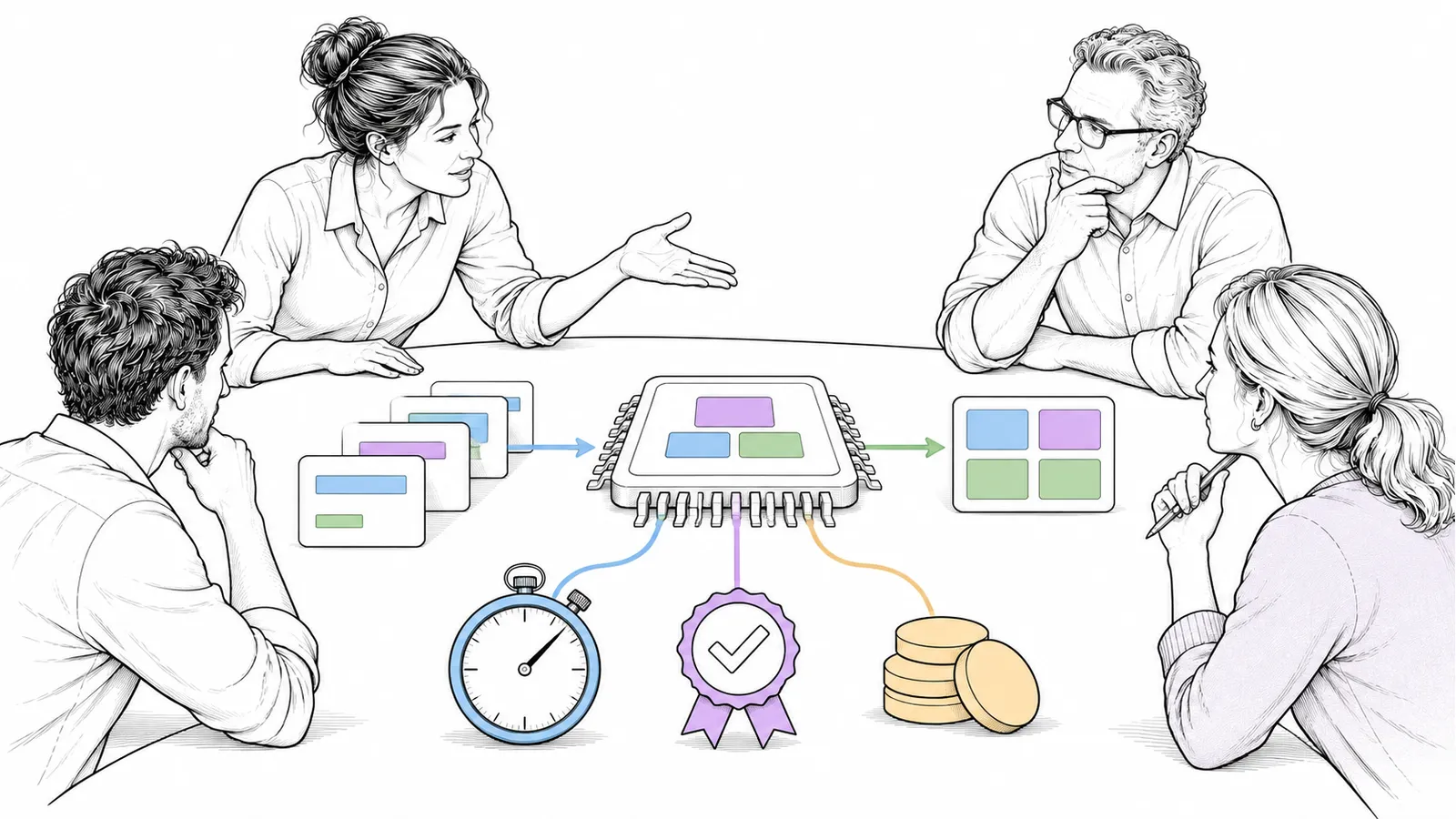
A chip processes short document cards beside a stopwatch and a few tokens.

History

Gemini 3 Flash brings the new generation to the Flash range
Google introduced a Gemini 3 variant emphasising speed and usage cost.

·

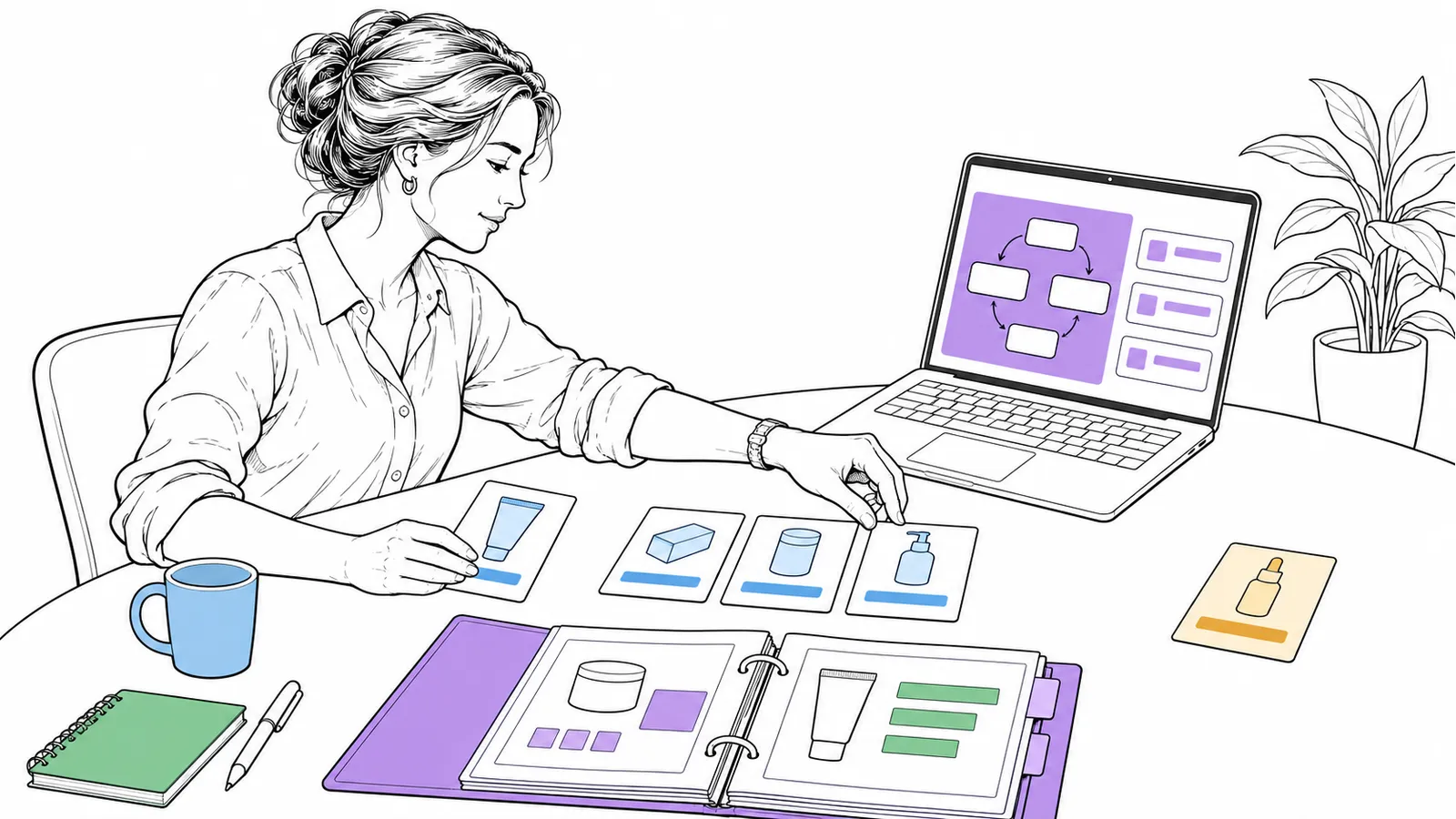
An employee sorts product cards into groups beside a laptop.

History

Gemini 3.1 Pro starts as a preview
Google made Gemini 3.1 Pro available as a public preview on 19 February 2026.

·

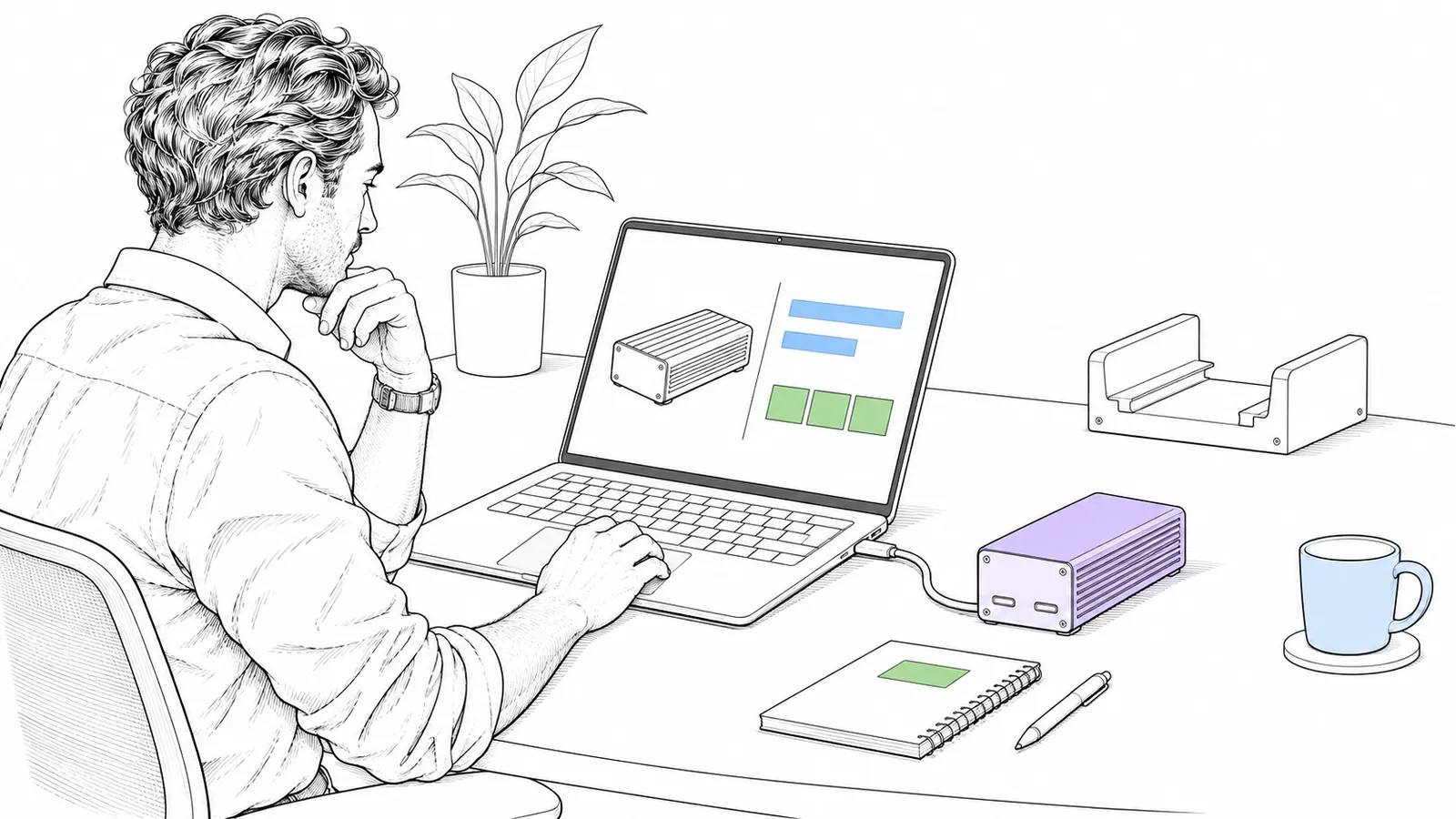
An employee tests a connected model module beside an empty holder.

History

Gemini 3.5 starts with Flash

Google introduced Gemini 3.5 Flash on 19 May 2026 as the first model in the new family.

·

Three employees discuss a fault report beside a test screen.

History

Gemini 4 Carbon focuses on software security
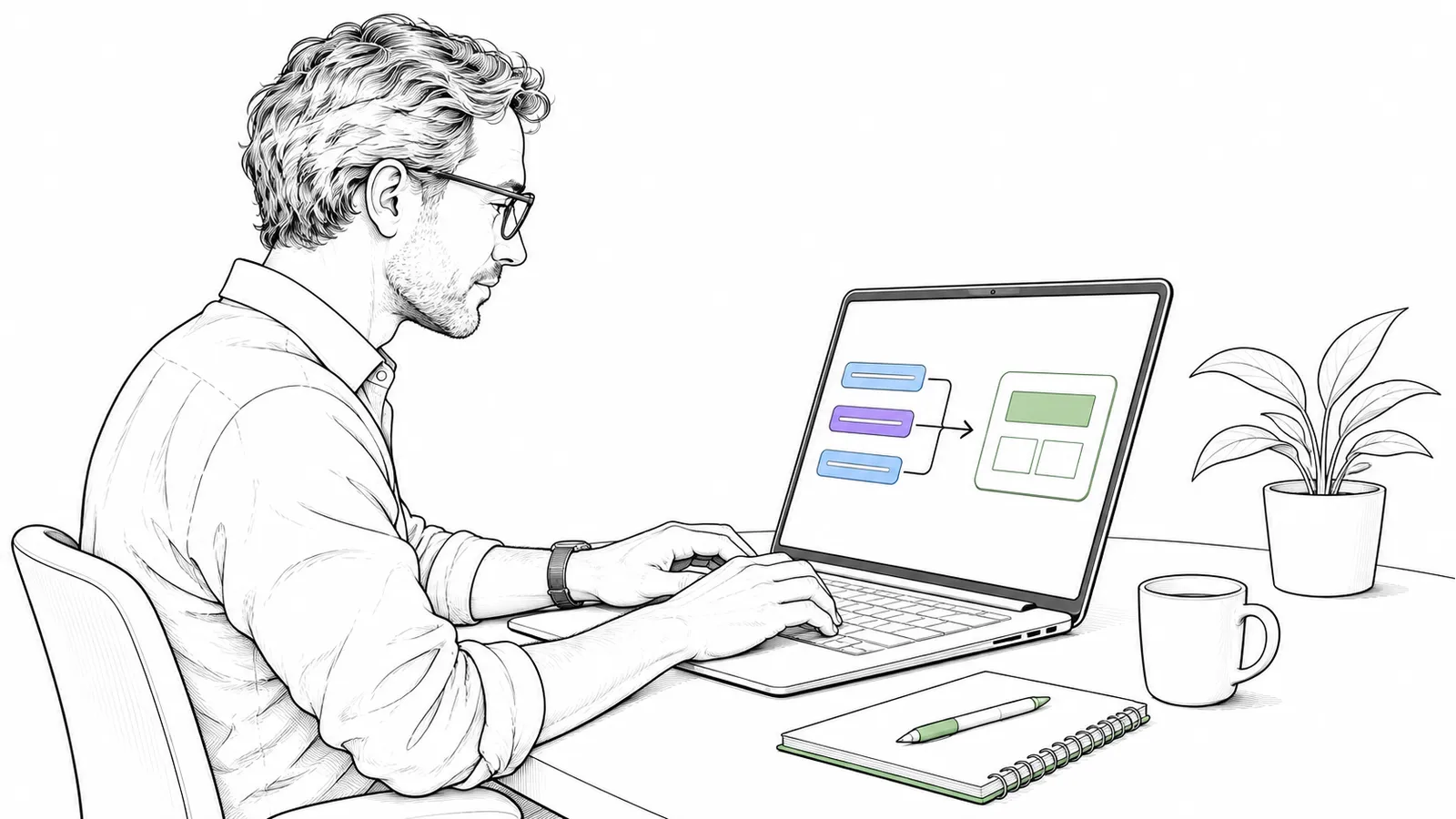
On 28 October 2026, Reuters reported the introduction of Gemini 4 Carbon with an emphasis on software and security.

·

A developer uses a terminal and a form on his laptop.

History

Gemini CLI brings an agent to the terminal
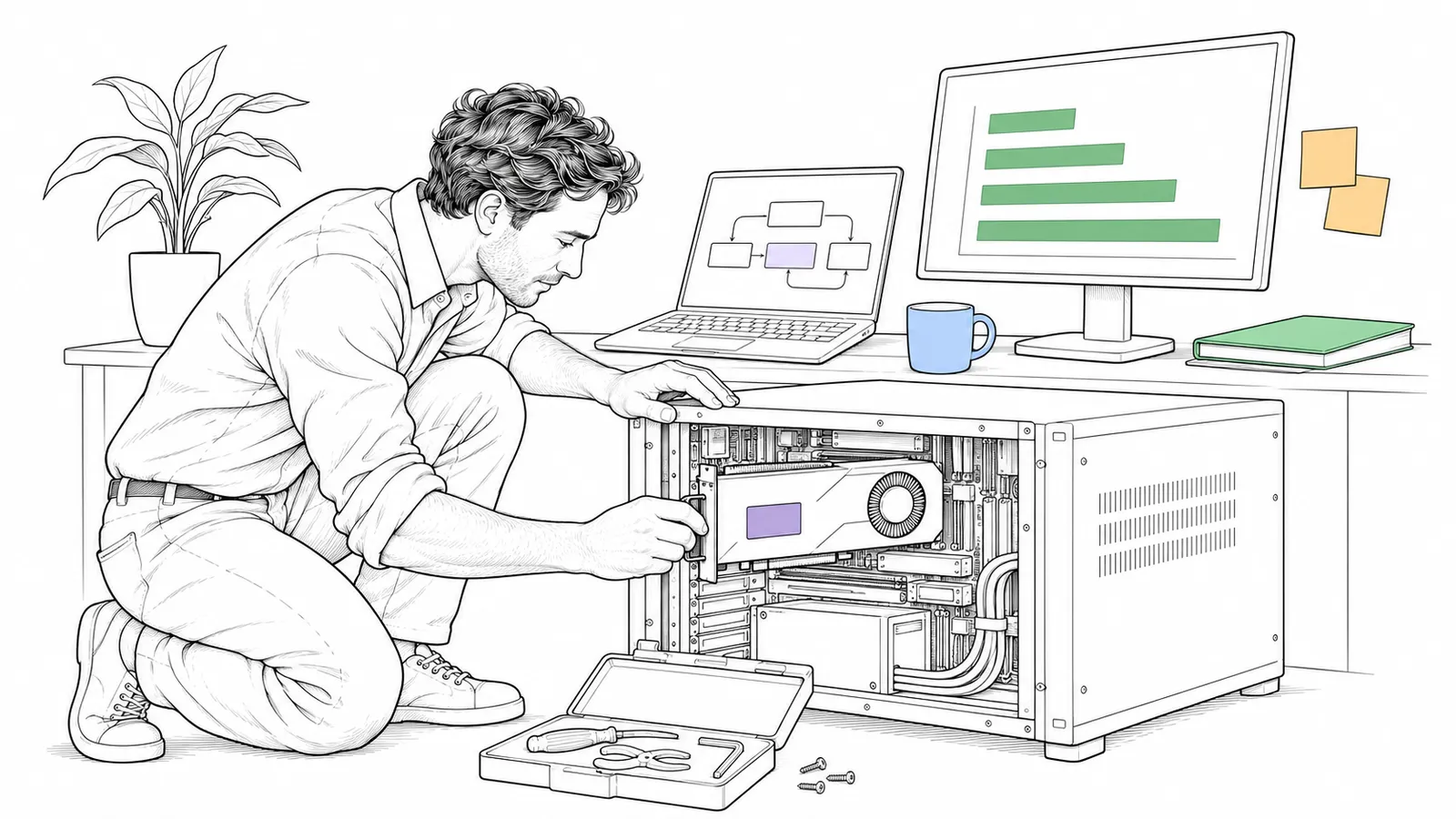
Google introduced an open coding agent with a free usage tier.

·

A technician examines a single accelerator card in a server beside a screen with green bars.

History

Gemma 2: Google's open model fits on one GPU
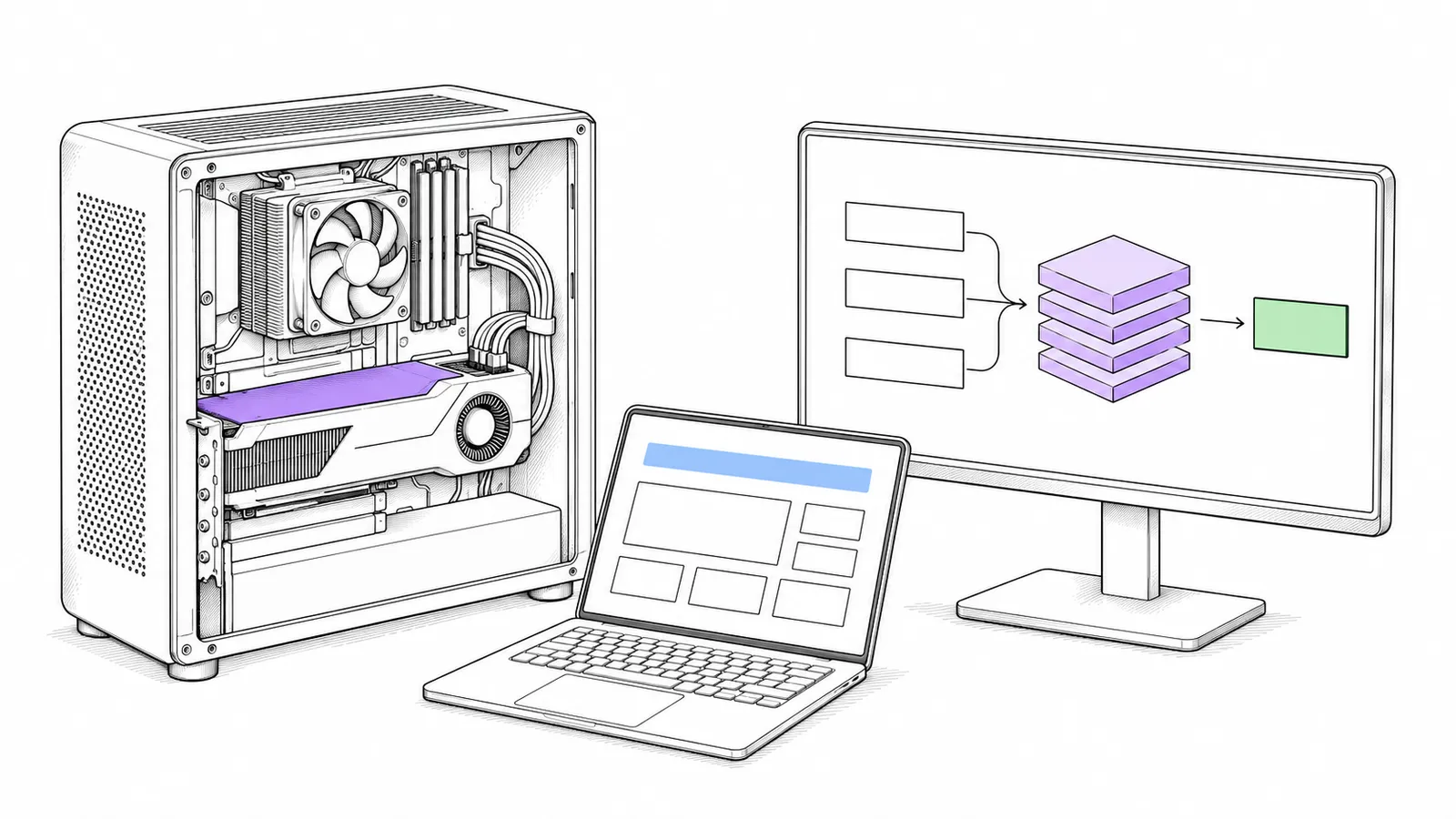
Google released Gemma 2 in 9 and 27 billion parameters. The larger model runs on one data-centre GPU and scores like models twice its size.

·

An open computer with one accelerator stands beside a laptop and a screen.

History

Gemma 3 targets models for a single accelerator
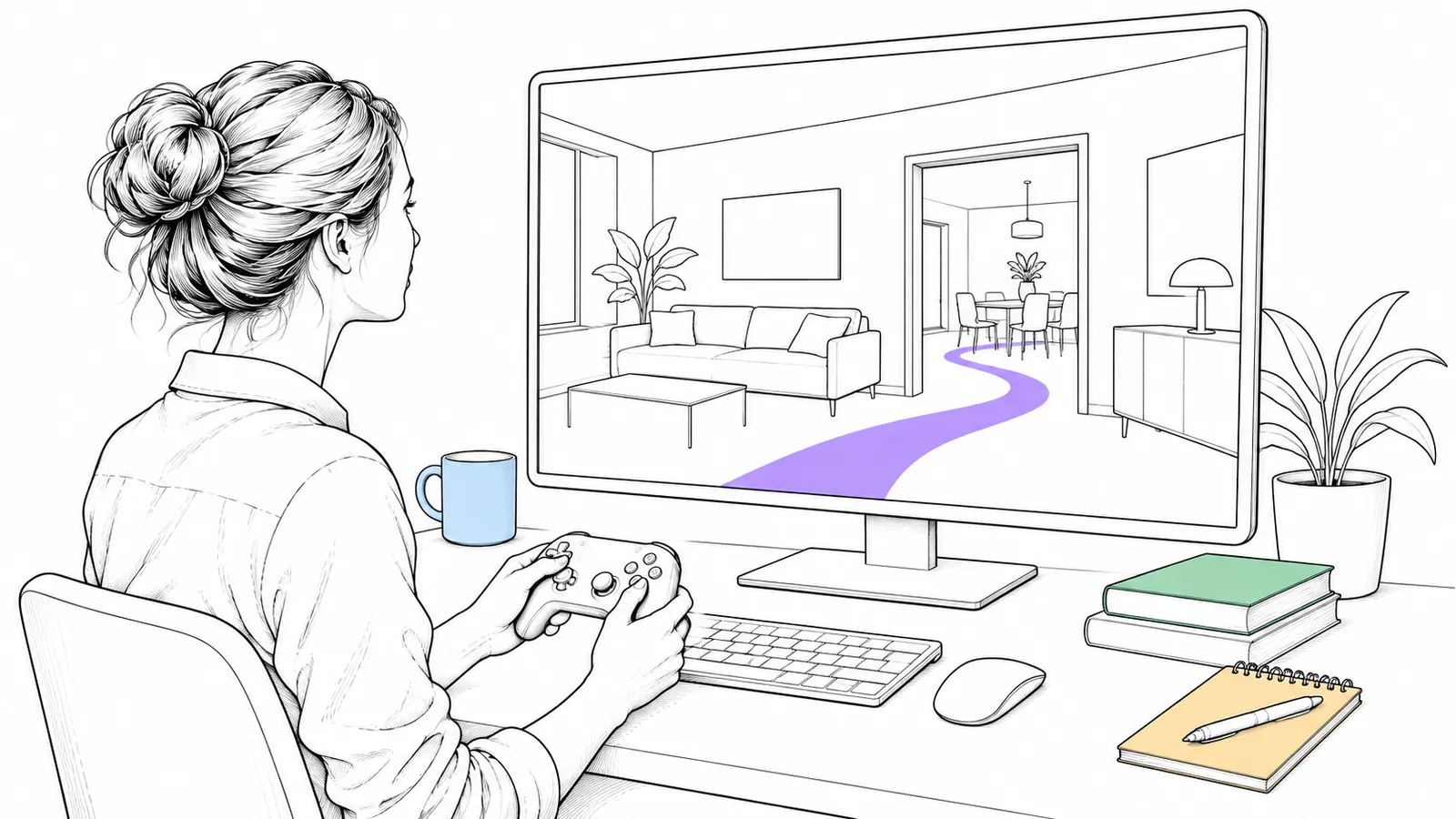
Google presented Gemma 3 as a model family that could also run on a single GPU or TPU.

·

A worker controls a walk through a drawn room on a screen.

History

Genie 3 shows worlds that respond to the user
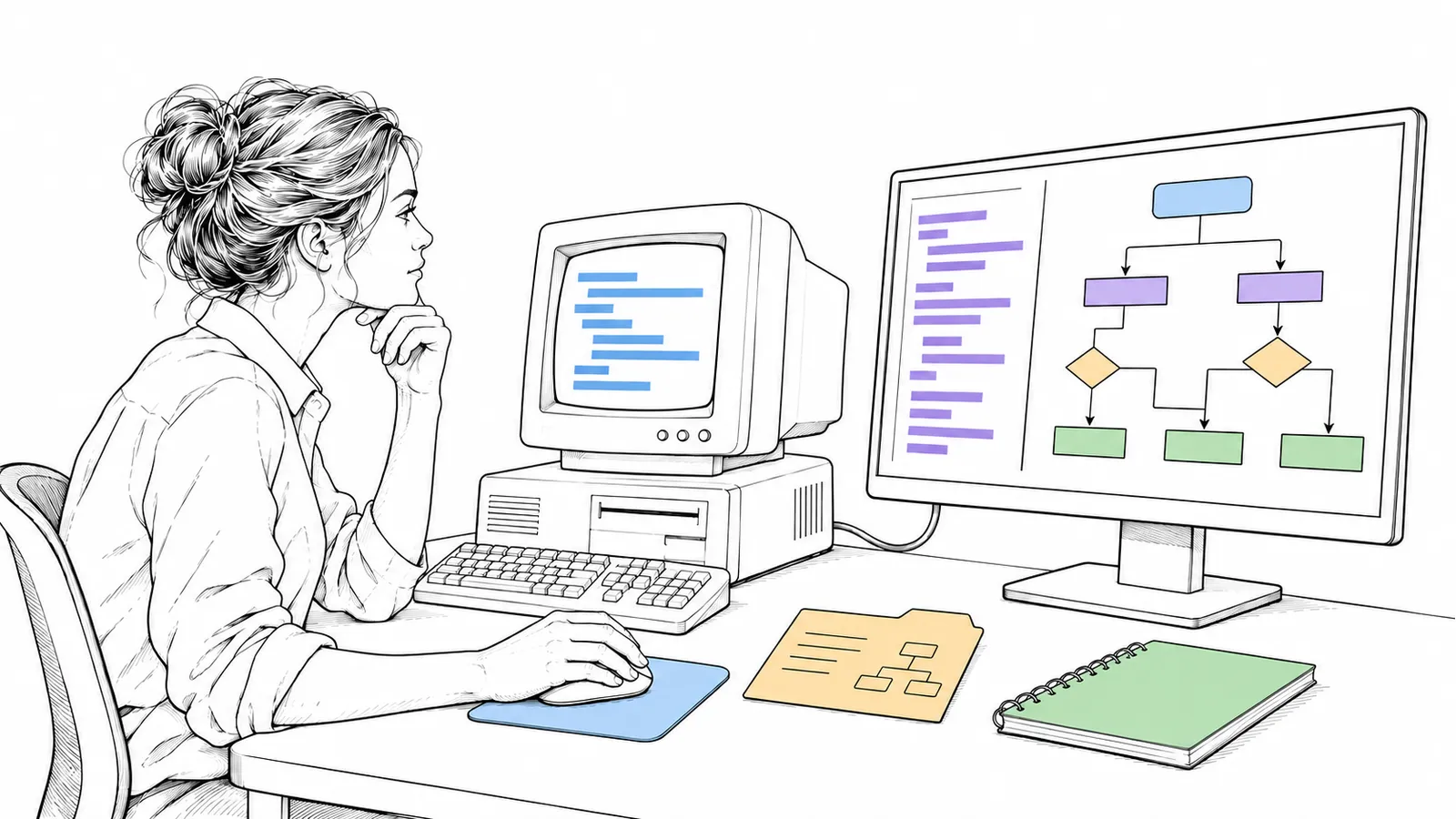
Google DeepMind presented a model for generated environments that users can control in real time.

·

A worker examines an old computer beside a screen with a branching diagram.

Vlog

Ghidra: taking software apart with the NSA's open source tool
Ghidra shows what a program does when you do not have the source code. Free, open source, and now also something AI can drive.

A researcher studies a function map beside a connected chip.

Vlog

GhidraMCP: letting an AI agent work in Ghidra
GhidraMCP connects Ghidra to an AI model through MCP. The model can then decompile code, rename functions and map a program by itself.

A developer chooses between several model blocks on a screen.

History

GitHub Copilot lets you choose the model
At GitHub Universe, GitHub puts models from Anthropic, Google and OpenAI side by side in Copilot.

·

A worker points a phone at a lamp beside a screen with video frames and response bars.

History

Google I/O 2024: Flash, Veo and Project Astra
At I/O 2024, Google shows a fast model, its first video model and a plan for an assistant that sees what you see.

·

A creator reviews a video scene with an audio track.

History

Google I/O brings video with sound and new building tools
Google presented Veo 3, Imagen 4, Flow and a public test version of Jules.

·

A worker views two purple model blocks on a laptop beside a local server.

History

Google releases Gemma, open models
Google publishes the weights of Gemma 2B and 7B, built on the research behind Gemini.

·

An employee finds relevant passages in a long manual.

History

GPT-4.1 focuses on code and long input
OpenAI introduced GPT-4.1 in the API with support for up to one million tokens of context.

·

An editor compares a product sheet with text versions on a screen.

History

GPT-4.5 focuses on conversation and pattern recognition
OpenAI presented GPT-4.5 as a research preview built on larger-scale training without extra reasoning steps.

·

A worker uses a laptop with two routes behind the screen.

History

GPT-5 makes model selection part of the system
OpenAI introduced a system that could choose between quick answers and more reasoning.

·

Two developers review a change on a laptop.

History

GPT-5-Codex gets a dedicated role in coding
OpenAI introduced a GPT-5 variant tuned for code within Codex.

·

A staff member reviews a laptop answer with two separate review sheets.

History

GPT-5.1 combines conversational tone with adaptive reasoning
OpenAI introduced an update with a warmer tone and a different allocation of reasoning.

·

A staff member examines connected task panels beside a source document and a summary.

History

GPT-5.2 emphasises professional work
OpenAI introduced a model update for work including long-running agent tasks.

·

An employee compares two purple panels beside an open manual.

History

GPT-5.4 arrives in Thinking and Pro
OpenAI released GPT-5.4 on 5 March 2026 in Thinking and Pro variants.

·

Two colleagues study a chat screen and a form connected to a model module.

History

GPT-5.5 gets a separate API release day
OpenAI announced GPT-5.5 on 23 April 2026 and reported API availability a day later.

·

Two people study a model console with open glass panels.

History

GPT-5.6 gets a public release after limited access
According to the source, GPT-5.6 was publicly released on 9 July 2026 after limited access from 26 June.

·

An employee holds an access card beside an enclosed chip module.

History

GPT-6 Astra starts with limited access
GPT-6 Astra appeared as a limited preview on 3 September 2026, followed by restricted access for paying users.

·

A developer follows a software fault through to the repair check.

History

GPT-6 Cyber is announced for security work
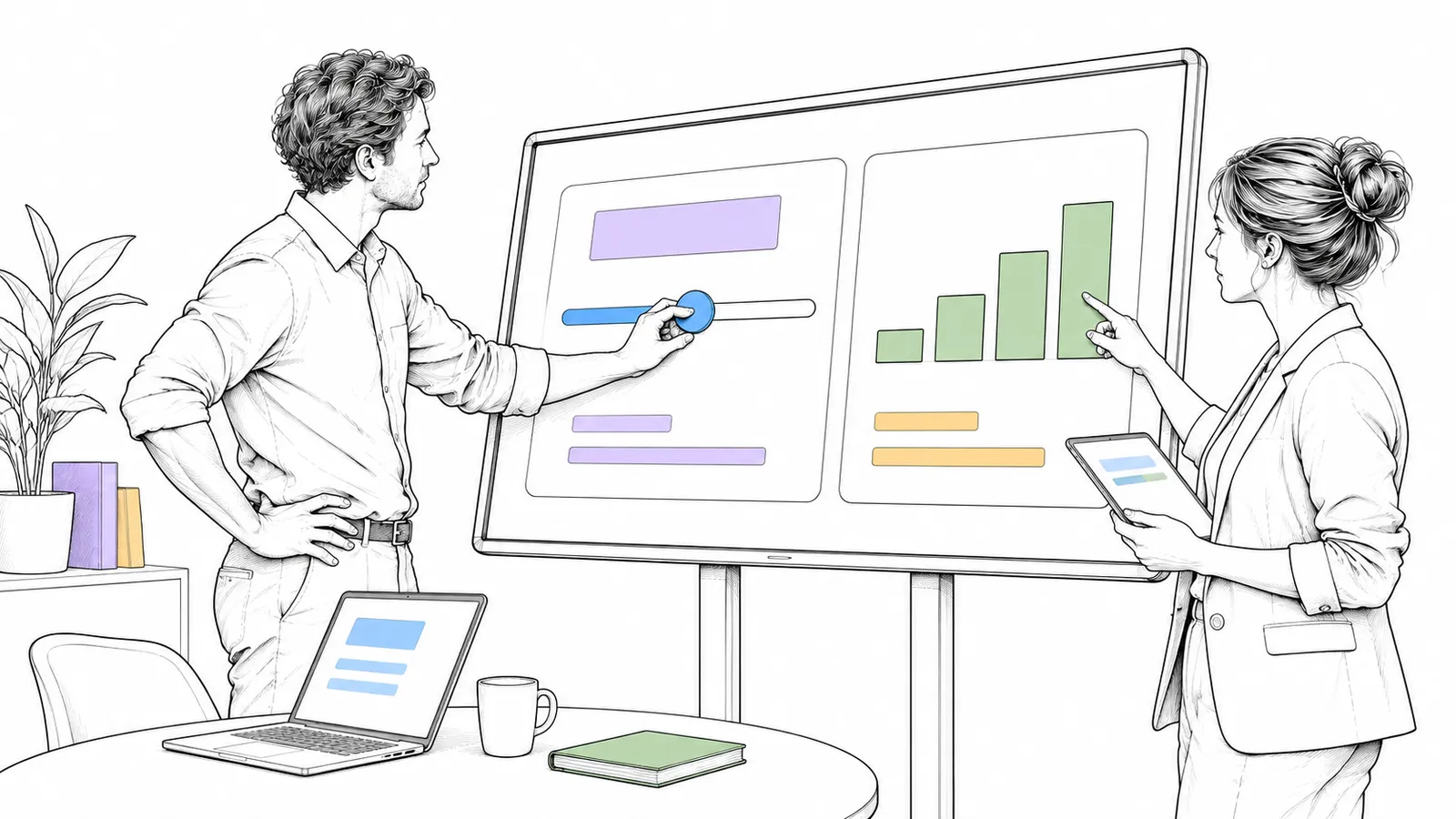
OpenAI announced GPT-6 Cyber on 5 November 2026 as a specialised model for software security.

·

Two colleagues examine a slider and changing bars on a screen.

History

GPT-6 Instant adds interactive answers
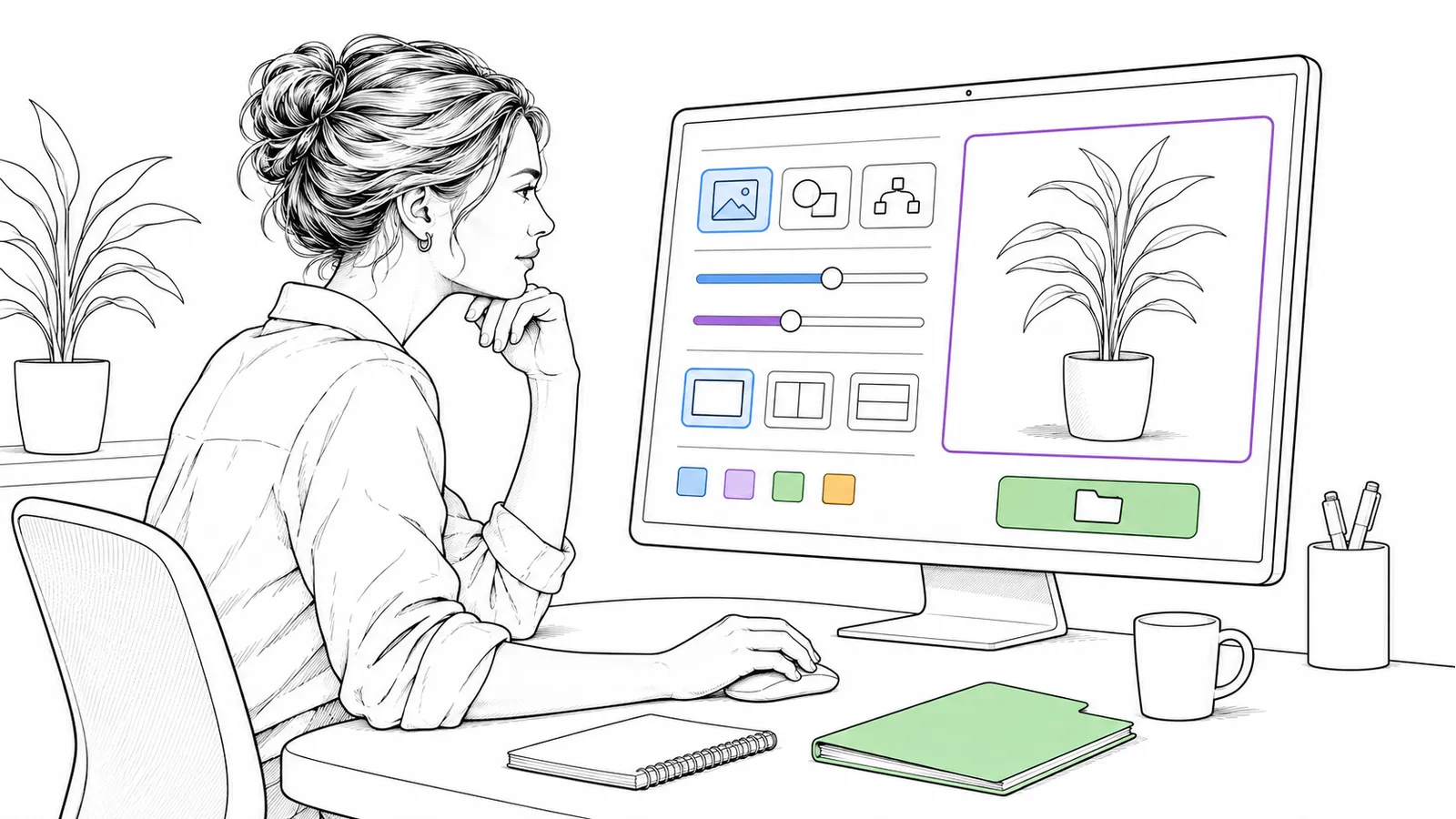
On 7 October 2026, GPT-6 Instant appeared for paying users with interactive elements in answers.

·

An employee reviews a new plant illustration in a custom application.

History

gpt-image-1 becomes available for custom applications
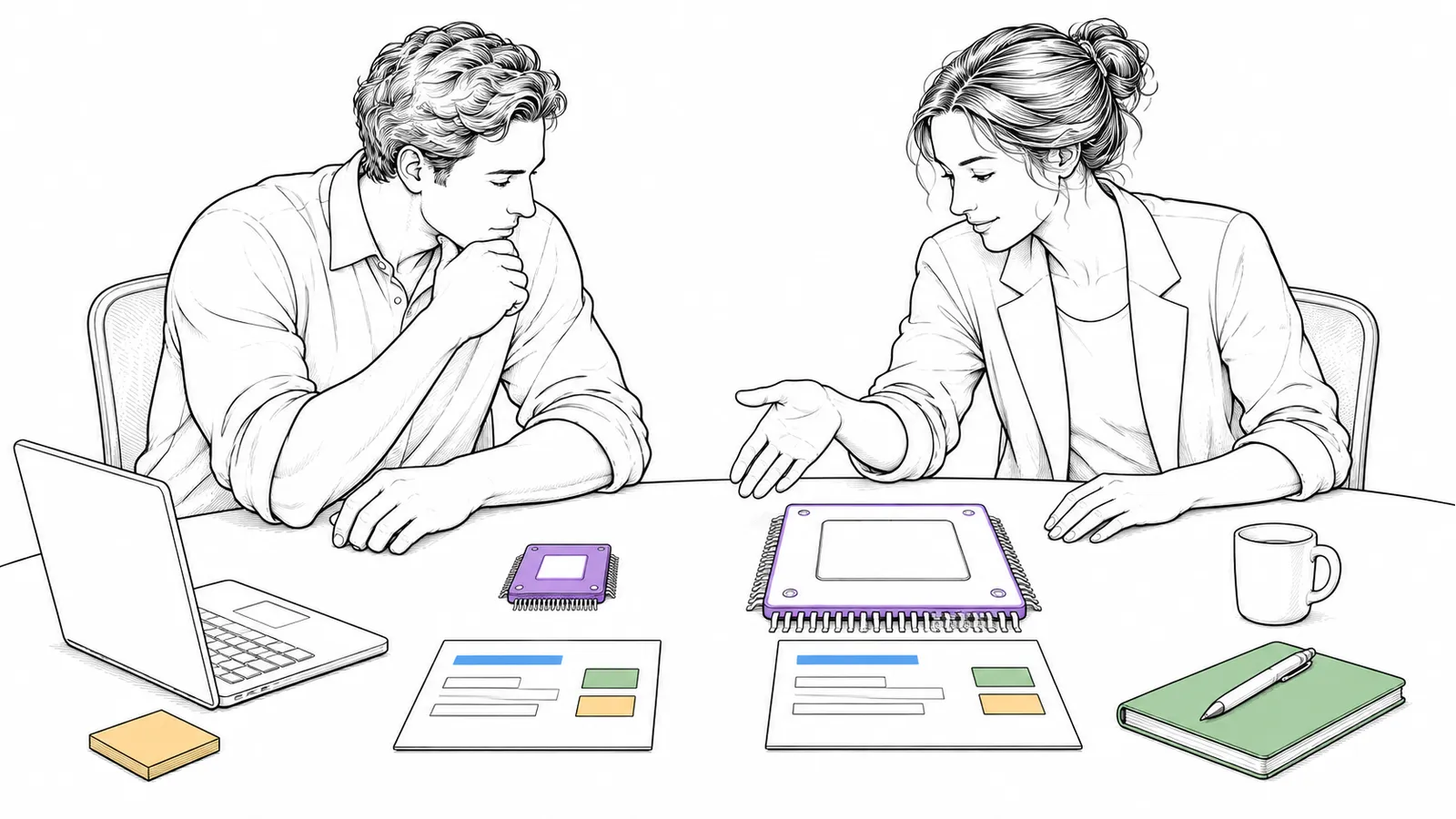
OpenAI brought ChatGPT’s image model to the API for developers.

·

Two colleagues compare a small and a large chip for the same task.

History

Haiku 4.5 makes the smaller-model choice concrete
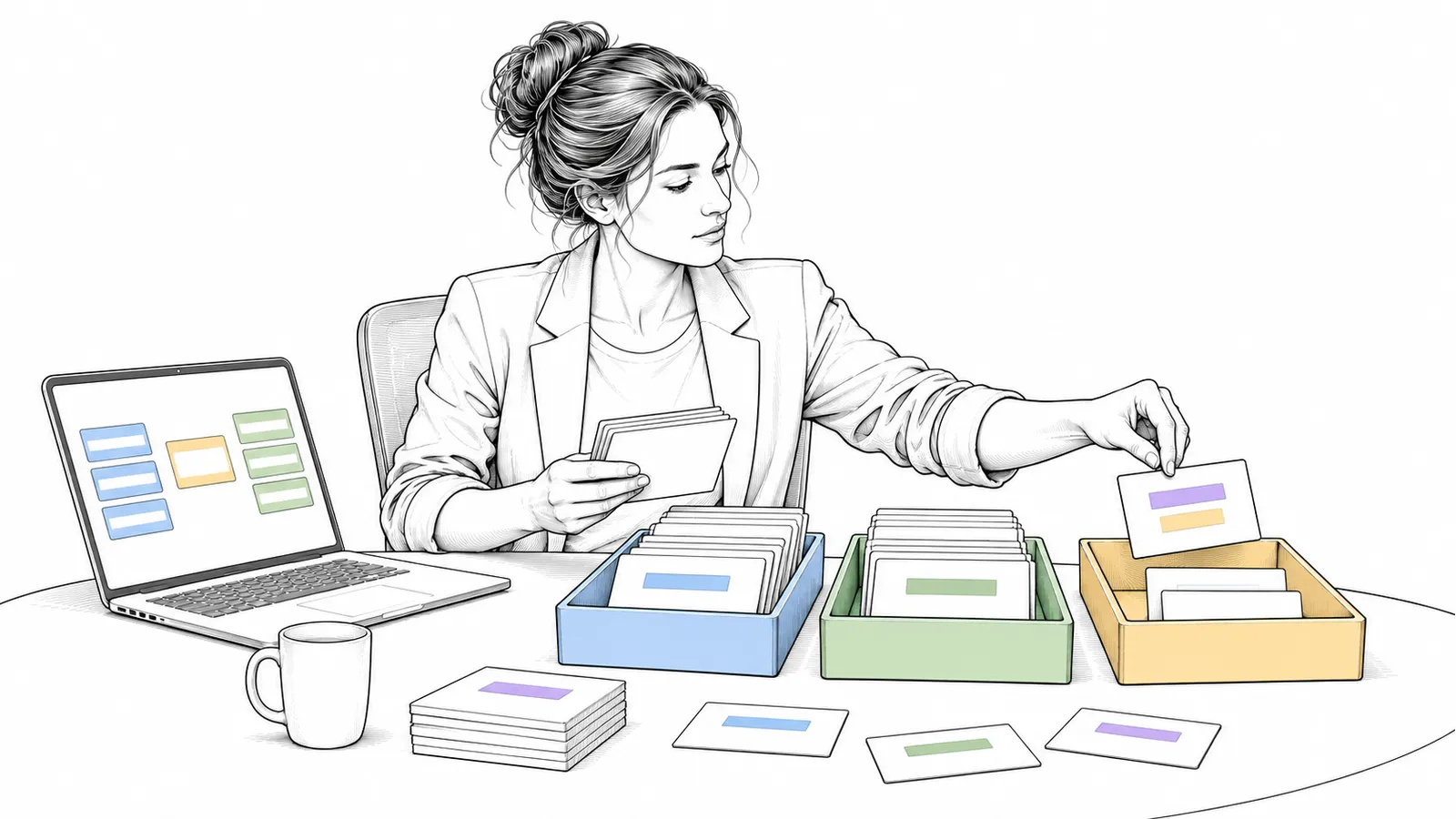
Anthropic introduced a small model with performance compared to Sonnet 4 level.

·

An employee sorts cards and sets an uncertain case aside.

History

Haiku 5.5 targets many small tasks
Anthropic introduced Claude Haiku 5.5 on 7 October 2026 for high-volume, cost-sensitive tasks.

·

Two people review a design on a laptop and a phone.

Knowledge

How we build

From question to working software: the why first, then a clickable design, then the thinnest line that really works, and every step tested. Our whole process on one page.

A designer looks at two versions of an image in a conversation window.

History

Image generation becomes part of the conversation
OpenAI added image generation to GPT-4o in ChatGPT.

·

A developer compares a connected service with a server with an empty bay.

History

Kimi K3.1 Pro starts with an API release
Moonshot released Kimi K3.1 Pro through its API on 23 October 2026, with model weights announced as a separate step.

·

Two builders compare an agreement on paper with a form.

History

Kiro starts with agreements about the software
Amazon introduced Kiro as a coding environment where specifications guide agents.

·

Two developers examine a large model module beside a server rack.

History

Llama 3.1 405B: an open model at frontier size
Meta releases Llama 3.1, with a model of 405 billion parameters and improved 8B and 70B models.

·

A working adult reviews a summary on a phone.

History

Llama 3.2: it sees, and it is small enough for a phone
Meta releases Llama 3.2: models that understand images, and small text models for phones and laptops.

·

A developer looks at a screen with an image and a document beside computing modules.

History

Llama 4 arrives with Scout and Maverick

Meta introduced two models that process text and images using a mixture of experts.

·

An employee tests an app beside a folder and blank banknotes.

History

Lovable raises new funding

Sifted reported on 12 August 2026 that Lovable raised 400 million dollars at a valuation of 13.3 billion dollars.

·

A designer compares a screen with her own design cards.

Knowledge

Making with AI, without the AI look
Purple gradients, the Inter font and three bullets per paragraph: that is how you spot AI work. This is how you make something that looks like your own.

Three colleagues examine a shared hub with cables and document cards.

History

MCP gains a home at the Linux Foundation
The creation of the Agentic AI Foundation gave shared governance of agent technology its own organisation.

·

Two colleagues examine connections between a laptop, data and tools.

History

MCP gains agreements for tasks and access
The November 2025 specification extended the protocol for connections with agents.

·

Two developers place a model block in a server with a toolbox on the table.

History

Meta releases Llama 3

Meta publishes Llama 3 in 8B and 70B, with new safety tools.

·

A designer arranges three images of a moving boat.

History

Midjourney takes the step into video with V1
Midjourney introduced its first video model, expanding from still images into moving images.

·

Two designers compare three images of a watering can and a plant.

History

Midjourney V7 begins with an initial test release
Midjourney introduced V7 as a new generation for creating images.

·

Two colleagues compare a large and a small module using the same documents.

History

Mistral 3 offers large and small models in one series
Mistral introduced Large 3 and the smaller Ministral 3 models with open weights.

·

Two colleagues compare two versions of work instructions.

History

Mistral introduces Magistral, its first reasoning model
Magistral arrived in a smaller version with available weights and a larger enterprise version.

·

A worker reviews a licence beside a server and a model module.

History

Mistral Large 2: open weights, not a free licence
Mistral releases Large 2: 123 billion parameters, 128,000 tokens of context, under a research licence.

·

Two developers connect a laptop to two boxes containing the same purple model block.

History

Mistral Large: a European top model through the API
The French lab Mistral AI releases Mistral Large, on its own platform and on Azure.

·

An employee places three different task cards beside one laptop.

History

Mistral Small 4 combines different types of work
Mistral released Small 4 on 16 March 2026 as a model for instructions, reasoning and code.

·

A technician examines eight modules, two of them purple and connected to a screen.

History

Mixtral 8x22B under Apache 2.0
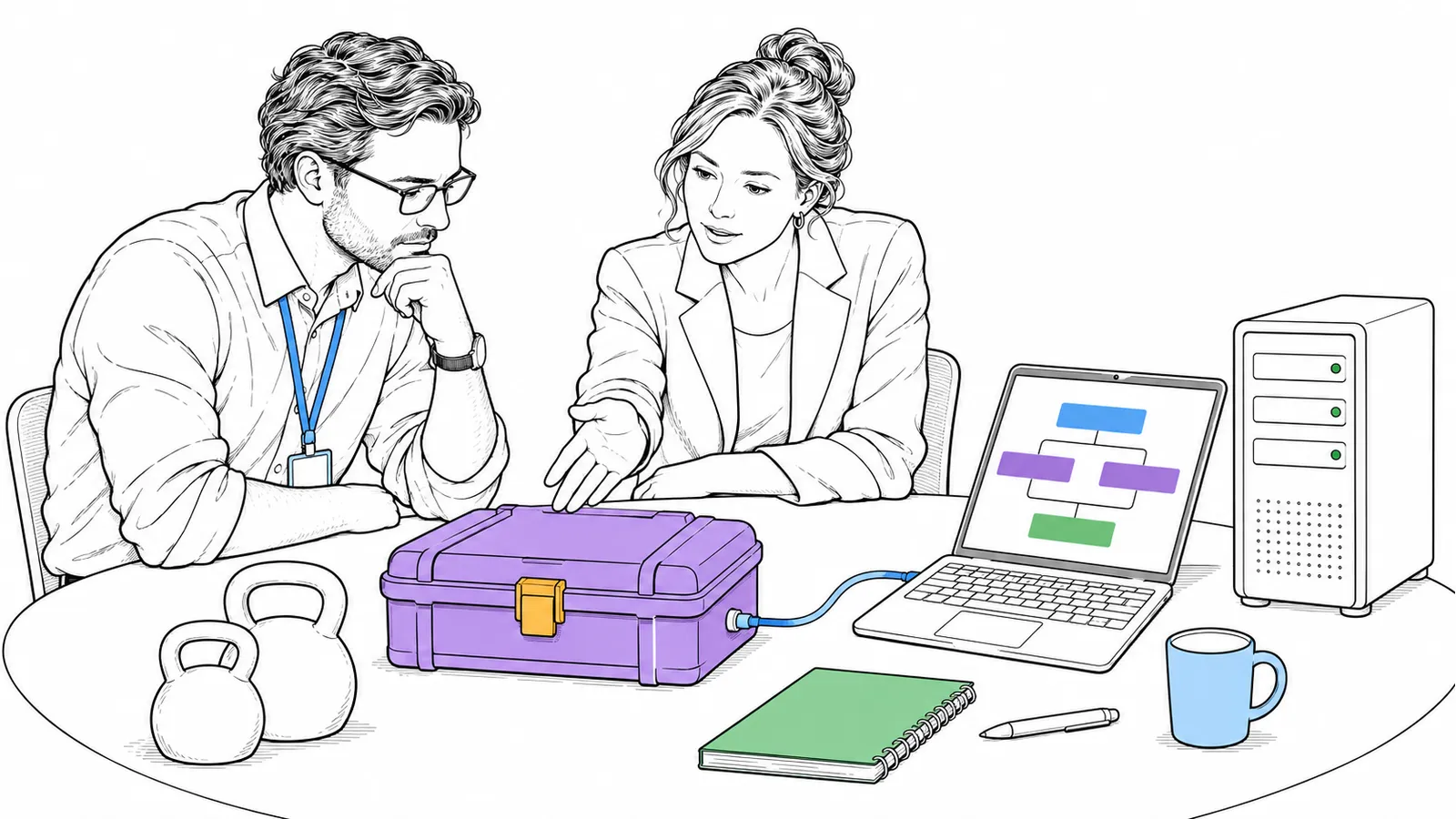
Mistral AI releases an open mixture-of-experts model that you may use without restrictions.

·

Two colleagues examine a closed box beside a laptop and a server.

History

Muse Spark does not get open model weights
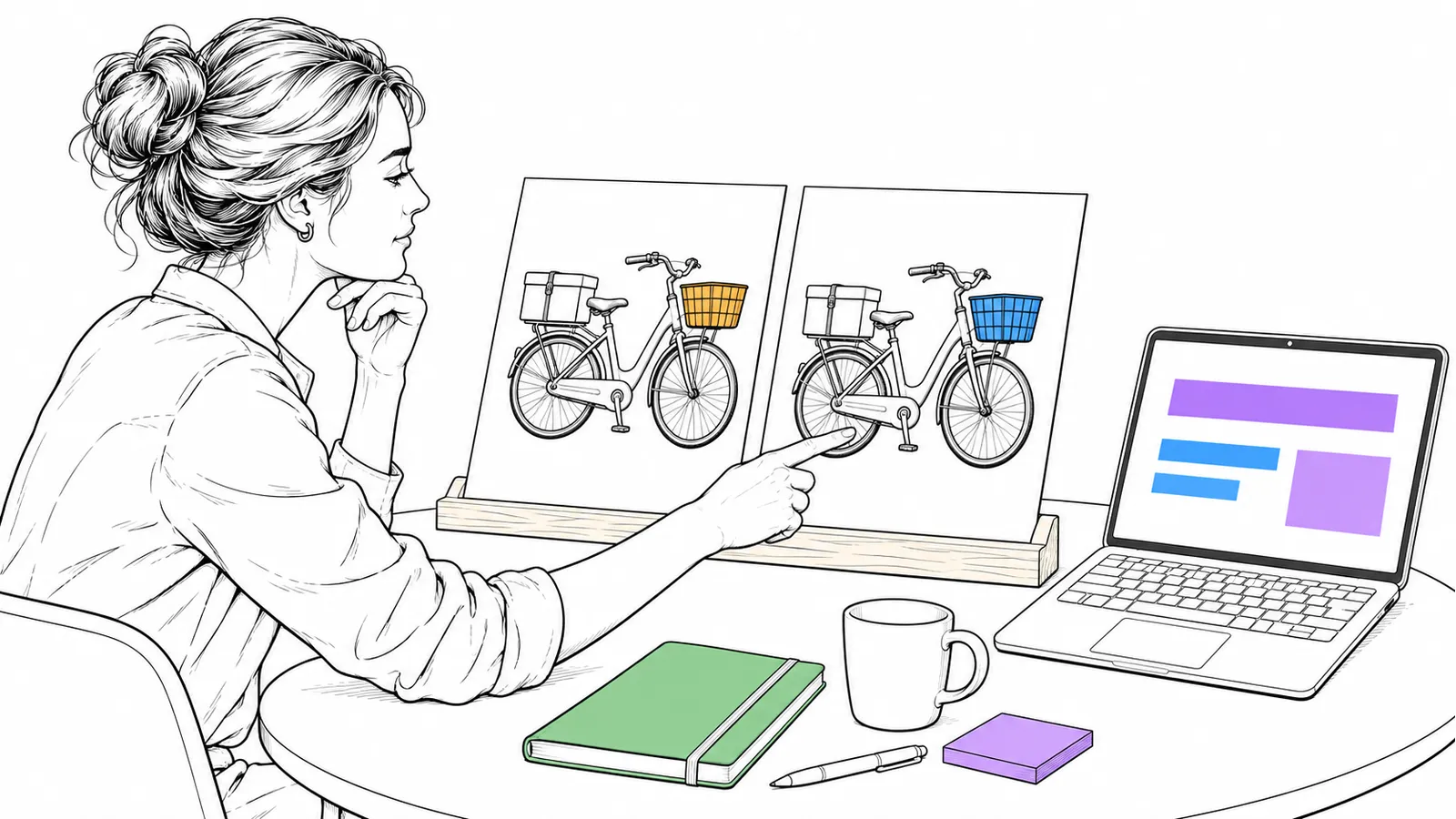
Meta introduced Muse Spark on 8 April 2026, the first model from Meta Superintelligence Labs, with closed weights.

·

A designer compares two printed bicycle illustrations beside a laptop.

History

Nano Banana 2 brings a new image model to Gemini
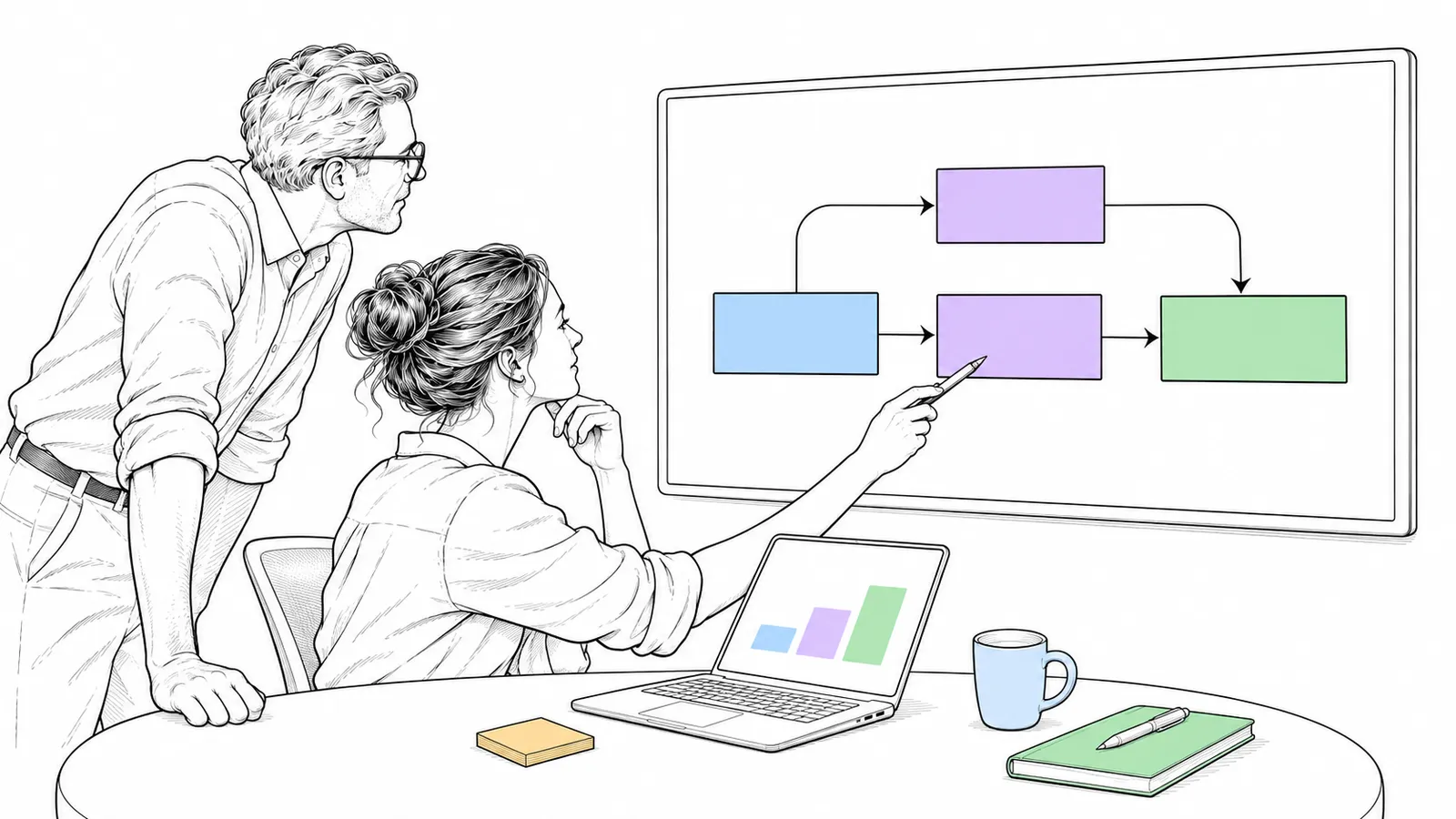
Google announced Nano Banana 2, also known as Gemini 3.1 Flash Image, on 26 February 2026.

·

Two colleagues examine a process graphic with blank boxes and clear arrows.

History

Nano Banana Pro makes text part of the image
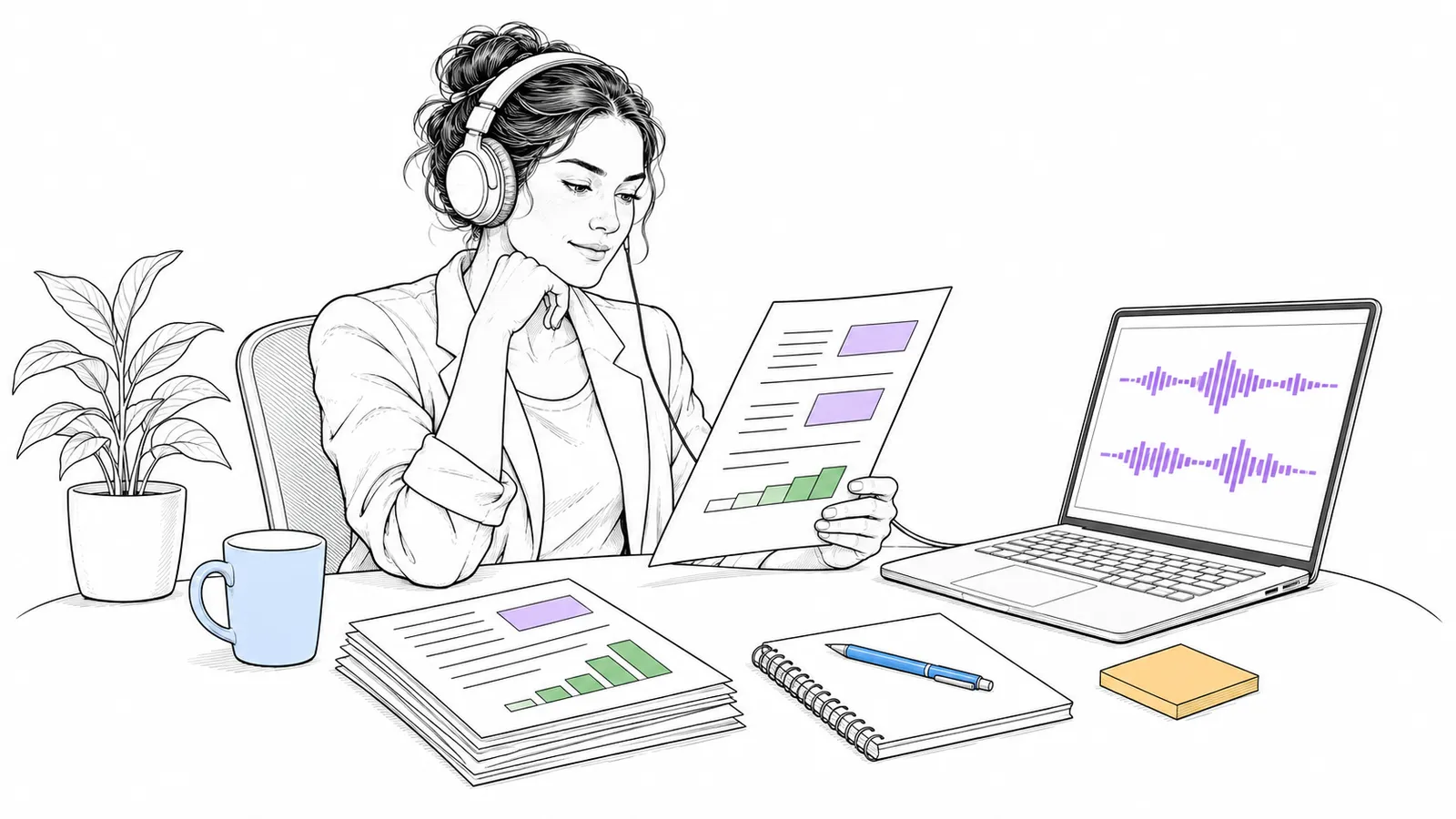
Google introduced Gemini 3 Pro Image with a focus on readable text and infographics.

·

A worker listens with headphones and reviews documents.

History

NotebookLM turns your documents into a podcast
Google added Audio Overview to NotebookLM: two AI voices discuss your own sources in a conversation you can download.

·

A developer checks a repaired function beside a terminal.

History

o3 and o4-mini arrive with Codex CLI
OpenAI combined new reasoning models with a coding tool for the terminal.

·

A researcher studies patterns on a screen and an assessment sheet.

History

o3 shows the direction of reasoning models
OpenAI previewed o3 and invited researchers to take part in safety testing.

·

An employee compares a stock sheet with boxes and a laptop.

History

o3-mini brings a smaller reasoning model
OpenAI introduced o3-mini in ChatGPT and the API as a cheaper model for reasoning tasks.

·

An employee compares two long lists beside an hourglass.

History

o3-pro puts more emphasis on reliability than speed
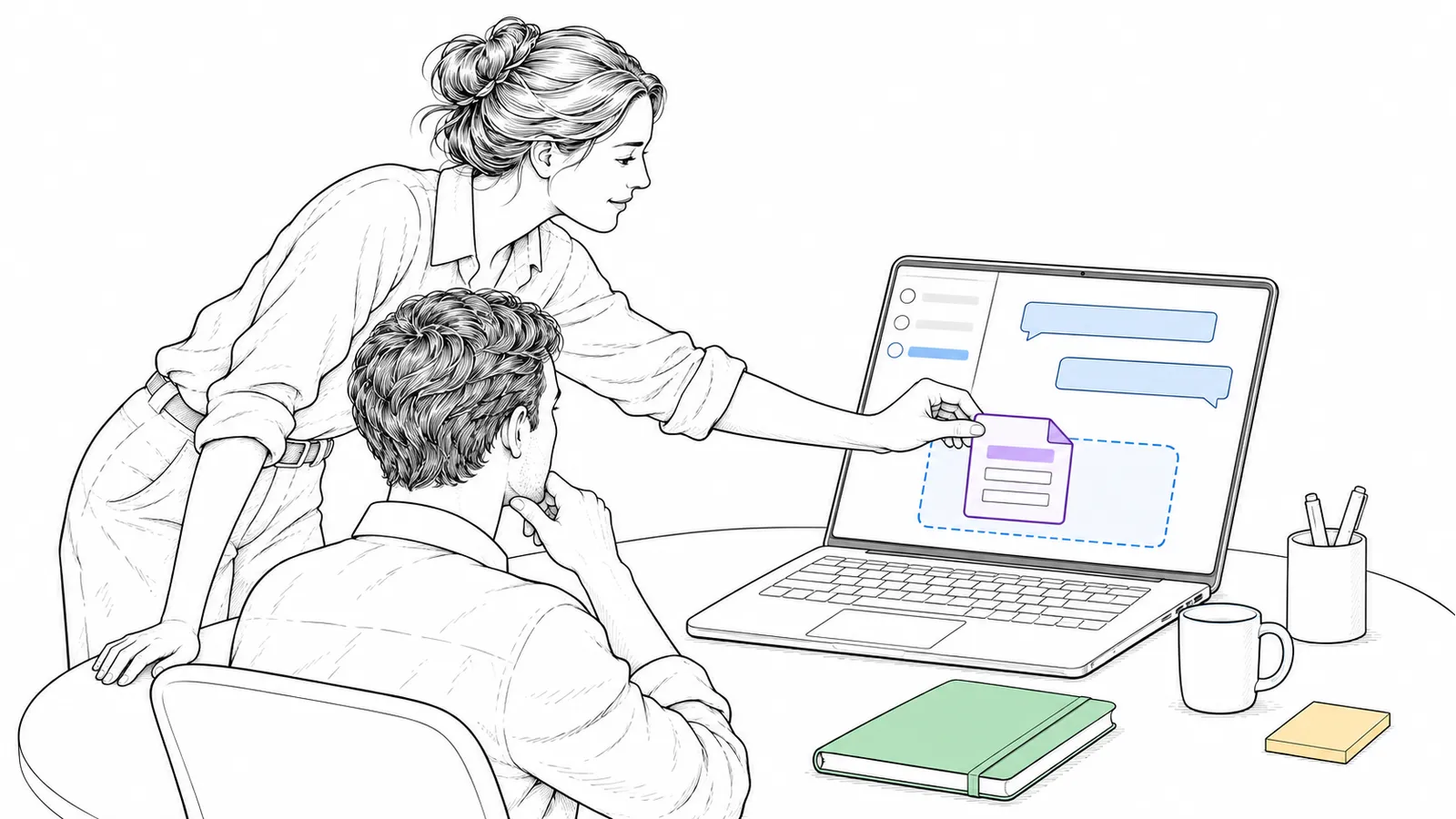
OpenAI released a version of o3 that could spend longer working on difficult answers.

·

A worker drags a document into a chat window on a laptop.

History

Ollama gets a desktop chat window
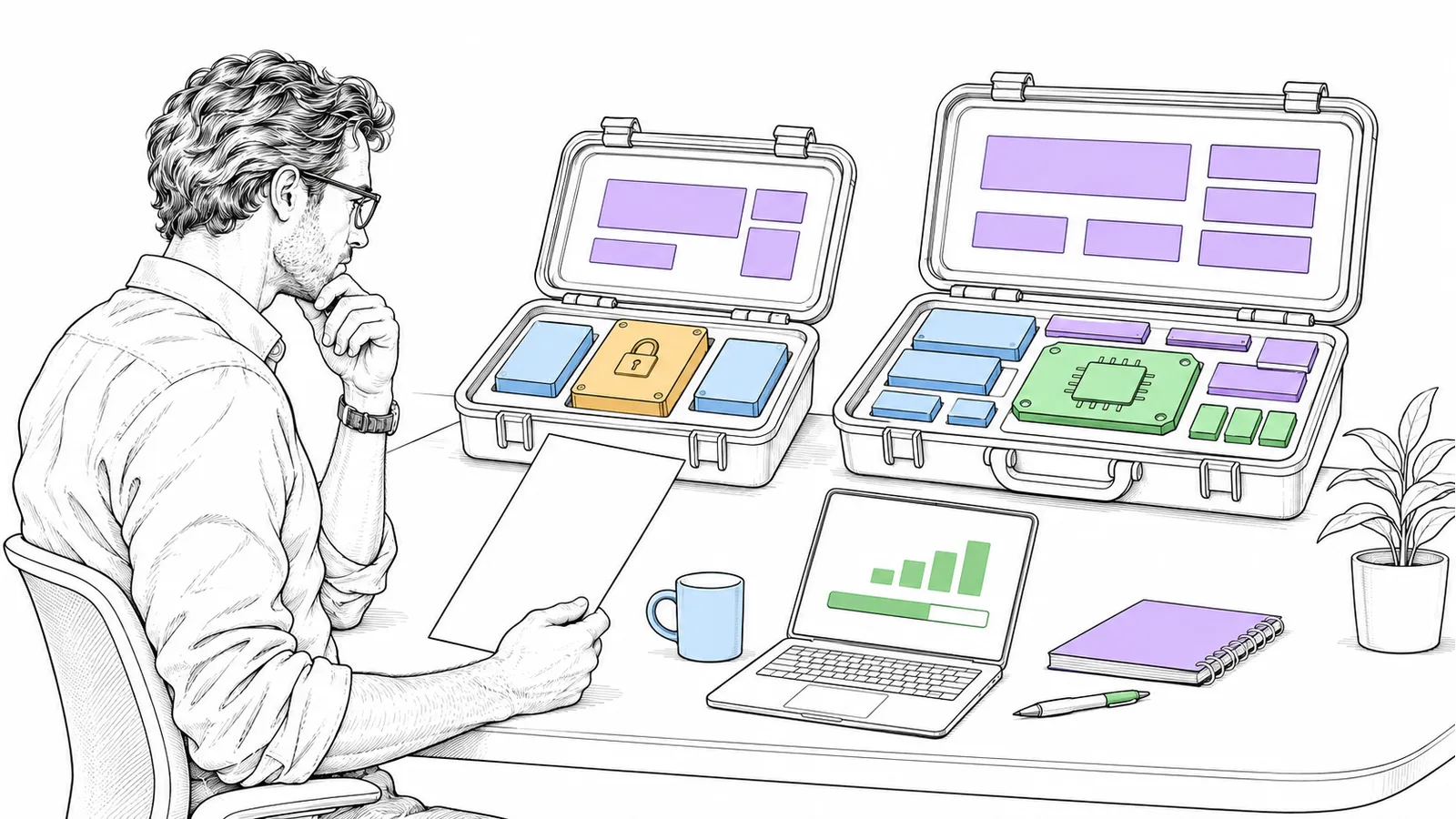
The new app for macOS and Windows made chatting with local models accessible without a terminal.

·

A person compares an open box with a box containing a closed extra section.

Knowledge

Open source or open core: read the licence
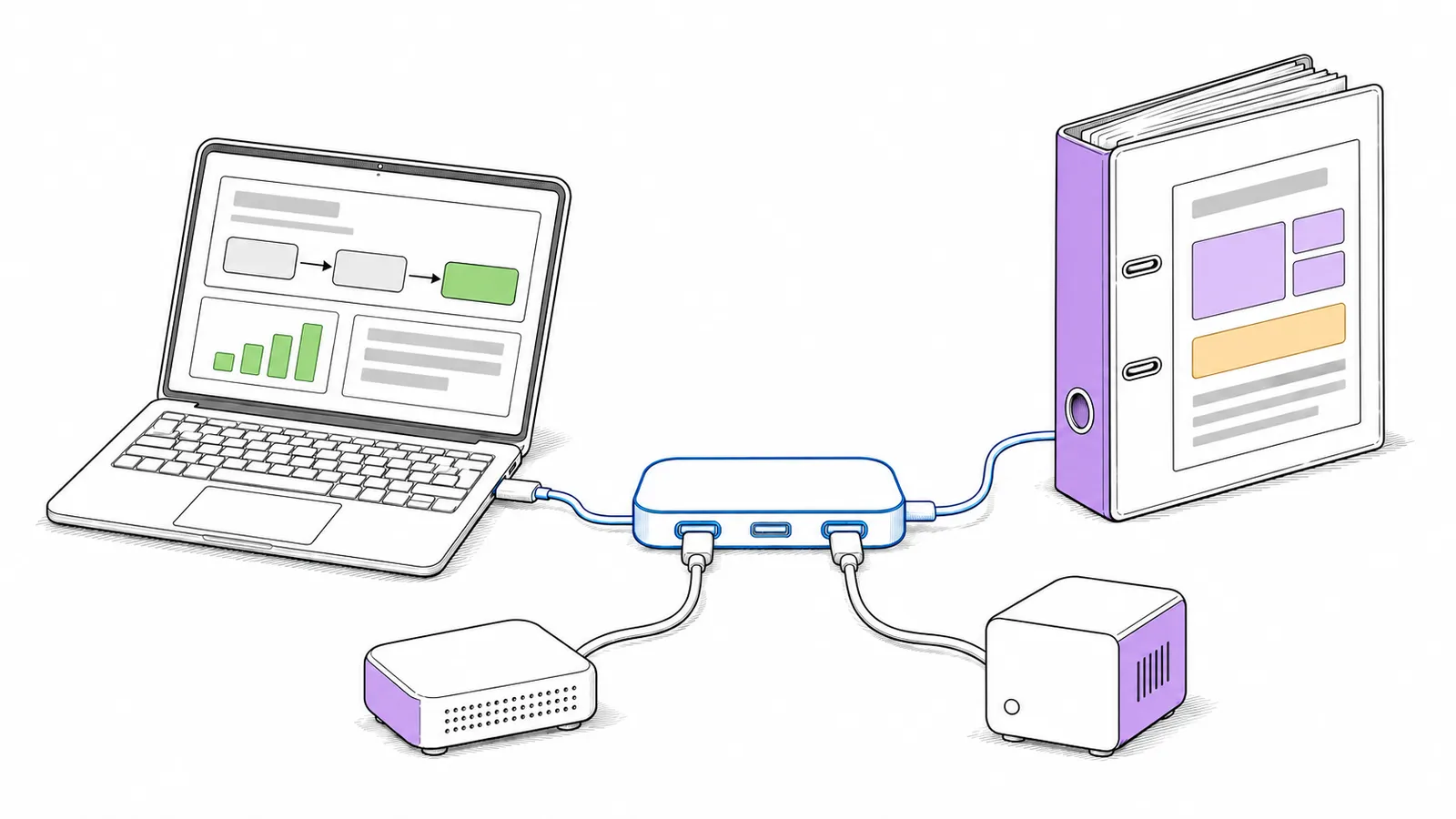
Open source, open core, open weights, fair-code: it sounds the same, but what you may do differs a lot.

A laptop and a document folder connect to interchangeable modules through one connector.

History

OpenAI announces support for MCP
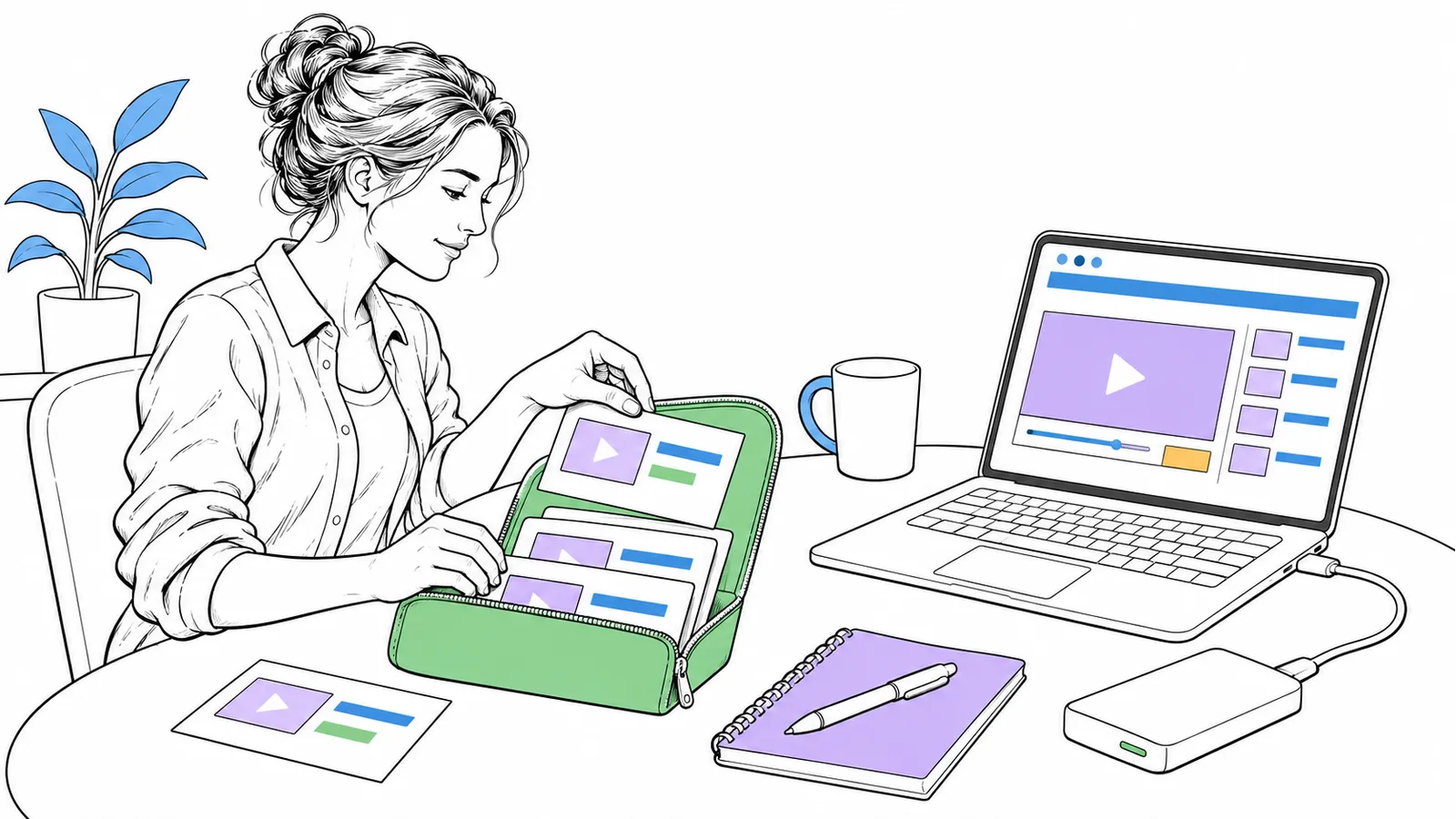
The announced support gave a shared connection protocol for AI tools a wider reach.

·

An employee stores image cards beside a laptop and an external drive.

History

OpenAI announces the end of the Sora app
On 24 March 2026, news emerged that OpenAI would close the standalone Sora app, without giving a reason.

·

A developer looks at a screen with connected tools for search and computer use.

History

OpenAI offers building blocks for custom agents
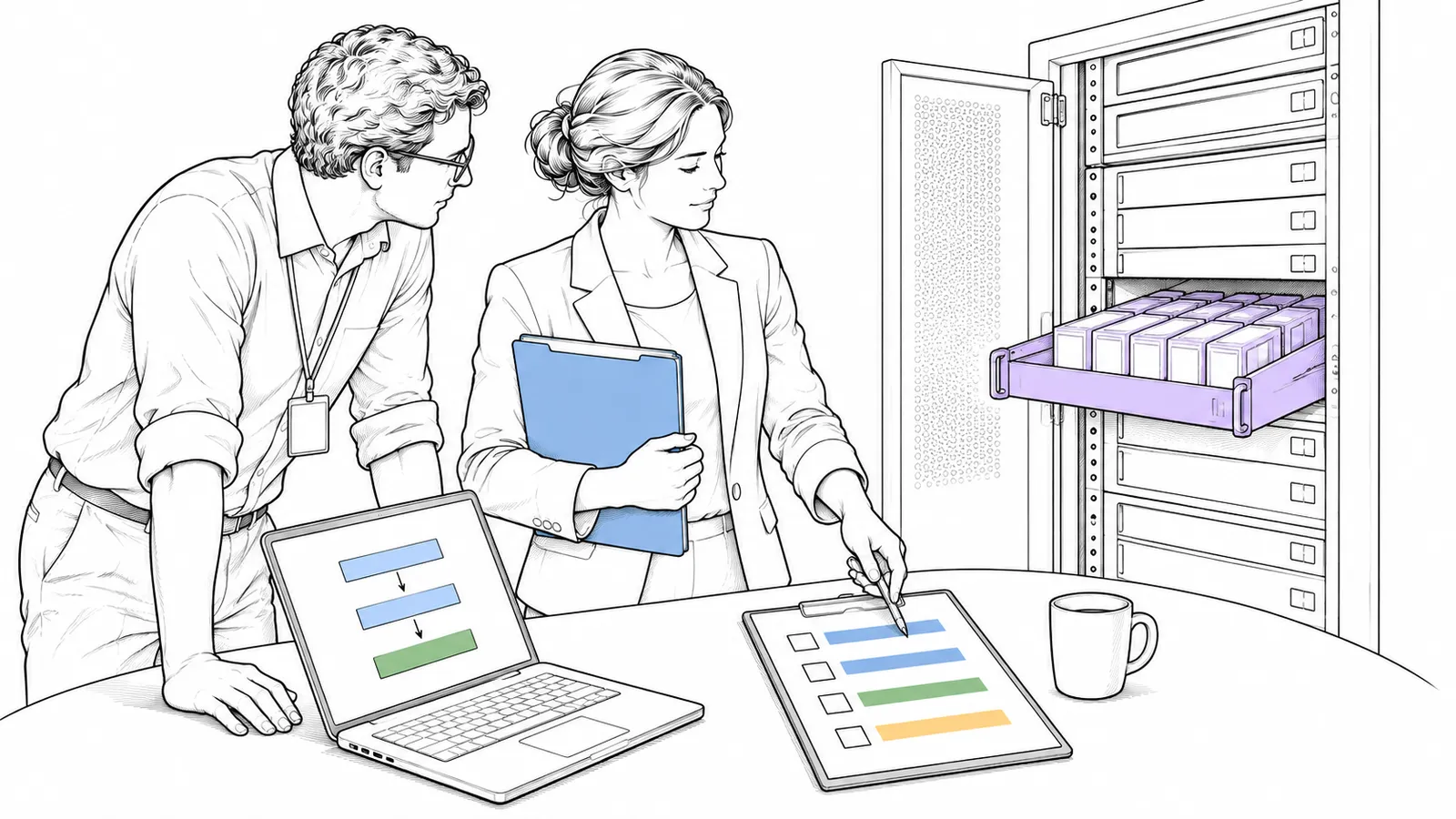
The Responses API and Agents SDK brought model use and tools together for developers.

·

Two colleagues examine a server and a management sheet.

History

OpenAI releases two open-weight models
The gpt-oss-120b and gpt-oss-20b models were released under the Apache 2.0 licence.

·

A worker compares a laptop answer with documents beside a small server.

Knowledge

OpenSearch: put your knowledge in, and search it with AI
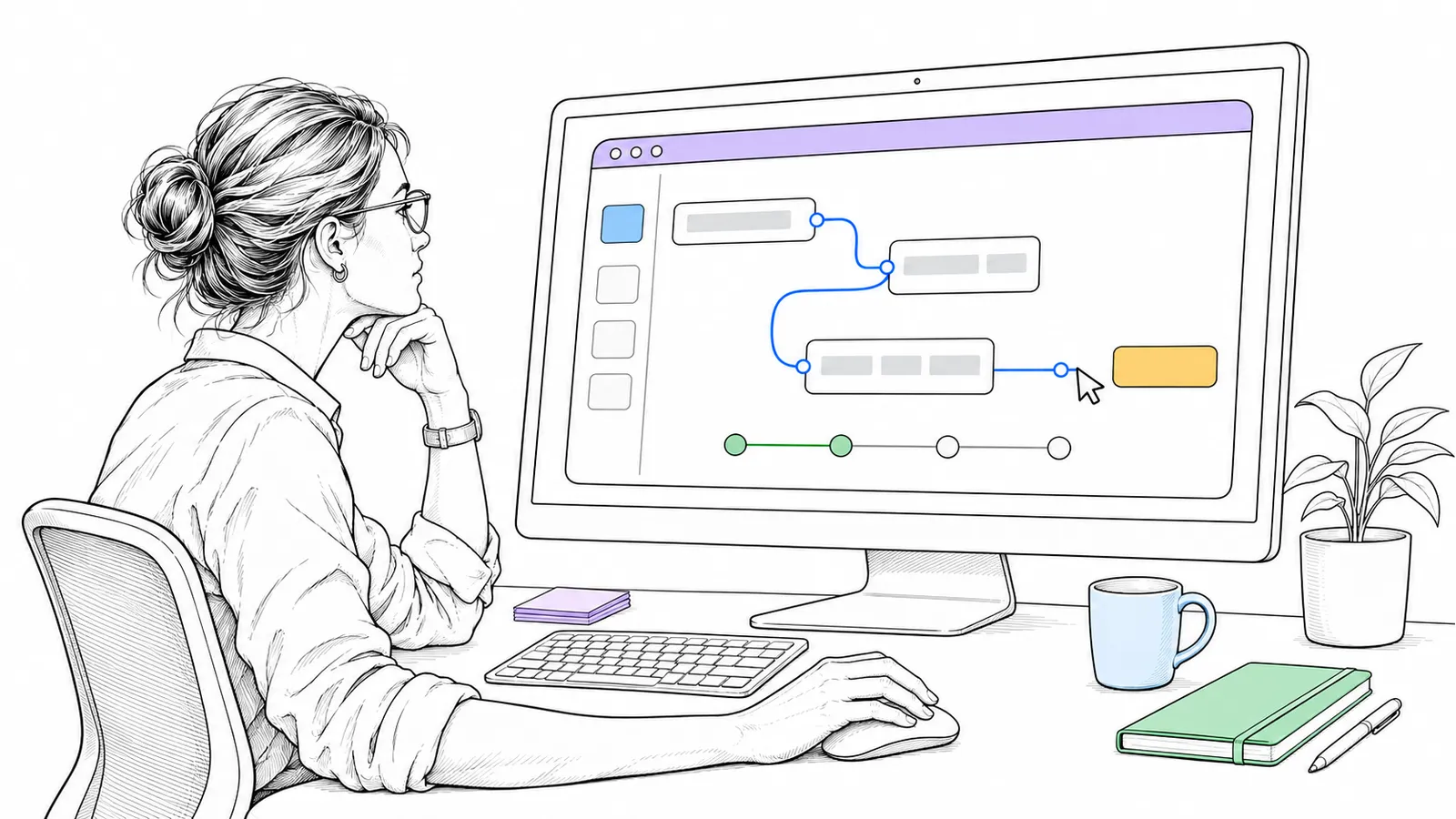
How to put documents in OpenSearch and find them again by words and by meaning, with the source included.

An employee watches a browser form where a pointer stops before the final button.

History

Operator carries out tasks in a browser
OpenAI introduced an agent that could view and operate web pages.

·

A developer reviews code blocks beside a chip, tokens and a repair card.

History

Opus 4.5 links coding work to a different price
Anthropic introduced a new Opus version with a lower usage price.

·

Two colleagues sort manual pages and task cards beside a laptop.

History

Opus 4.6 focuses on more context and agent teams
Anthropic introduced an Opus update with a larger context window and agent teams.

·

Two colleagues examine an input form on a monitor and a phone.

History

Opus 4.7 updates the larger Claude model
Anthropic made Claude Opus 4.7 generally available on 16 April 2026.

·

An employee assesses old results while a new model module stands ready.

History

Opus 4.8 follows the previous version quickly
Anthropic introduced Claude Opus 4.8 on 28 May 2026 as the successor to Opus 4.7.

·

Two employees study a new chip module beside older modules.

History

Opus 5.5 opens the Claude 5.5 family
Anthropic introduced Claude Opus 5.5 on 22 September 2026 as the first model in the 5.5 family.

·

A worker sorts forms on a laptop with a small purple chip.

History

Phi-3: Microsoft shows that small also works
Microsoft released Phi-3-mini, an open language model with 3.8 billion parameters that runs on a laptop and handles up to 128,000 tokens of text.

·

Two maintainers study a server setup and access cards.

History

Project Glasswing expands its group of participants
On 2 June 2026, Anthropic announced an expansion of Project Glasswing to approximately 150 new organisations.

·

Two maintainers examine software blocks and a replacement component.

History

Project Glasswing puts a new model to work on defence
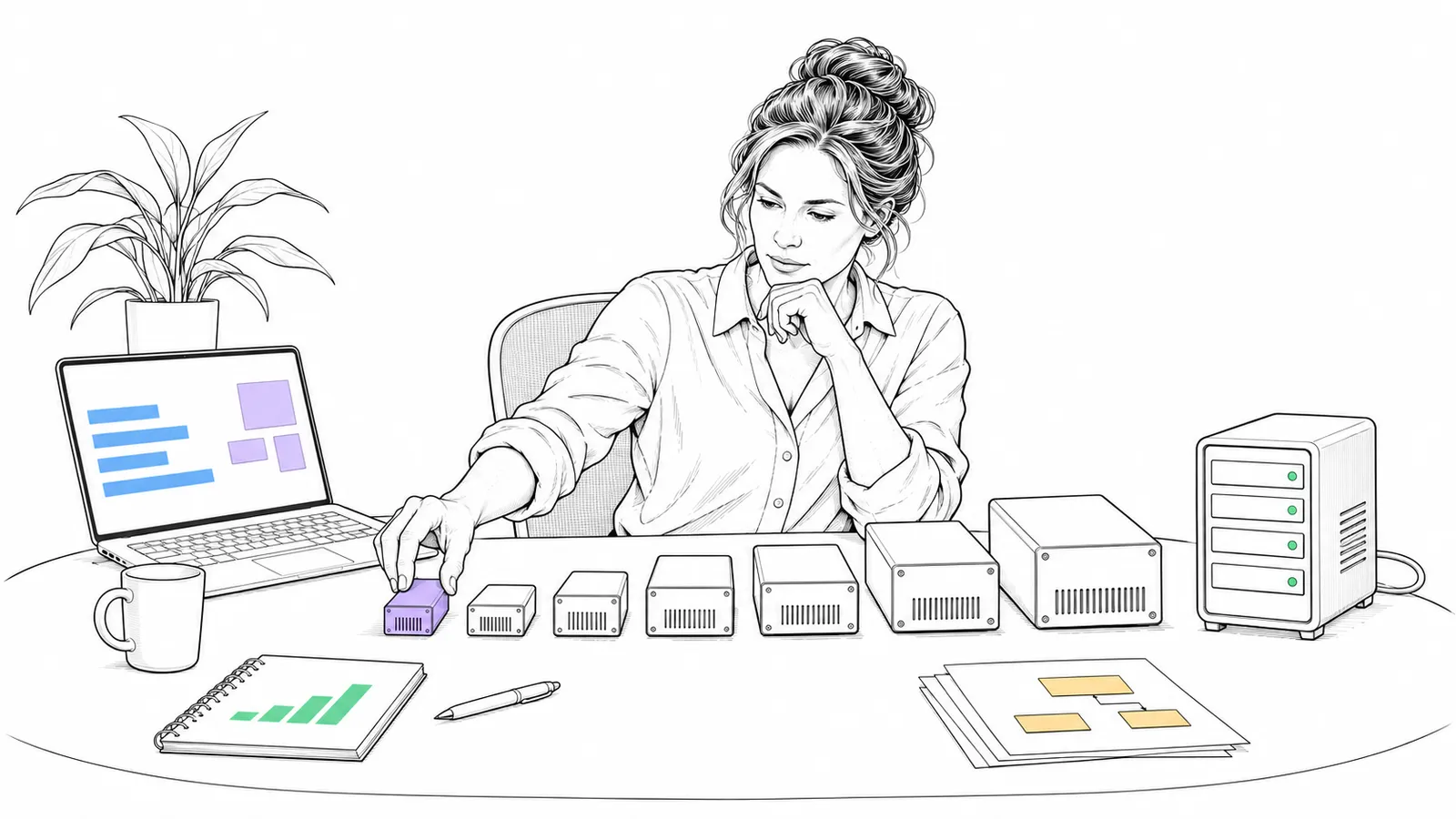
Anthropic announced Project Glasswing on 7 April 2026, giving software defenders access to Claude Mythos Preview.

·

A worker chooses a small module from seven different sizes.

History

Qwen2.5: a whole family of open models
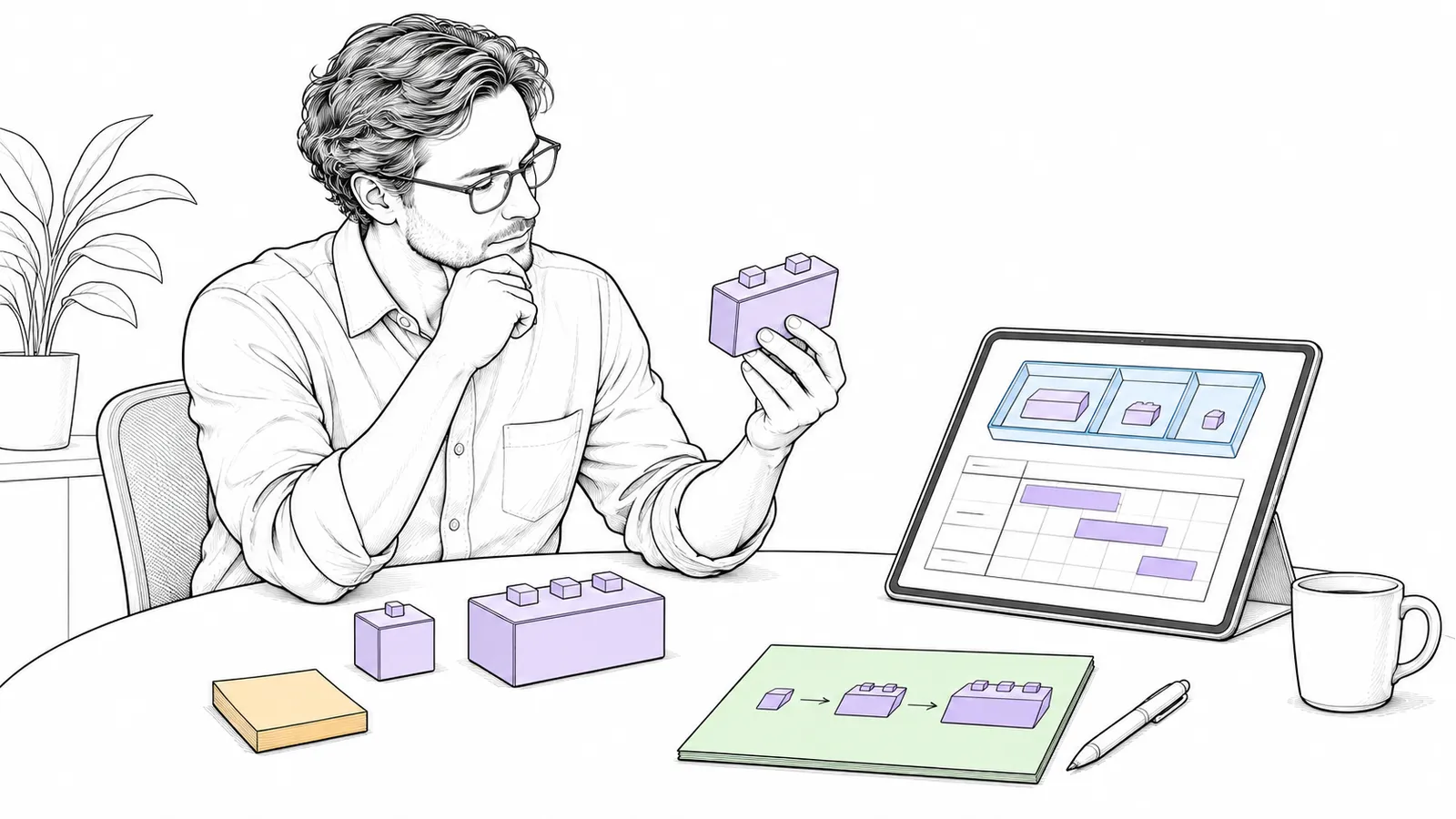
The Qwen team releases Qwen2.5, with separate models for code and maths, from 0.5B to 72B.

·

An employee compares model sizes beside two different tasks.

History

Qwen3 offers models in a wide range of sizes
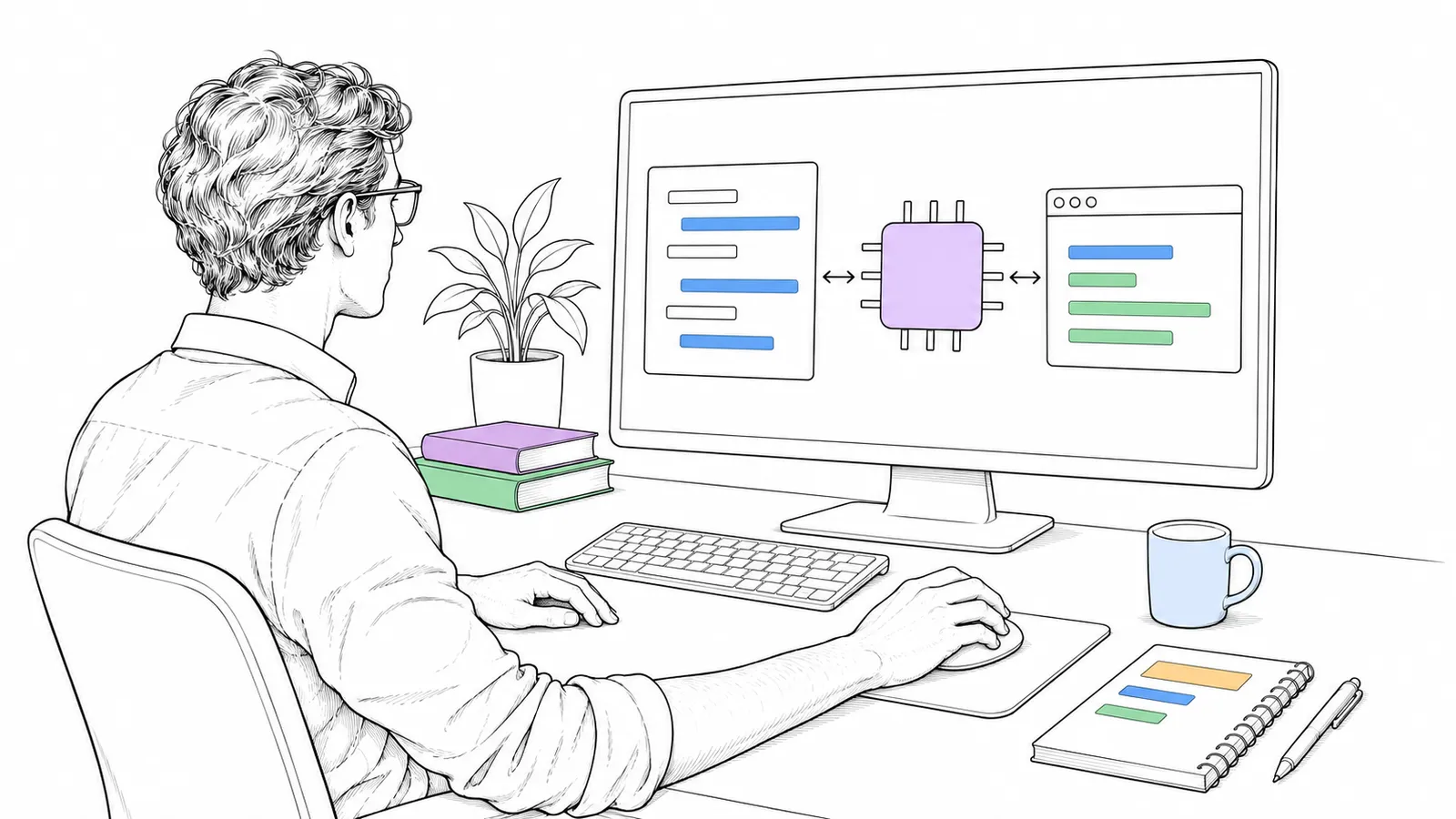
The Qwen3 family arrived with available weights, an Apache 2.0 licence and different thinking modes.

·

A developer views a model module and two windows on a screen.

History

Qwen3-Coder pairs a coding model with a terminal agent
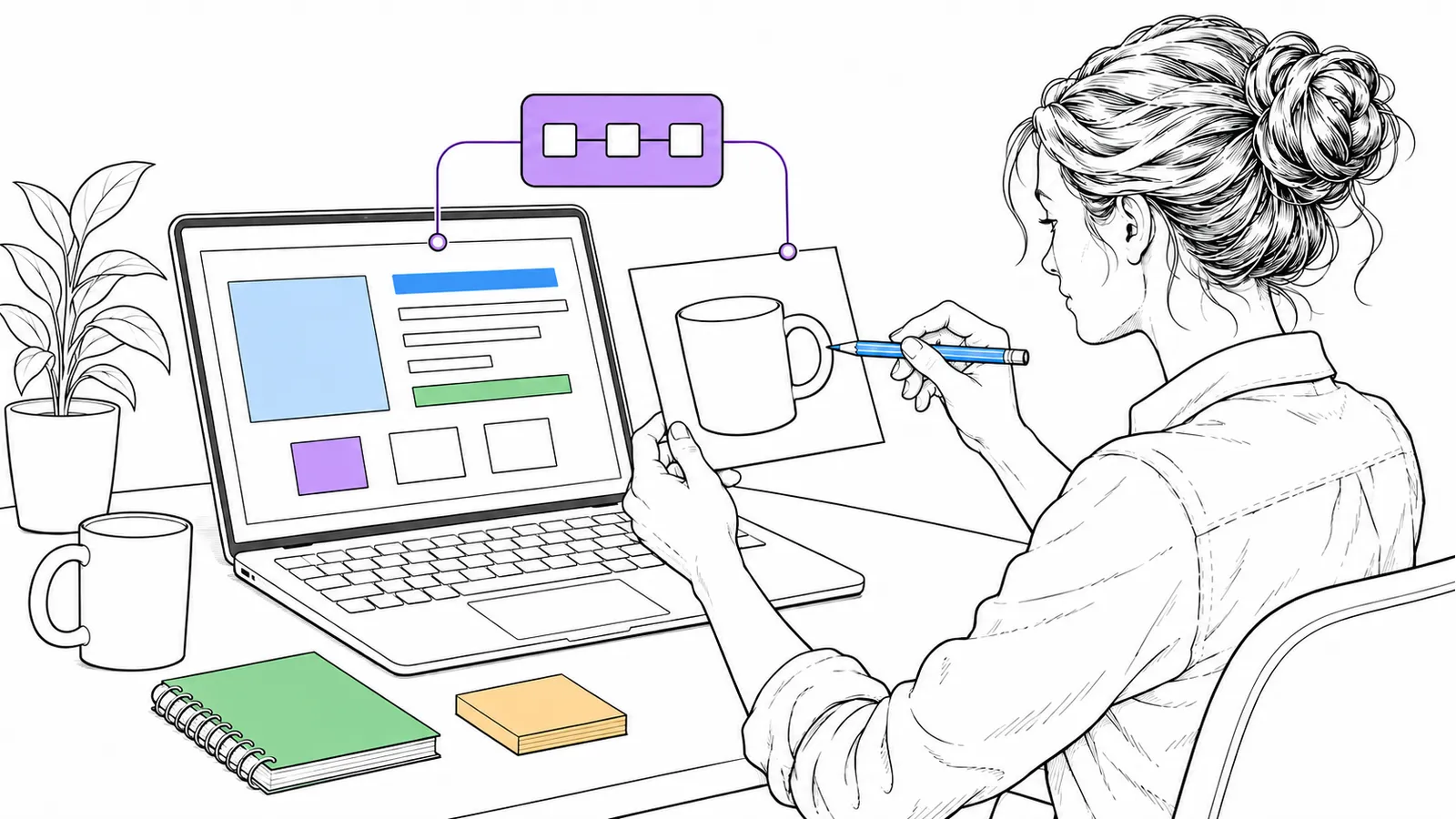
The Qwen team introduced an open coding model alongside Qwen Code.

·

An employee compares a card showing a mug with blocks on a laptop.

History

Qwen3.5 brings images and text together in an open model
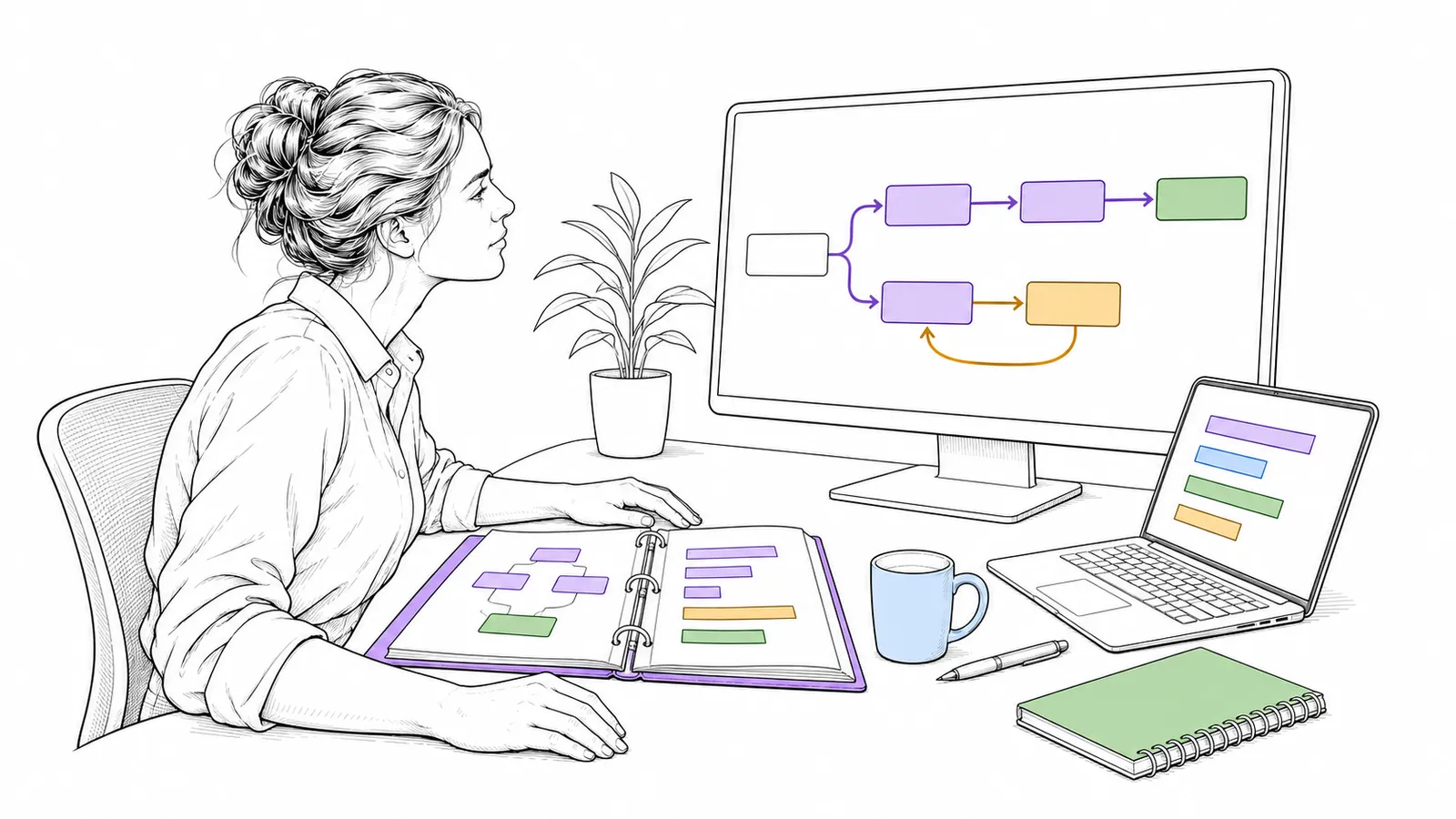
Alibaba introduced Qwen3.5 with a multimodal design and a focus on execution costs.

·

A researcher studies a reasoning path that partly runs in a circle.

History

QwQ-32B-Preview: an open model that thinks first
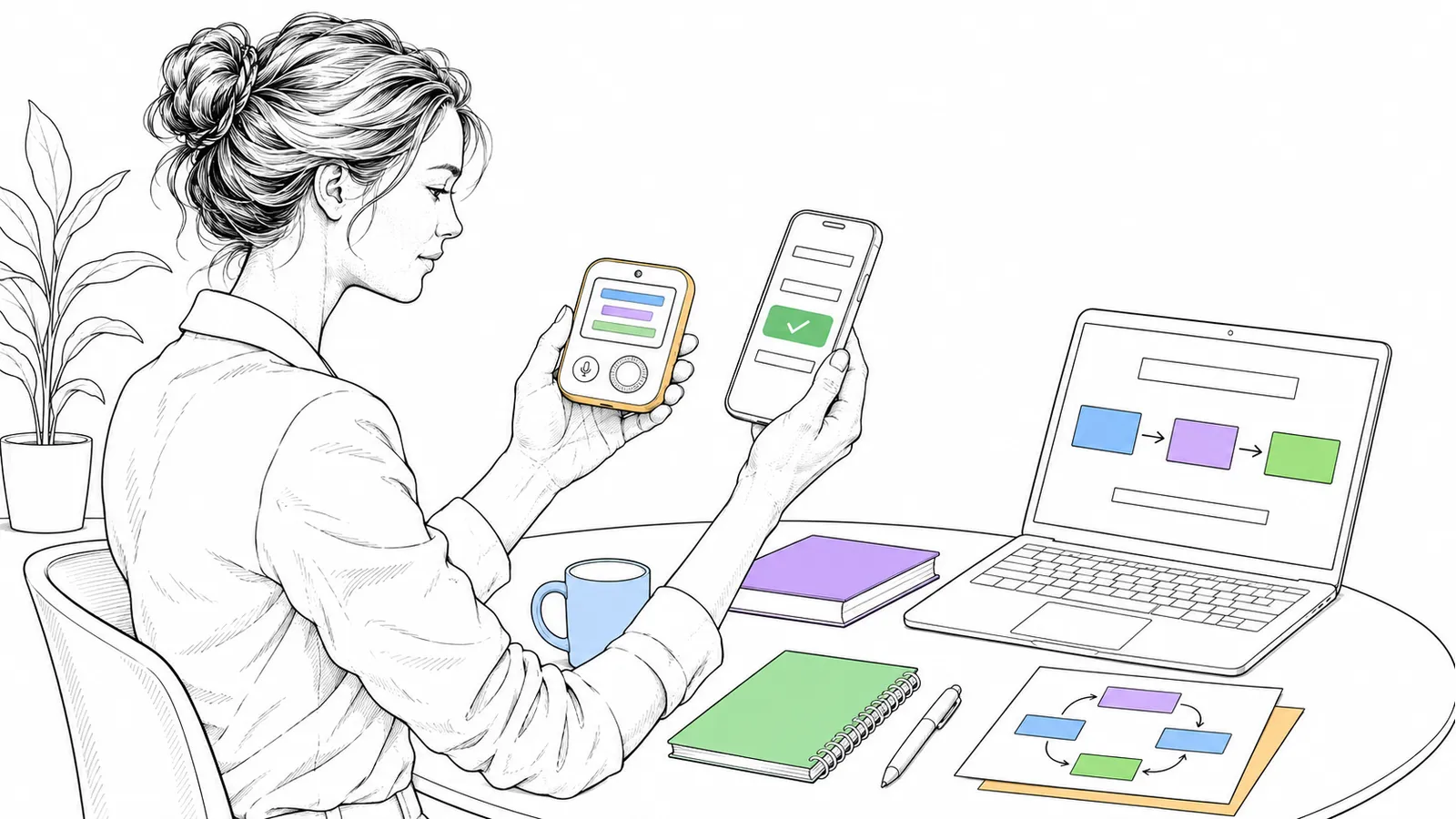
The Qwen team releases an experimental open model that focuses on reasoning, with its weak points named plainly.

·

A worker compares a small device with a normal phone.

History

Rabbit r1: a separate device for AI tasks
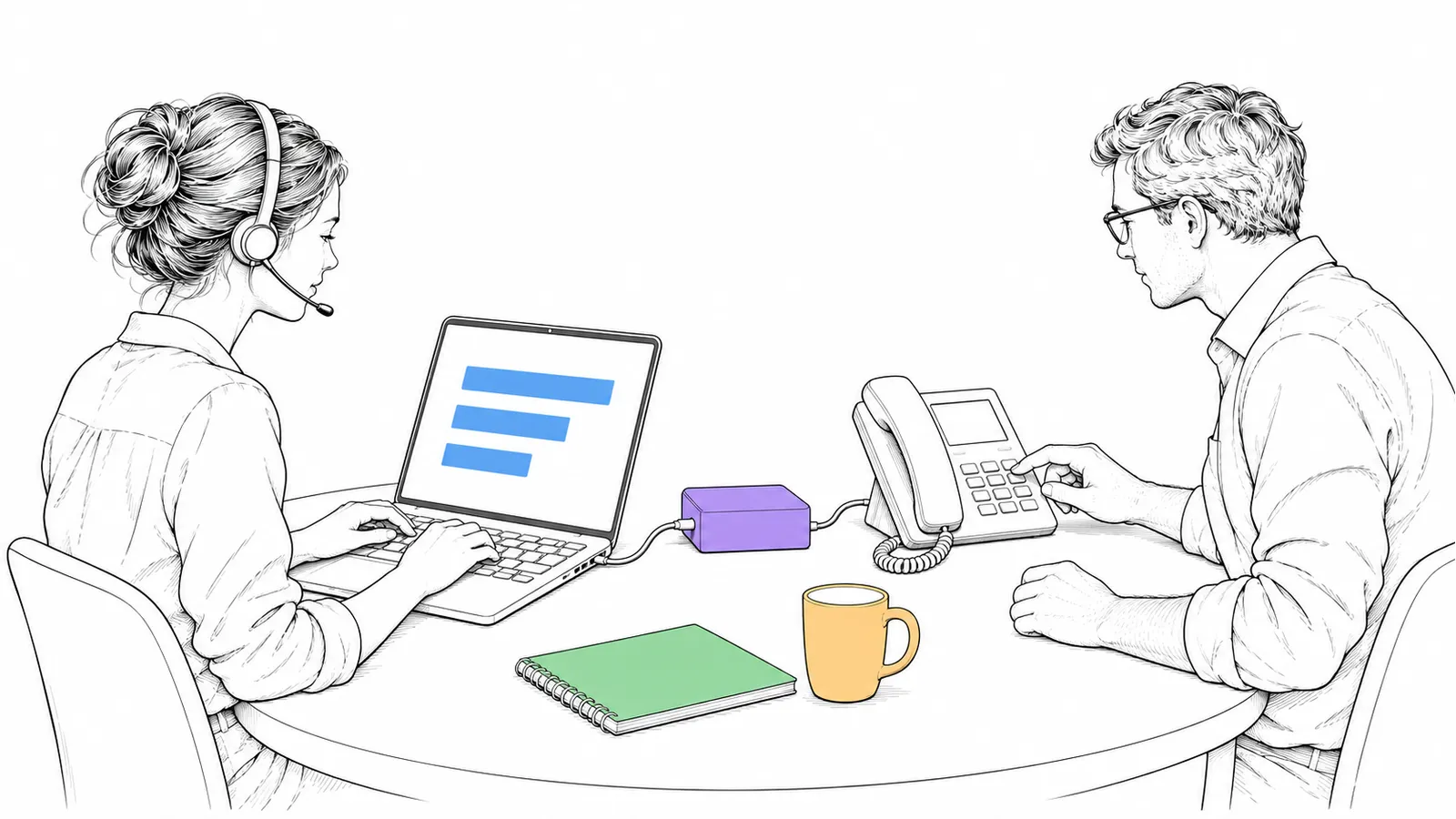
At CES 2024 Rabbit showed the r1, a small box that would do tasks by voice. Mostly it showed that a phone app is often enough.

·

A worker wearing a headset sits beside a phone and a colleague.

History

Realtime API connects spoken conversations with telephony
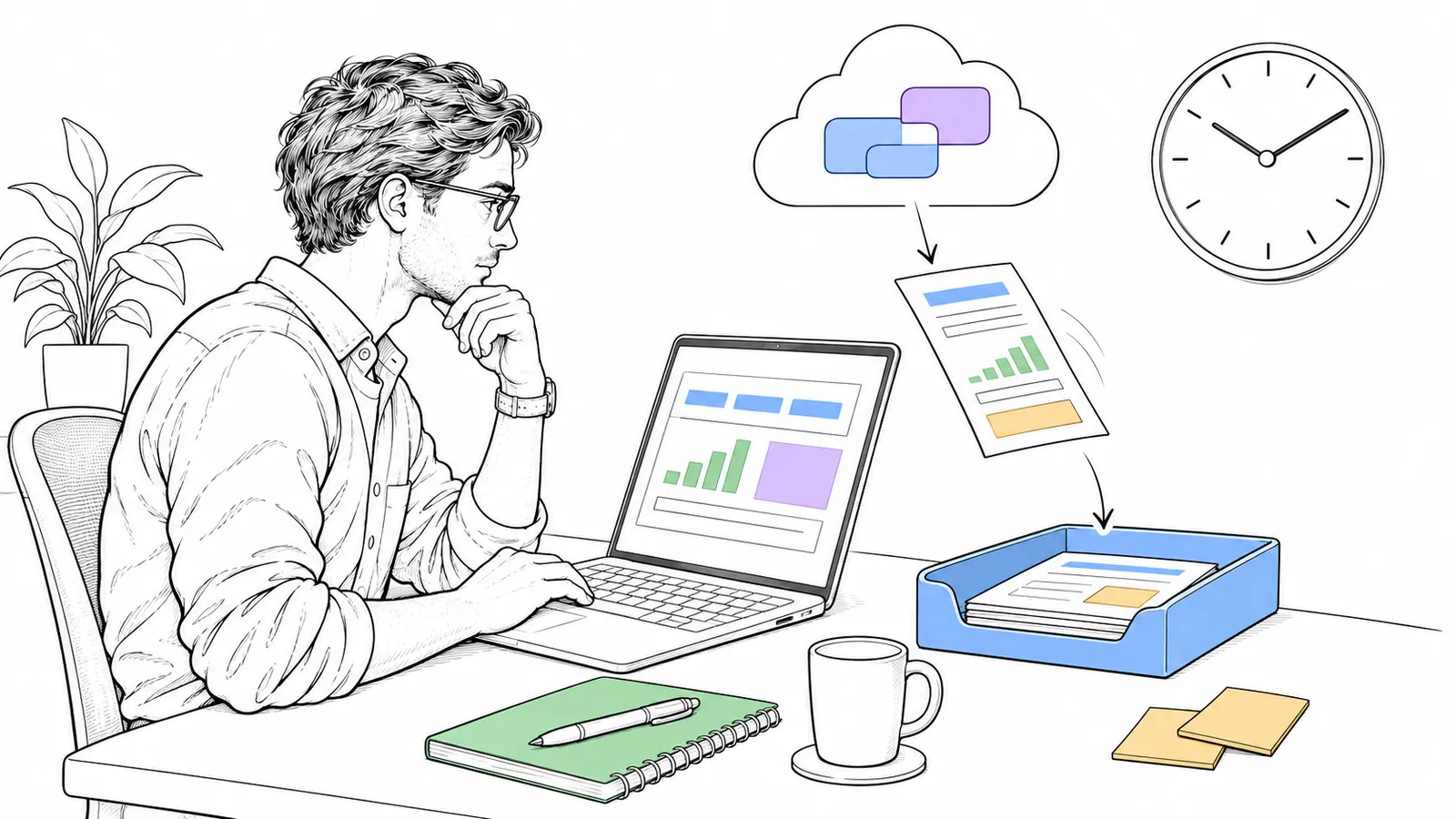
OpenAI introduced gpt-realtime and made its Realtime API generally available with SIP support.

·

A developer examines a report beside a clock and a laptop.

History

Routines enable scheduled coding-agent tasks
On 14 April 2026, Anthropic introduced a redesigned Claude Code desktop app and Routines for tasks in the cloud.

·

An employee studies three chip modules on a workbench.

History

Sol and Luna expand the GPT-6 family
GPT-6 Sol and GPT-6 Luna appeared on 22 September 2026 alongside the previously introduced Astra.

·

A developer places task cards beside a laptop and a review tray.

History

Sonnet 4.5 arrives with tools for building agents
Anthropic introduced Sonnet 4.5, Claude Code 2.0 and the Claude Agent SDK.

·

Two colleagues compare work sheets and answers beside a laptop.

History

Sonnet 4.6 updates the everyday work model
Anthropic released Claude Sonnet 4.6 on 17 February 2026 as a new version of its everyday model.

·

An employee reviews recurring instruction sheets beside a model module.

History

Sonnet 5 brings the new generation to the Sonnet line
Anthropic released Claude Sonnet 5 on 30 June 2026 as a new version of the Sonnet line.

·

Two colleagues compare a source with a rewritten version.

History

Sonnet 5.5 follows Opus 5.5

Anthropic introduced Claude Sonnet 5.5 on 28 September 2026 as the second model in the 5.5 family.

·

A creator views a video scene with sound on a phone.

History

Sora 2 brings generated video and sound to an app

OpenAI presented a video model with sound and its own social video app.

·

Two colleagues study a legal book beside a laptop, with four calendar sheets on the wall.

History

The AI Act is in the Official Journal
The European AI Act, Regulation (EU) 2024/1689, is published. That starts the clock on its deadlines.

·

Two colleagues examine separate tasks and their combined result on screens.

History

The Codex app brings multiple agents into one workspace
OpenAI introduced a macOS app for organising coding assignments with agents.

·

A developer and a colleague examine a task on a desktop computer.

History

The Codex app comes to Windows

According to TestingCatalog, the Codex app became available for Windows through the Microsoft Store on 3 March 2026.

·

Two people examine a proposal beside a separate rule binder and a calendar.

History

The Commission proposes changes to the AI Act
The Digital Omnibus proposal opened discussion on changing implementation of the AI Act.

·

An employee looks at falling bars beside an accelerator and a paper proposal.

History

The DeepSeek shock reaches the stock market
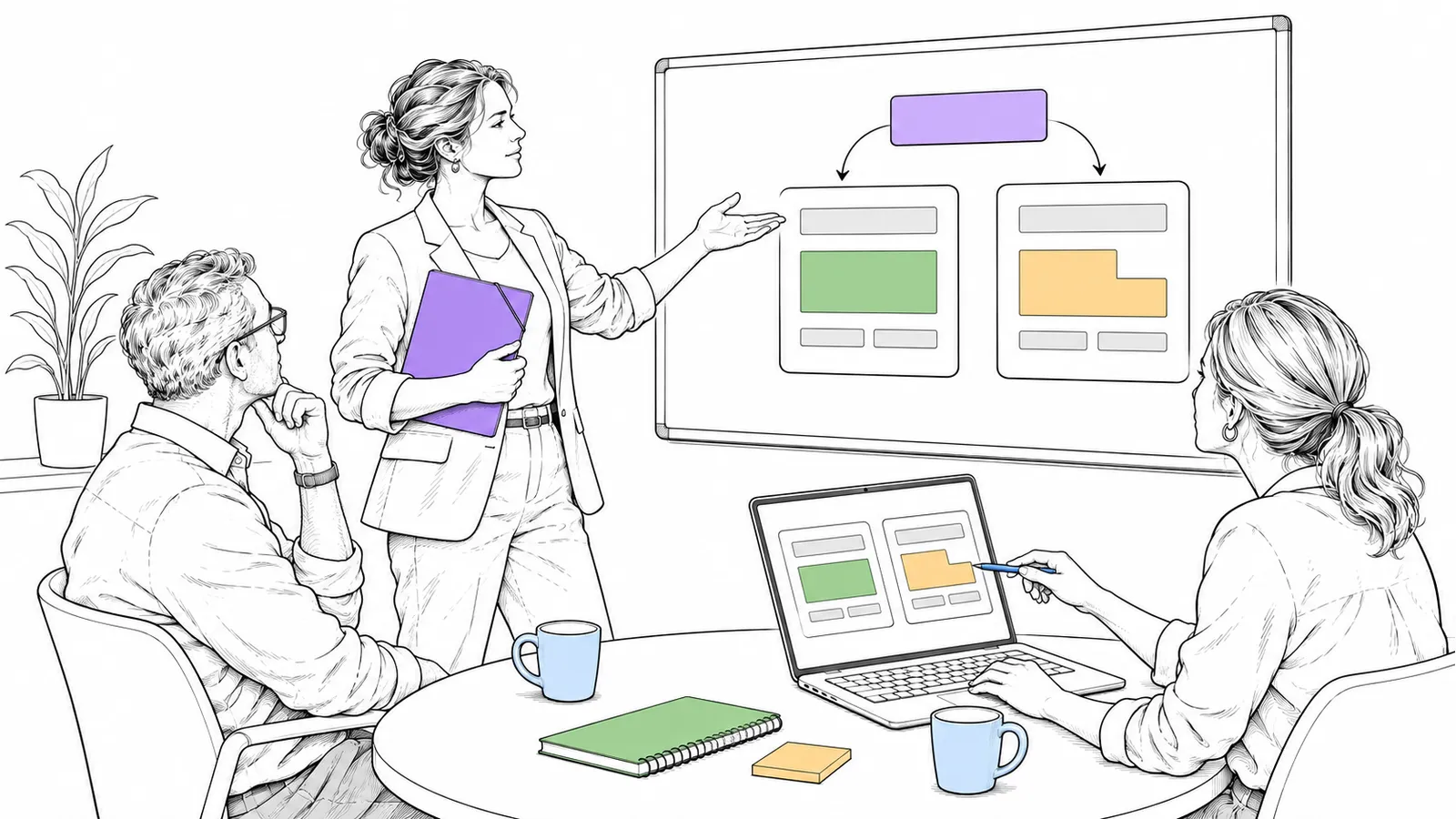
Nvidia’s share-price fall showed how uncertain expectations about AI infrastructure were.

·

Three employees discuss good and incorrect results during a practice session.

History

The first AI Act obligations take effect
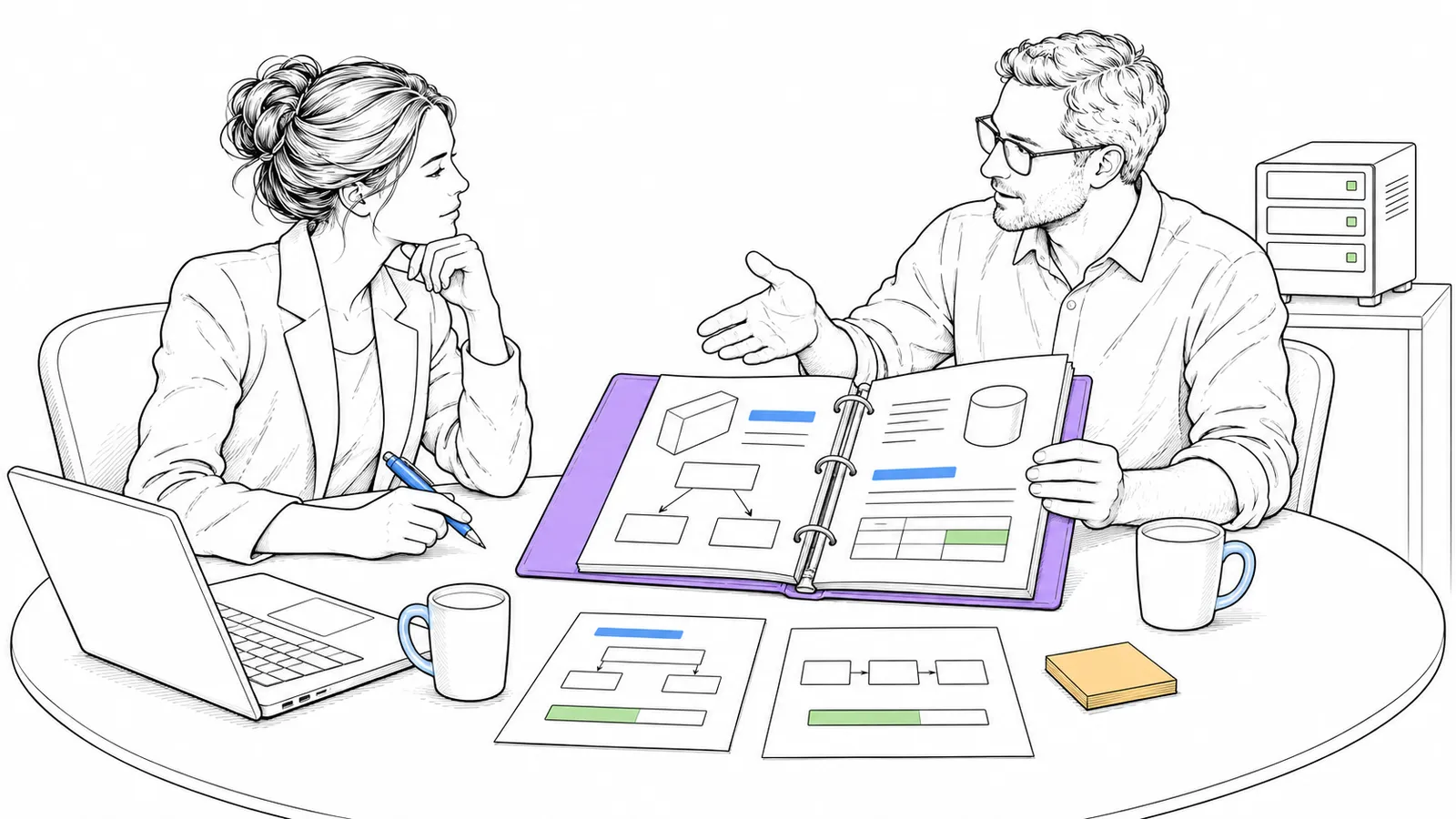
On 2 February 2025, rules on prohibited AI practices and AI literacy became applicable.

·

A buyer and a supplier discuss documentation for a model.

History

The first duties for general-purpose AI models take effect
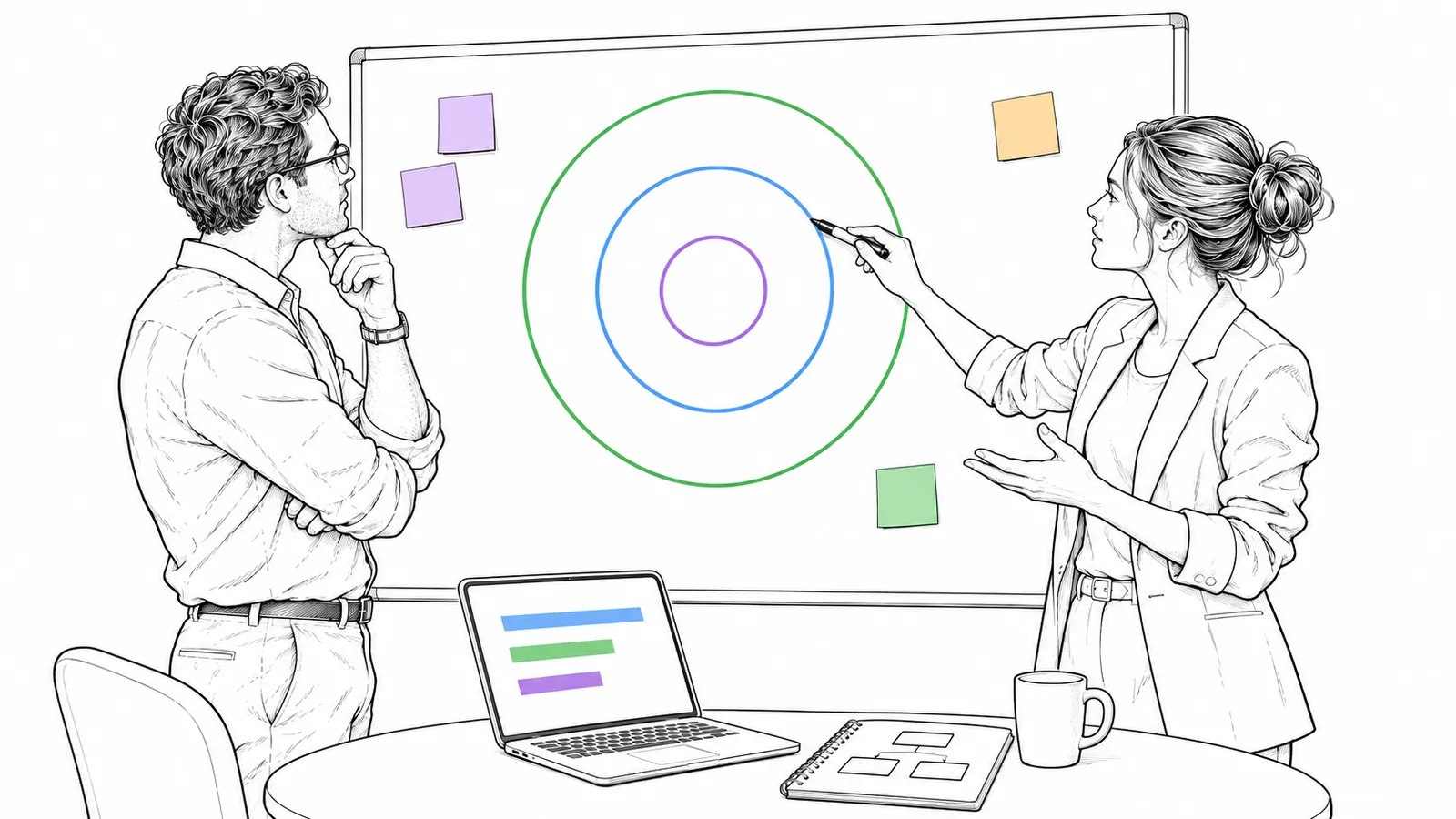
On 2 August 2025, a new phase of the European AI Act began for model providers.

·

Two people discuss three circles on a board with a purple centre.

Knowledge

The golden circle: first why, then how, then what
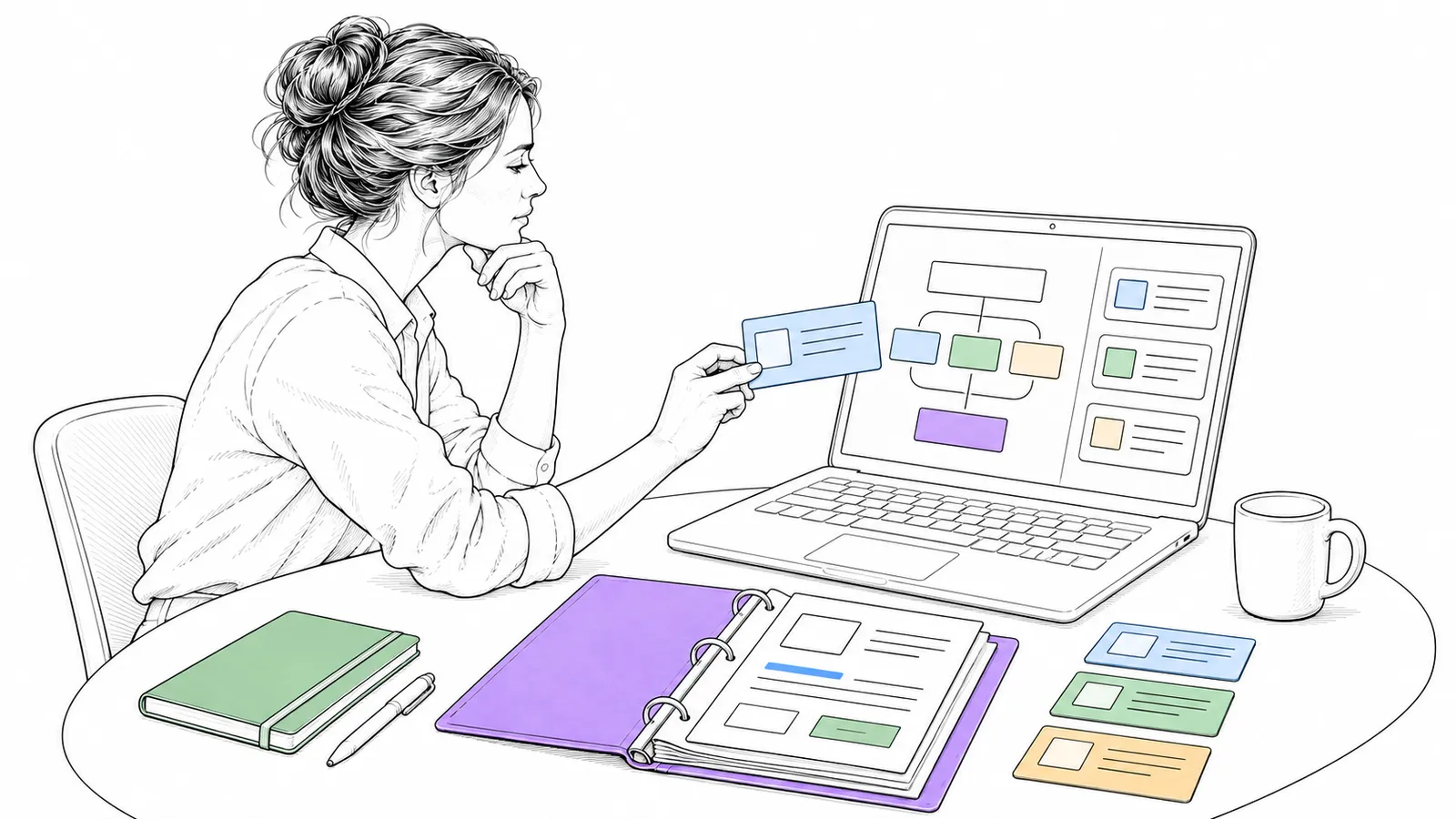
Simon Sinek says: start with why. That is how we set up every project and every article on this site.

A worker arranges an instruction card and documents beside a laptop with assistant cards.

History

The GPT Store opens: custom chatbots without code
OpenAI opened a store for custom versions of ChatGPT. Anyone with a paid plan could build and share their own GPT.

·

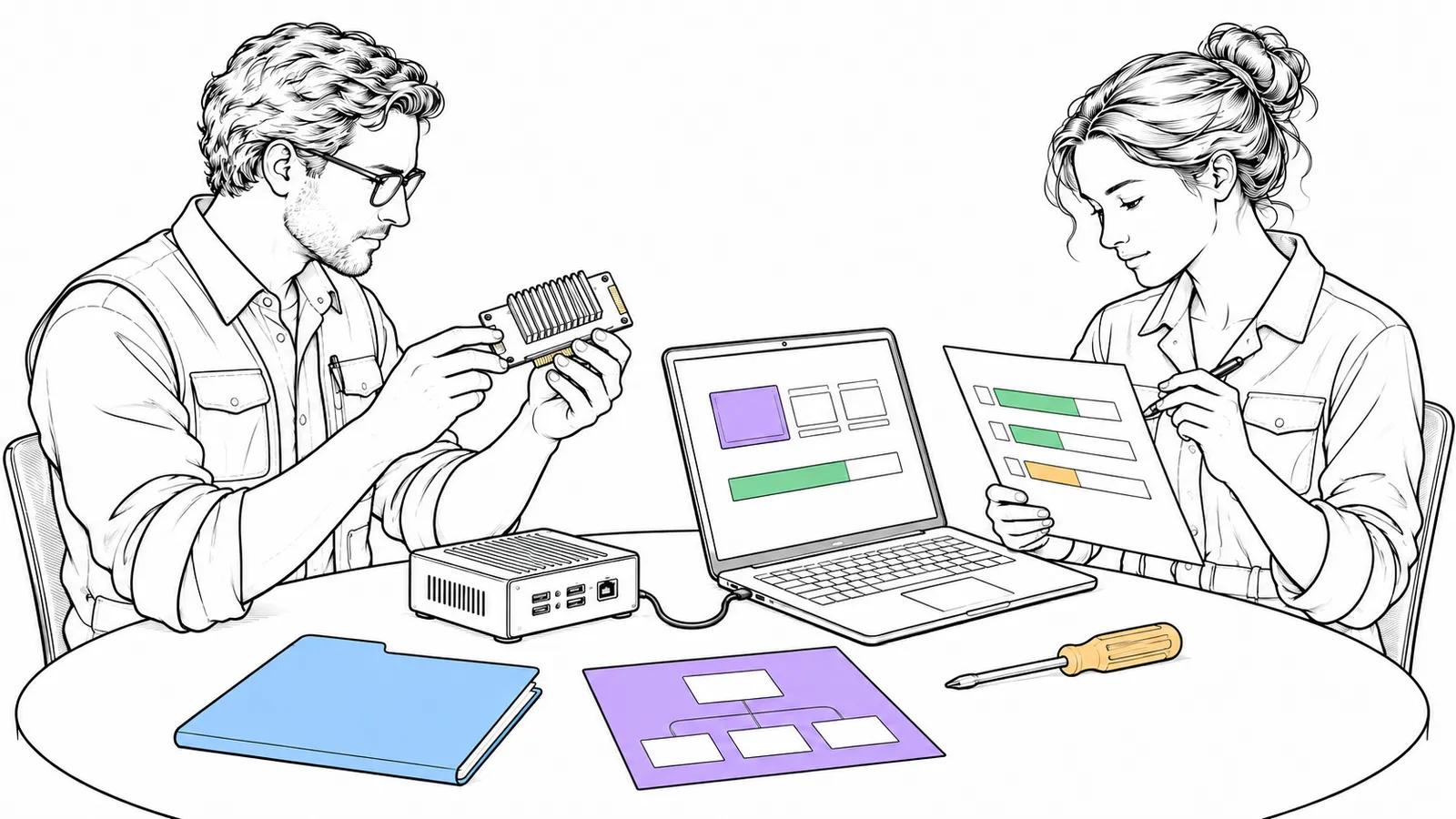
Two maintainers examine a small computer, a component and a report.

History

The team behind llama.cpp joins Hugging Face
On 20 February 2026, ggml.ai announced it was joining Hugging Face to support the further development of local AI.

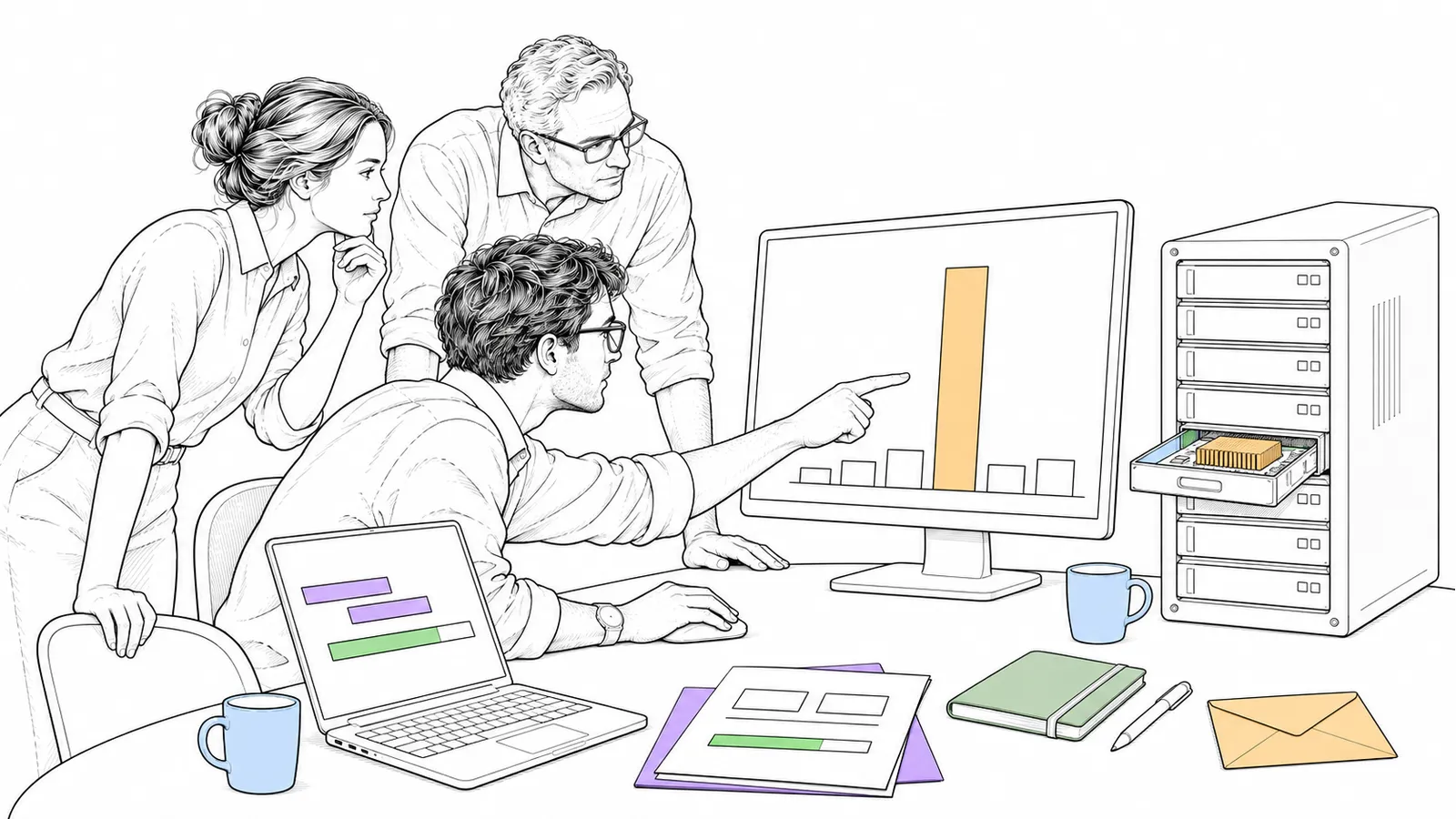
·

A developer investigates a tall amber bar on a screen beside an open server.

History

The xz backdoor: almost an attack on millions of servers
A developer saw that SSH logins used too much CPU. He found a hidden backdoor in xz, a small piece of software that ships with almost every Linux system.

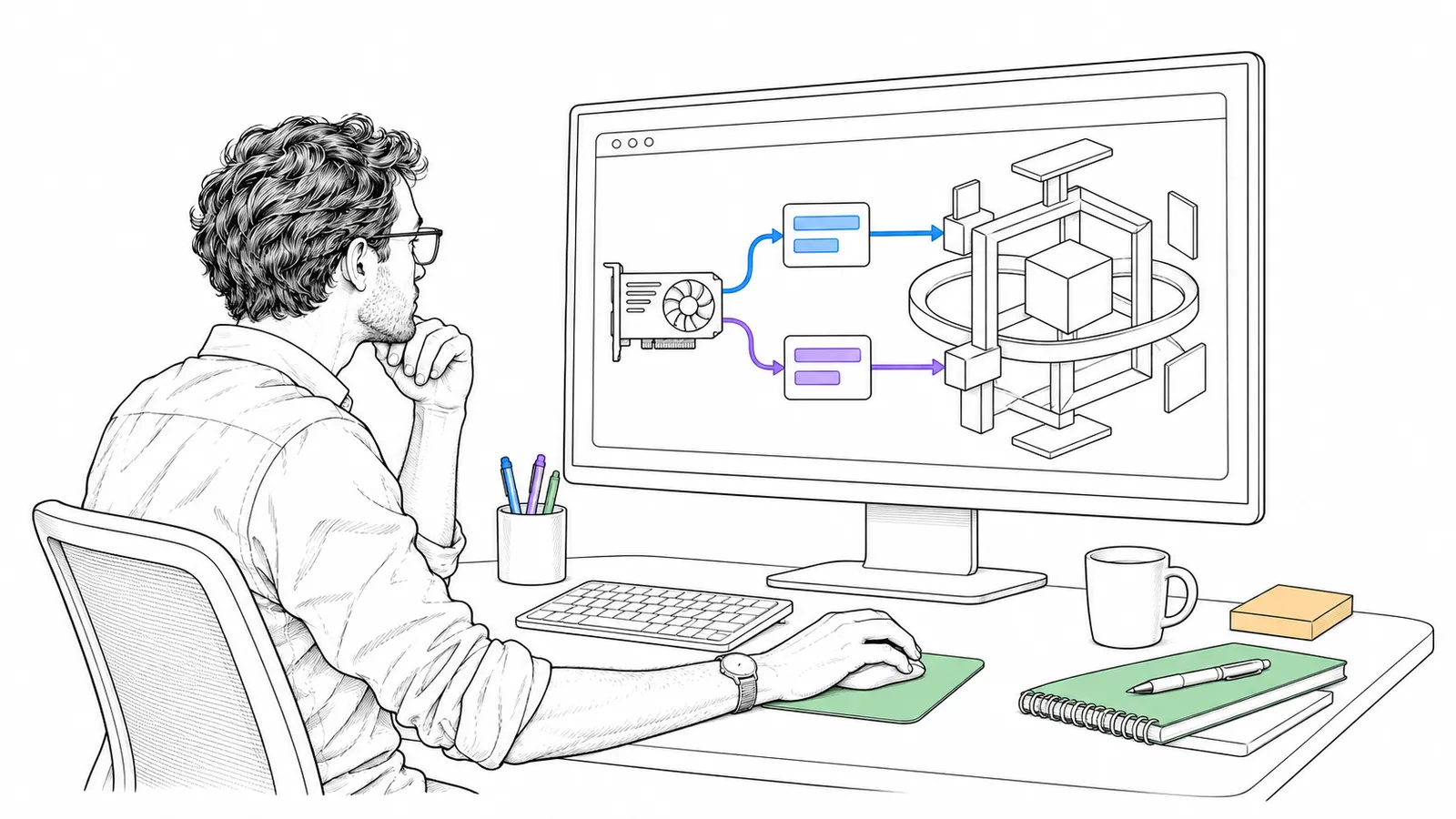
·

A developer studies a 3D shape and two separate connections to a graphics card.

History

three.js r171: WebGL and WebGPU apart
The 3D library of the web splits its entry points for WebGL and WebGPU, and gets its own file for TSL.

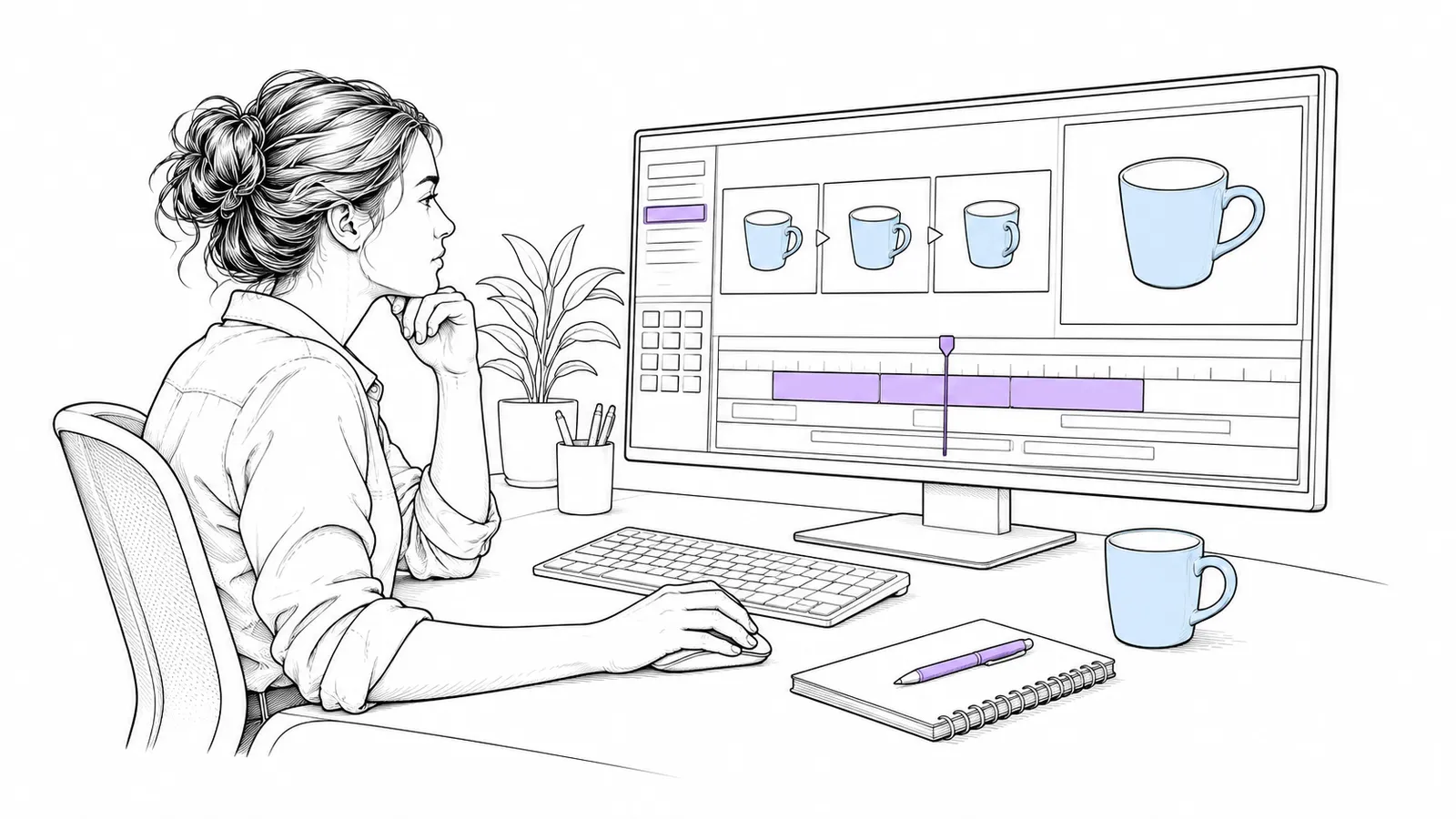
·

A creator reviews video frames and a still image of a cup.

History

Veo 2 and a better Imagen 3

Google brings its video model Veo 2 to VideoFX and puts an improved Imagen 3 in ImageFX, in more than 100 countries.

·

A creator reviews a video scene and the sound bars below it.

History

Veo 3.1 emphasises sound and control
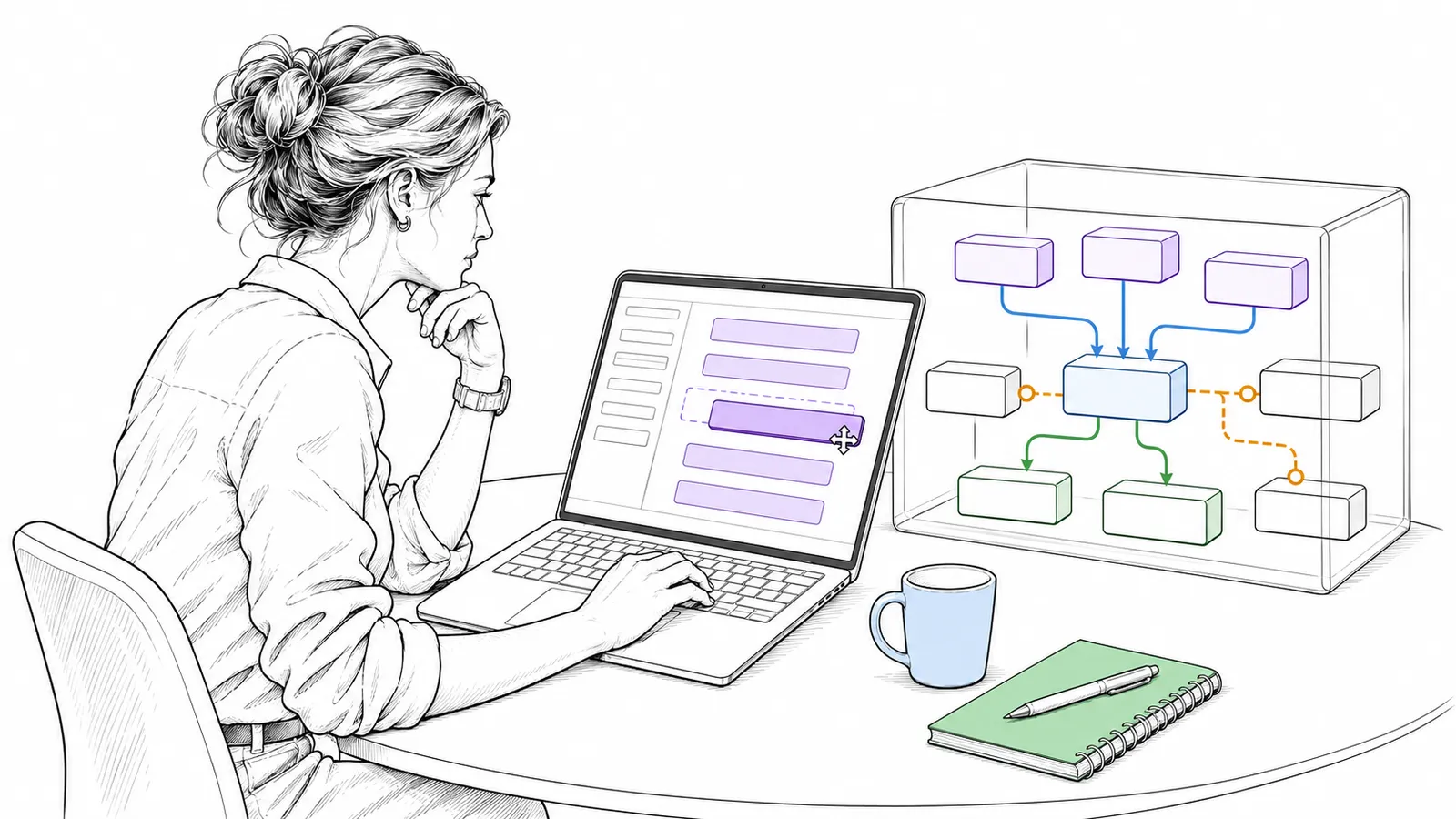
Google introduced a video-model update with more control over the result.

·

An employee looks at a prototype screen beside an open view of its underlying parts.

History

Vibe coding gets a name

Andrej Karpathy gave the approach of building software with AI the name vibe coding.

·

A technician examines a server component beside a screen with input and output.

History

vLLM rebuilds the engine behind model responses
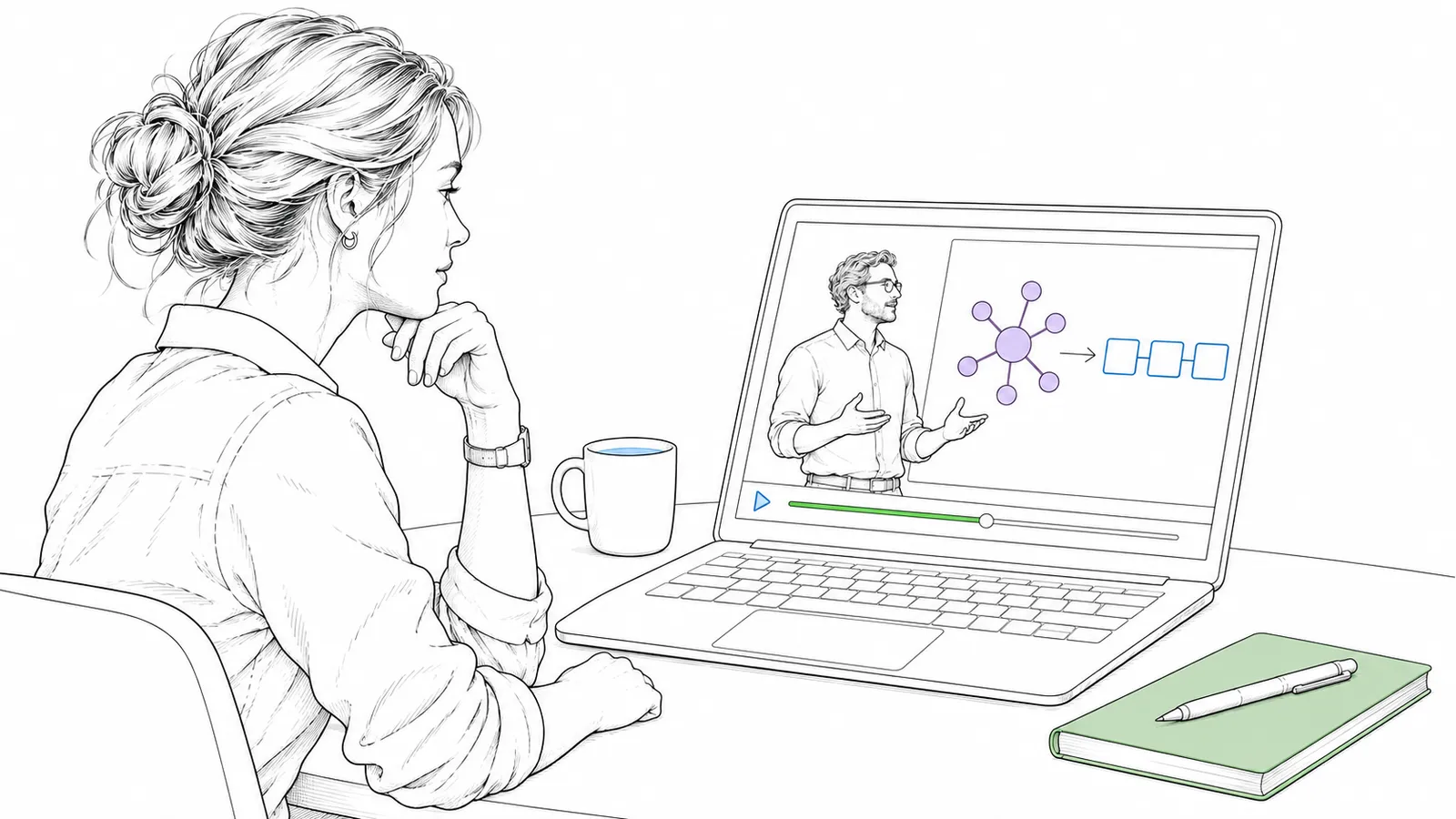
The first V1 version of vLLM aimed for a simpler and faster system for running models.

·

A woman watches a speaker with a diagram on his slide on a laptop.

Vlog

Watch tip: Karpathy on software changing again
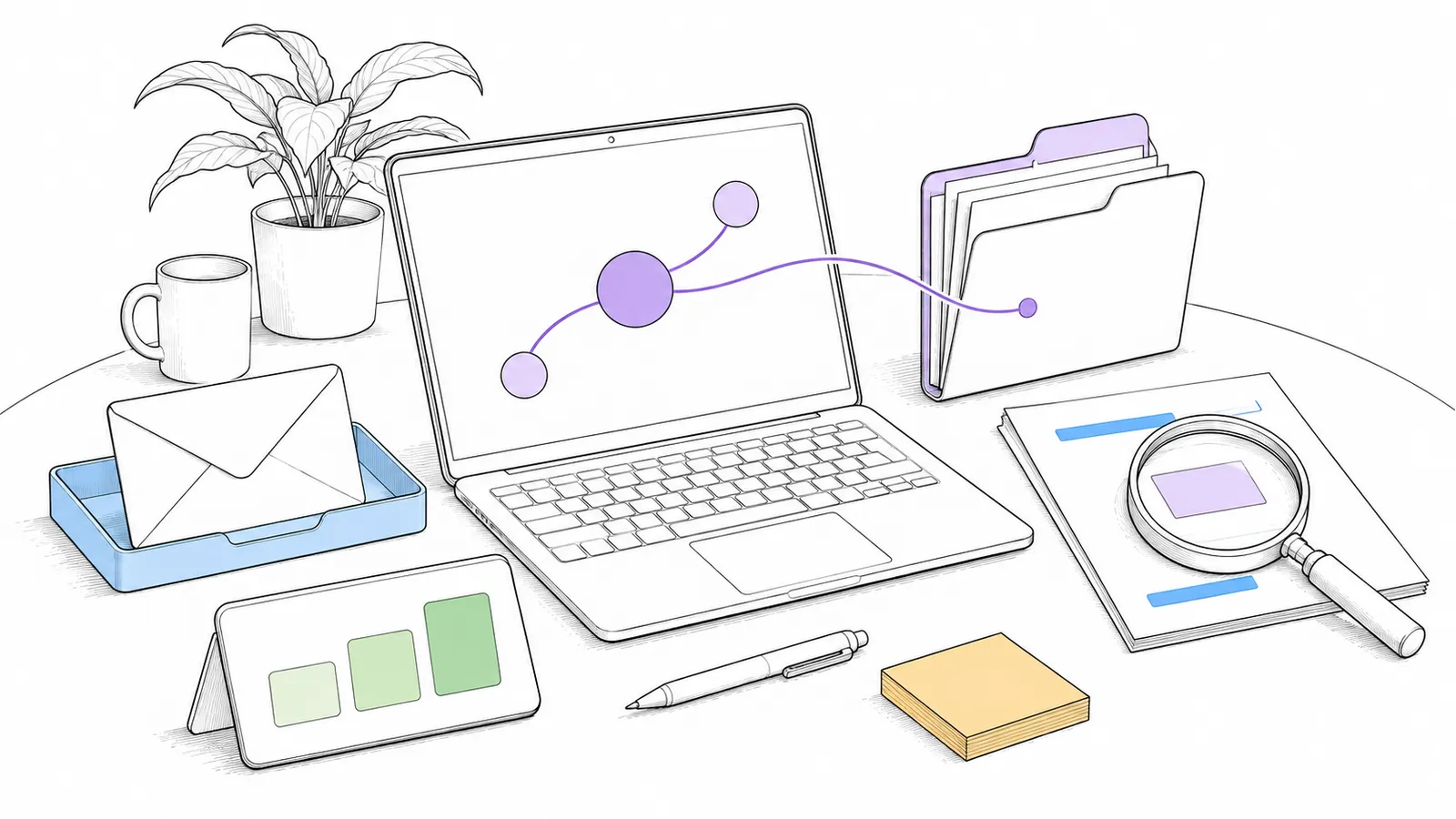
A talk by Andrej Karpathy at Y Combinator about what language models do to making software. Why we recommend it, and where to find the notes.

A laptop sits between a folder, a magnifying glass, an envelope and a screen with green blocks.

Knowledge

What is an agent?

An agent is an AI with tools. As soon as it can do something, instead of only answering, you can call it an agent.

A mechanic studies a manual beside an aircraft part.

Knowledge

Write like an aircraft manual: plain technical English
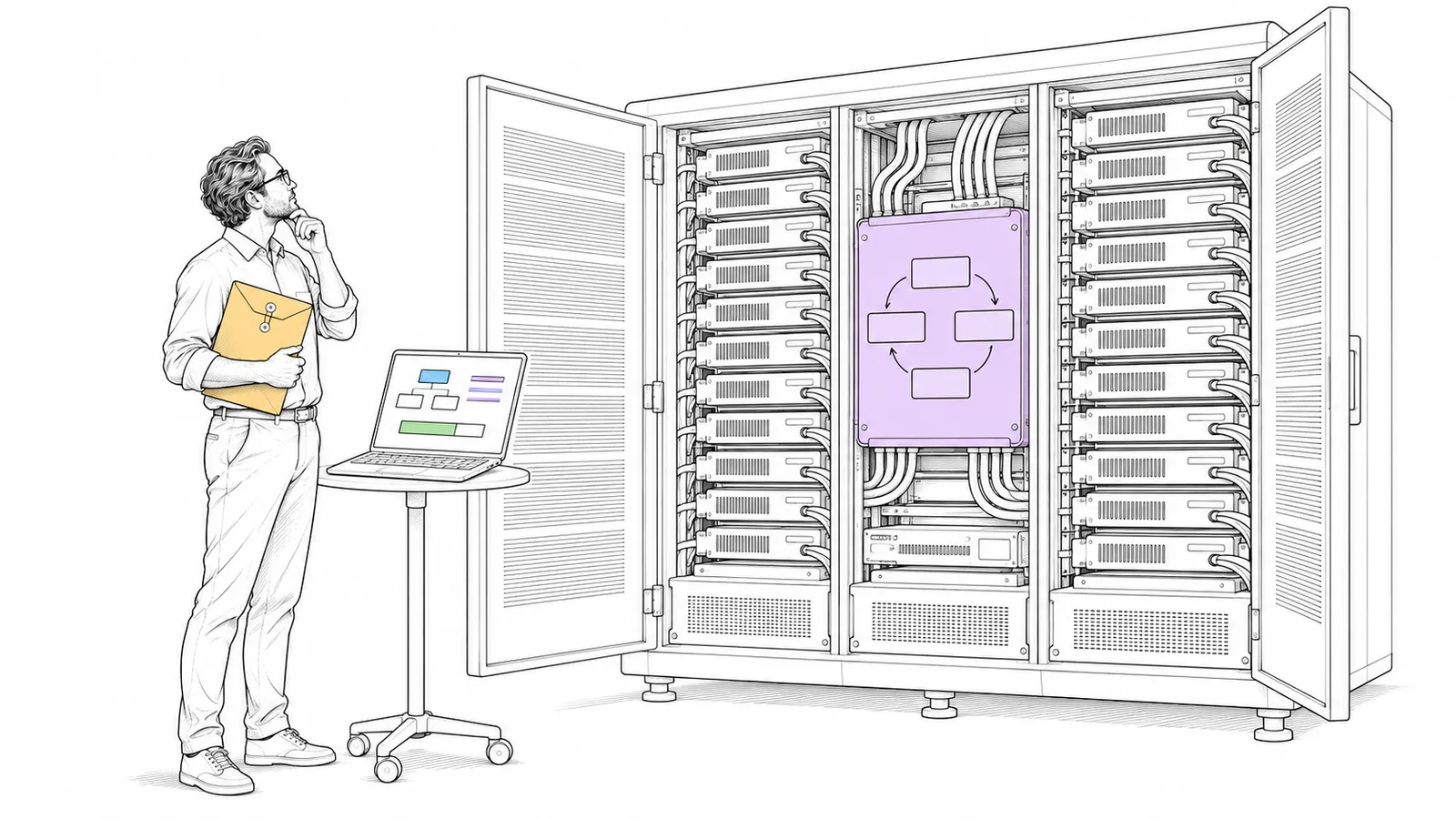
Andrej Karpathy asks language models to explain things in the style of aircraft manuals. We write all our texts that way, for people and for agents.

A worker with a laptop examines a large cabinet of accelerator cards and a purple model block.

History

xAI releases Grok-1 as open weights
xAI published the weights of Grok-1, a 314-billion-parameter model, under the Apache 2.0 licence. Large, but not trained for conversation.

·

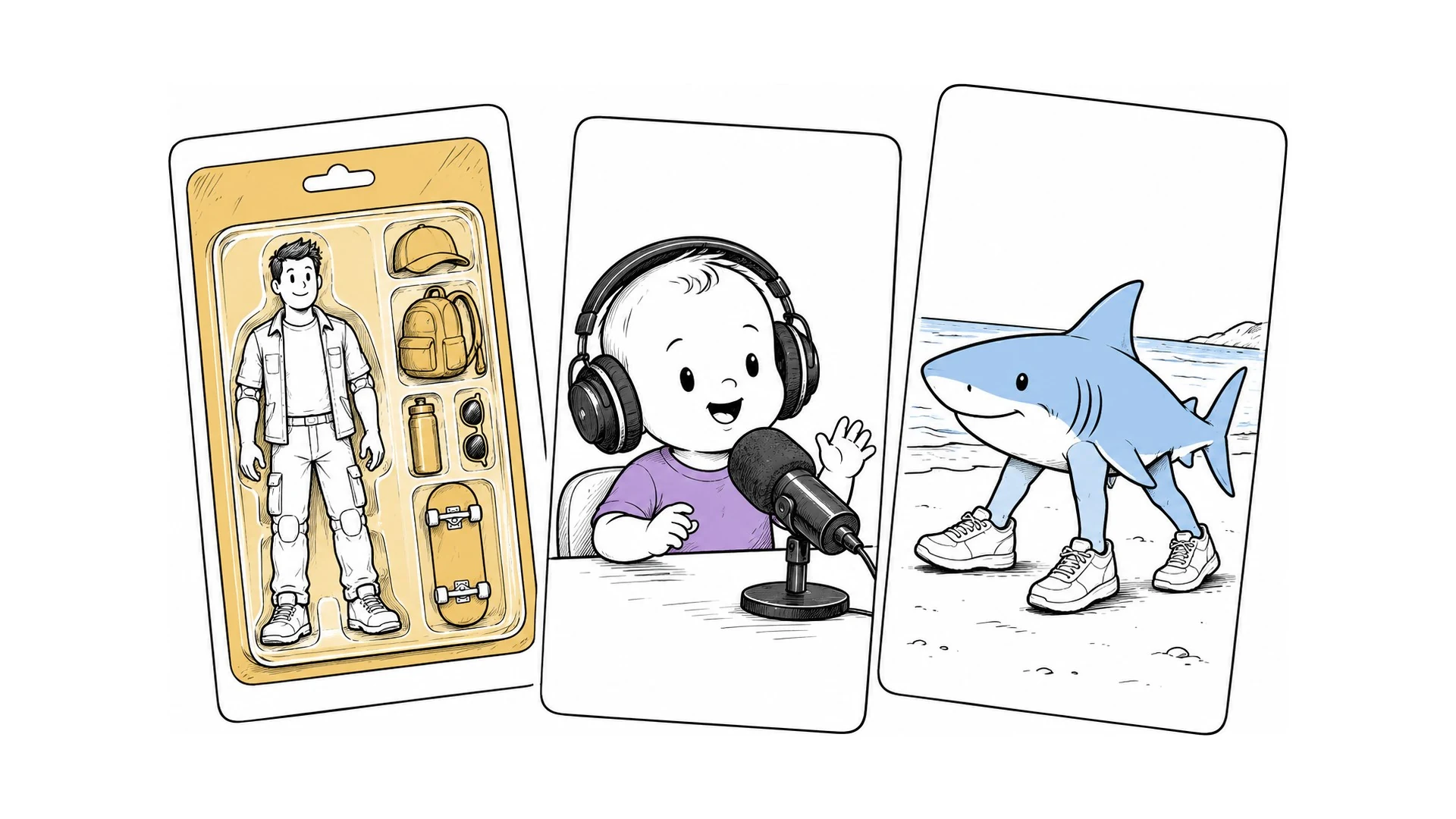
Three drawings of AI hypes: an action figure in a box, a baby presenting a podcast and a shark in sneakers.

Knowledge

A new AI hype every week. What stays?

Hypes come and go. What stays are people who build something for their own work. And you turn a fun experiment into something that lasts together.